The Scarcity Principle: Why the anOrdain Model 2 OT is the Ultimate Flex
In the world of high-stakes watch collecting, the metric of 'luxury' has shifted. It is no longer about how much you can spend, but how long you are willing to wait. While the big Swiss houses continue to churn out thousands of 'limited editions' that are anything but limited, a small studio in Glasgow is quietly producing the most coveted dials in the northern hemisphere. The anOrdain Model 2 OT (Old Texture) is the physical manifestation of this shift.
The Dial: Alchemy in Glasgow
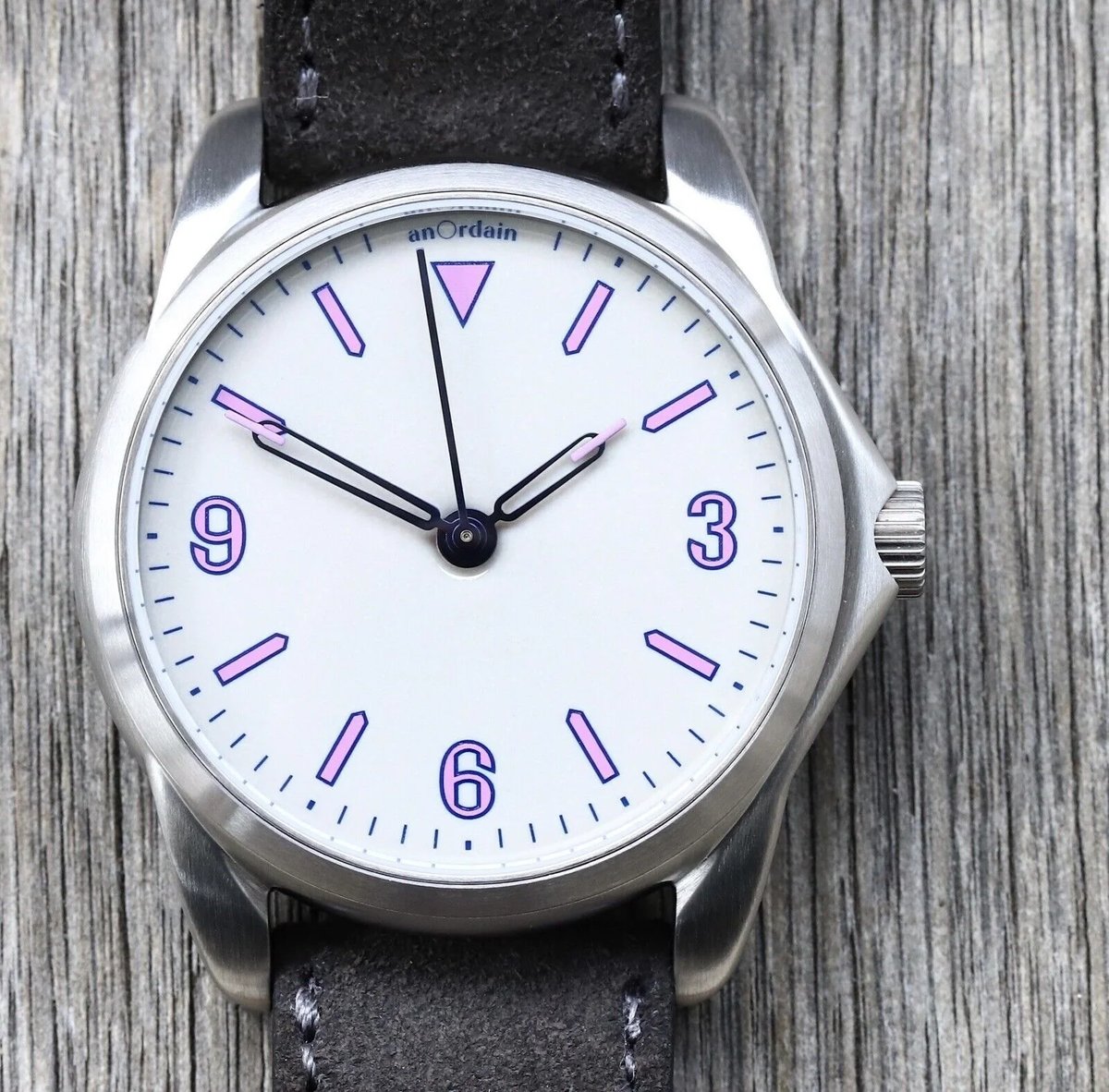
The heart of the Model 2 OT is its vitreous enamel dial. For the uninitiated, this isn't paint or lacquer. It is a mixture of silica and metal oxides fired at temperatures exceeding 800 degrees Celsius. The 'OT' variant features a unique, pitted texture that mimics the look of antique enamel that hasn't been perfectly polished—a 'rough luxury' that feels incredibly modern. Each dial is a gamble; the failure rate in the kiln is notoriously high, which explains why anOrdain can only produce a handful of these pieces per week. This isn't just a watch face; it's a survivor of a literal trial by fire.
The Secondary Market: Arbitrage and Allocation
Let’s talk numbers, because at Vivir, we know your portfolio matters as much as your pulse. The MSRP for a Model 2 OT sits comfortably around the $2,600 mark. However, try to buy one today, and you’ll find yourself on a waiting list that currently extends into the late 2020s. This has created a fascinating secondary market dynamic. On platforms like Chrono24 and at boutique auction houses, these pieces are regularly trading for $5,000 to $6,500. We are seeing a 100-150% premium for a watch with a standard Sellita movement. This is the 'anOrdain Premium,' and it is driven by the fact that the supply is physically capped by the number of master enamellers the brand can train.
The Aesthetic: Field Watch or Fine Art?
The Model 2 is ostensibly a field watch. It has the hooded lugs, the 36mm case, and the legibility associated with military timepieces. But the 'OT' dial elevates it to something else entirely. The hands are skeletonized to ensure that the texture of the enamel is never obscured. The case is brushed to provide a utilitarian contrast to the jewel-like quality of the dial. It’s a watch that pairs perfectly with a Loro Piana overshirt or a vintage Barbour jacket. It signals that you appreciate the 'workwear' aesthetic but have the refinement to demand hand-fired enamel on your wrist.
The Movement: Pragmatism over Prestige
Some critics point to the Sellita SW210-1 as a weak point. At a $6,000 secondary price point, one might expect an in-house caliber. But that misses the point of anOrdain. By using a robust, easily serviced Swiss manual-wind movement, anOrdain ensures that the watch remains a practical daily wearer. The thinness of the SW210-1 is essential to the watch’s proportions. The movement is a non-issue; you aren't buying this for the gears, you're buying it for the kiln-fired art on the front.
The Verdict: Hold vs. Flip
If you are lucky enough to have an allocation coming up, our recommendation is a firm **HOLD**. While the 'flip' profit is tempting, the brand's trajectory suggests that early 'OT' models will become the 'Pre-Daytona' equivalents of the micro-brand world. As anOrdain grows and potentially moves into more complex movements or higher price brackets, these early, hand-finished field watches will be the pieces that collectors scramble for at Phillips in ten years. The Model 2 OT is a rare example of a watch that is both a joy to wear and a sound place to park capital.