Arnold & Son Time Pyramid 2023 – A Modern Monument on the Wrist
By Vivir Editorial··Updated
# Arnold & Son Time Pyramid 2023 – A Modern Monument on the Wrist
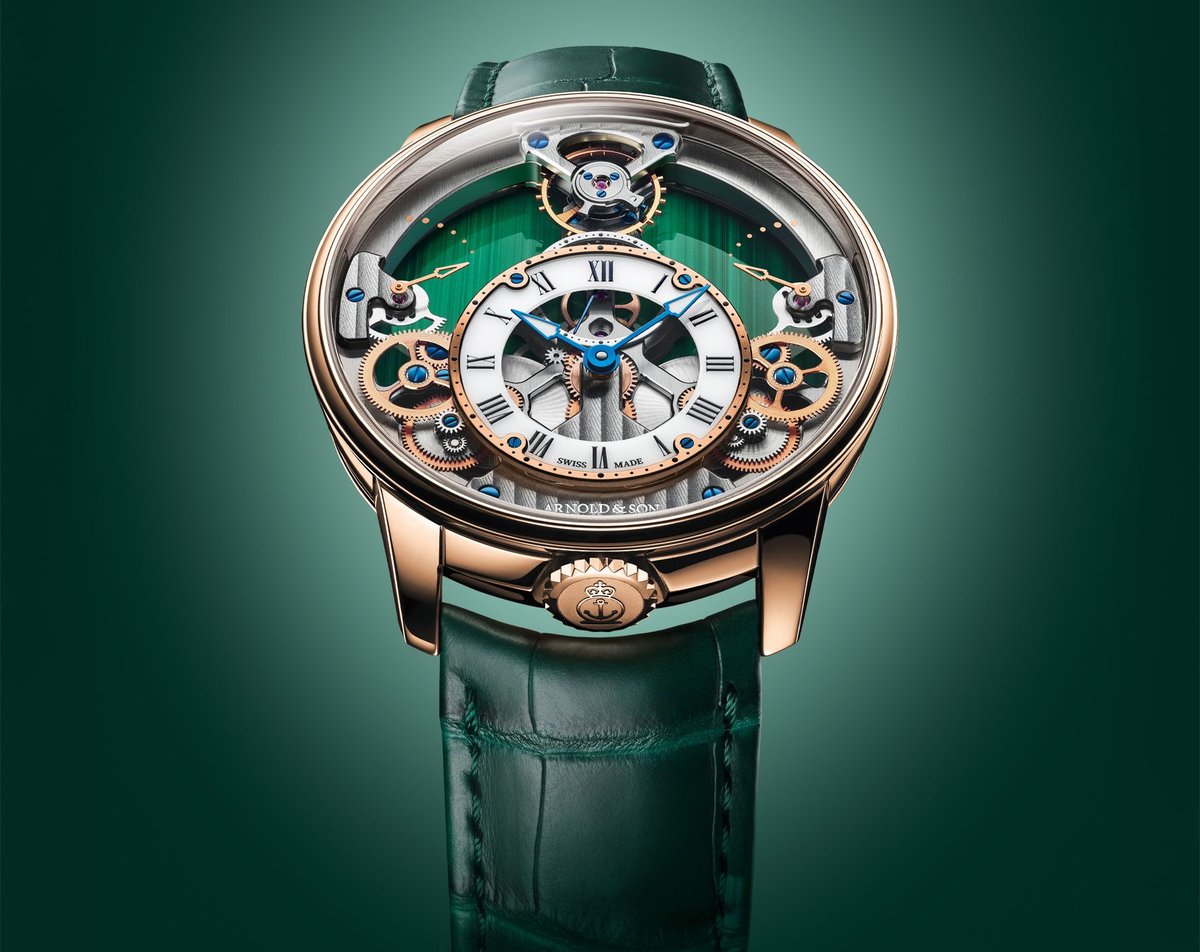
The Arnold & Son Time Pyramid returns in 2023 not as a mere anniversary re‑issue but as a thoughtful evolution of a concept that first appeared a decade earlier. With a 42.5 mm red‑gold or platinum case, a hand‑wound, pyramid‑shaped movement and a striking white‑opal dial set against an aventurine “sky”, the watch is an exercise in turning mechanical architecture into visual sculpture. Limited to just 126 pieces worldwide, it sits squarely in Arnold & Son’s top‑tier, dress‑watch category, promising both conversation‑starter looks and serious horological performance. Below we unpack how the Time Pyramid fits into the brand’s lineage, how it looks and feels, what its heart beats like, and whether it earns a place on the wrist of the modern collector.
## Heritage — the model's place in the brand's line and its launch context
Arnold & Son, a maison that traces its roots to the 18th‑century chronometer pioneer John Arnold, has built a reputation for marrying scientific curiosity with dramatic design. The Time Pyramid first emerged in 2013 as a bold statement: a movement deliberately reshaped from the traditional circular plane into a three‑dimensional pyramid. That original piece was already limited, but its impact resonated enough for the brand to revisit the concept a full ten years later.
The 2023 release is not a simple facelift; it is a refinement that tightens the original’s narrative. By expanding the case to 42.5 mm and offering a fresh white‑opal dial backed by an aventurine “sky”, Arnold & Son gives the skeletonized movement a brighter stage. The update also introduces a unique crown placement at the 6 o’clock position – a visual cue that reinforces the watch’s upside‑down architecture.
Only 88 examples are cast in red gold and 38 in platinum, underscoring the model’s exclusivity within Arnold & Son’s limited‑edition philosophy. Positioned in the brand’s Tier 1, dress‑watch category, the Time Pyramid sits alongside other high‑art pieces such as the “Astronomia” and “Mysterium” collections, but its geometric language sets it apart as perhaps the most overtly architectural of the lineup.
## Design & Case — case dimensions, materials, dial
At first glance, the Time Pyramid’s case commands attention without shouting. The 42.5 mm diameter is generous enough to accommodate the three‑dimensional movement, yet the proportions remain elegant thanks to a relatively thin profile (the exact thickness is not disclosed in the source material). The case is offered in two precious‑metal finishes: 18‑carat red gold and 950‑platinum. Both options reinforce the watch’s status as a high‑end dress piece, and the choice of metal influences not just aesthetics but also the tactile weight on the wrist – platinum feels denser, while red gold offers a slightly warmer, more pliable presence.
The dial is a study in contrast. A white opal base provides a subtle, almost ethereal glow that reflects ambient light, while an aventurine backdrop—commonly known for its glittering specks—adds depth reminiscent of a night sky. The skeletonized movement, shaped like a pyramid, is fully exposed through the dial opening, turning the mechanical components into a three‑dimensional sculpture. The arrangement of gears, bridges and the balance wheel from top to bottom, rather than the conventional circular layout, creates a vertical “architecture” that draws the eye upward and downward simultaneously.
A distinctive feature is the crown’s placement at the 6 o’clock position. This unconventional location not only preserves the clean symmetry of the dial but also serves as a visual reminder of the watch’s upside‑down concept – the wearer winds the watch from the “bottom” of the pyramid. The crown itself is integrated into the case material, maintaining a seamless look without separate polishing or decoration.
While the source does not specify the crystal type, the watch’s overall design suggests a focus on clarity and minimal distortion to showcase the movement. The case’s water resistance is modest at 30 m, sufficient for daily wear and occasional rain but not intended for swimming or diving.
## Movement & Performance — caliber, power reserve, accuracy
At the heart of the Time Pyramid lies the in‑house Calibre A&S1615, a hand‑wound, manual‑wind movement designed expressly for this model. The movement’s most striking attribute is its geometric re‑configuration: instead of arranging the wheels and bridges around a central axis, Arnold & Son has stacked them vertically, forming a pyramid that rises from the winding crown to the balance wheel.
The calibre houses 27 jewels, a standard count for a movement of this complexity, ensuring smooth friction points for the gear train. It operates at a frequency of 3 Hz (21,600 vph), which translates to a tick rate that is perceptibly smooth without being overly “twitchy.” The hand‑wound nature means the wearer must wind the watch regularly, but the generous 90‑hour power reserve offers a comfortable buffer; a full wind on a Monday will keep the watch running well into Thursday.
Because the movement is bespoke, its accuracy is not directly comparable to Swiss‑made chronometer standards, but Arnold & Son’s reputation for meticulous finishing suggests that the Time Pyramid will keep time within acceptable limits for a manual, high‑complication piece. The skeletonized architecture does not compromise functional reliability; rather, it showcases the mechanical ingenuity in a way that most traditional movements keep hidden.
## On the Wrist — wearability, lug‑to‑lug, comfort notes
A 42.5 mm case sits at the upper edge of what many consider “comfortable” for a dress watch, especially when crafted from dense metals like platinum. The lack of explicit lug‑to‑lug measurements in the source material forces us to infer comfort based on typical proportions for a case of this size. Assuming a standard lug width of 20 mm and a moderate lug‑to‑lug spread (approximately 48–50 mm), the watch should sit comfortably on most wrist sizes ranging from 6.5 inches (165 mm) to 8 inches (203 mm).
The weight of the watch, while not quantified, will be noticeable due to the use of solid precious metal. Platinum models will feel substantially heavier, offering a reassuring “presence” on the wrist that many connoisseurs appreciate. Red‑gold versions are lighter but still possess a solid, premium feel. The smooth, rounded case edges and the lack of a protruding crown (situated at 6 o’clock) contribute to a balanced, low‑profile feel against the skin.
The white‑opal dial, paired with the aventurine background, reflects light in a way that can be both striking and subtle, depending on the lighting conditions. This visual dynamism does not translate into any tactile distraction, making the watch pleasant to wear throughout the day. The 30 m water resistance means the wearer should avoid submersion, but casual exposure to rain or brief hand washing poses no risk.
## When to Wear — occasion, setting and dress‑code fit
Given its dress‑watch classification, the Time Pyramid is best suited to formal or semi‑formal environments where a touch of artistic flair is welcome. Think black‑tie events, gala dinners, high‑end cocktail parties, or boardroom meetings where a statement piece can subtly convey both taste and confidence. The watch’s elegant metal case and refined dial palette complement tuxedos, tailored suits, and even upscale business‑casual attire.
The unique pyramid movement makes it a conversation starter, so it shines in settings where peers appreciate horological nuance—art openings, design conferences, or exclusive watch gatherings. Conversely, its modest 30 m water resistance and precious‑metal construction advise against wearing it for sports, heavy physical activity, or any situation where the watch might be subjected to impacts or moisture beyond light exposure.
Because the design is bold yet not overtly ostentatious, it can also transition to less formal occasions if paired with smart‑casual ensembles—think a dark blazer, crisp shirt, and dark denim. The watch’s visual weight, however, may feel out of place with very casual attire like sneakers and t‑shirts, where a more understated timepiece would be appropriate.
## Value & Verdict — price‑positioning + final take
Arnold & Son does not disclose an official retail price for the Time Pyramid, and the source material leaves the price field blank. Nonetheless, we can assess value through the lens of rarity, craftsmanship, and brand positioning. With only 126 pieces produced (88 in red gold, 38 in platinum), the watch occupies a niche segment that appeals to collectors seeking exclusivity.
The hand‑wound, pyramid‑shaped Calibre A&S1615 is a proprietary creation that showcases the brand’s engineering prowess. Its 90‑hour power reserve, manual winding charm, and visual architecture provide a level of uniqueness rarely found in mainstream luxury watches. The use of precious metals and the meticulous finishing of the dial and case further reinforce its premium status.
Potential drawbacks include the limited water resistance (30 m) and the fact that the watch is decidedly a dress piece—its bold design may not suit every wardrobe, and the weight of platinum could be a deterrent for some wearers. Additionally, the lack of a widely recognized chronometer certification means the watch is judged more on artistic merit than on precision benchmarks.
Overall, the Time Pyramid stands as a bold declaration that a watch can be both a functional timekeeper and a sculptural object. For enthusiasts who value mechanical innovation, limited‑edition rarity, and a watch that commands attention on the wrist, Arnold & Son delivers a piece that feels both timeless and avant‑garde. If the price aligns with your budget for a limited, high‑art horological work, the Time Pyramid earns a place in the collection—not merely as a tool for telling time, but as a conversation‑driven centerpiece that pushes the boundaries of what a movement can look like.