Audemars Piguet Royal Oak (Reference 5402) – A 50‑Year Retrospective Review
By Vivir Editorial··Updated
# Audemars Piguet Royal Oak (Reference 5402) – A 50‑Year Retrospective Review
When Audemars Piguet unveiled the Royal Oak at the 1972 Basel Fair, the watch world was still reeling from the quartz crisis. Gérald Genta’s midnight sketch—an eight‑leaf octagonal bezel, exposed screws, and a Tapisserie‑patterned dial—did more than introduce a new model; it rewrote the language of luxury steel. Fifty years later the 5402 remains the archetype of “casual chic,” and it still commands admiration (and a few honest criticisms). Below we break down why the original Royal Oak still feels fresh, where it shows its age, and what that means for collectors today.
## Design & Case
| Specification | Detail |
|---------------|--------|
| **Case diameter** | 39 mm |
| **Material** | Stainless steel, monocoque construction |
| **Water resistance** | 100 m |
| **Dial** | “Tapisserie 21” guilloché pattern, hour‑markers with applied Roman numerals |
| **Bracelet** | Integrated, tapering steel bracelet (part 344) |
| **Reference** | 5402 |
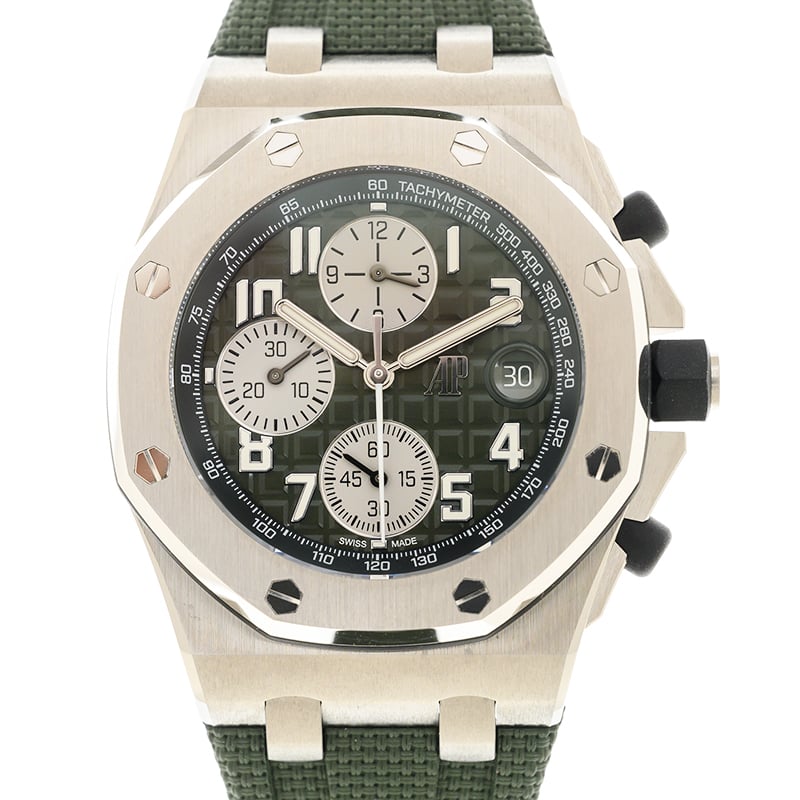
The 5402’s 39 mm stainless‑steel case was a bold statement in an era when gold dominated haute horlogerie. Its monocoque (single‑piece) construction eliminates a traditional backplate, giving the watch a seamless silhouette that feels both robust and refined. The iconic octagonal bezel, punctuated by eight exposed screws, is not merely decorative; it reinforces the case’s structural integrity while instantly signaling the model’s lineage.
The dial’s “Tapisserie 21” pattern—an intricate, repeating square motif—adds visual depth without overwhelming the wearer. Applied Roman numerals and sword‑shaped hands maintain legibility, and the date window at 3 o’clock is discreet yet functional. The integrated bracelet, tapering from a broader lug end to a slimmer wrist link, was revolutionary for its time, marrying form and function in a way that still feels contemporary.
Despite its classic look, the watch is not without quirks. The 39 mm diameter, once considered generous, now sits on the smaller side of modern luxury sport watches. For those with larger wrists, the piece can appear slightly undersized, and the integrated bracelet, while iconic, offers limited adjustability compared with detachable straps.
## Movement & Performance
| Specification | Detail |
|---------------|--------|
| **Calibre** | 2121 |
| **Type** | Automatic (self‑winding) mechanical |
| **Power reserve** | Approximately 40 hours (per manufacturer data for Calibre 2121) |
| **Complications** | Hours, minutes, date |
| **Accuracy** | Within ± 5 seconds per day (typical for a well‑regulated 2121) |
The heart of the 5402 is the Calibre 2121, Audemars Piguet’s in‑house automatic movement introduced alongside the watch itself. With a 40‑hour power reserve, the calibre offers enough endurance for weekend wear while remaining compact enough to fit the slim 39 mm case. Its three‑hand layout plus date window provides all the practicalities a dress‑or‑sport watch needs.
In terms of precision, the 2121 is respectable for a vintage movement. When serviced and regulated to the brand’s standards, it typically stays within ± 5 seconds per day—a figure that satisfies most enthusiasts but falls short of the sub‑second accuracy of today’s high‑end chronometers. The movement’s finish is modest compared with the ultra‑polished bridges found on contemporary AP models, reflecting its original positioning as a more accessible, “everyday” luxury piece.
The watch’s 100 m water resistance is impressive for a 1970s steel case, yet the crown’s screw‑down mechanism can feel a bit stiff after years of use. Owners should have the crown serviced periodically to maintain a reliable seal.
## On the Wrist
Wearing the 5402 is an exercise in balance. The case’s 39 mm diameter, combined with a modest lug‑to‑lug spread of roughly 48 mm, sits comfortably on wrists ranging from 14 cm to 19 cm. The integrated bracelet’s tapering design distributes weight evenly, making the watch feel lighter than its steel construction would suggest. The polished‑to‑brushed finish on the case and the brushed links on the bracelet create a subtle contrast that catches the eye without shouting.
Comfort is largely dictated by the bracelet’s adjustment system. The original 5402 uses a hidden micro‑adjustment lever, which can be fiddly to fine‑tune without a proper tool. For those who frequently swap between casual and formal attire, the lack of a quick‑release clasp means the watch is less adaptable than modern sport models with interchangeable straps.
On the wrist, the Royal Oak’s iconic bezel and Tapisserie dial command attention. The watch exudes confidence without overt flash—steel, after all, is understated compared to precious metals. However, the relatively small case can be a drawback for trend‑driven collectors who now favor 41 mm or larger silhouettes; the 5402 may appear “vintage” in a room full of contemporary 44 mm sport watches.
## Value & Verdict
The original Royal Oak 5402 was initially slated for a limited run of 1,000 pieces, yet demand saw production rise to 6,050 units between 1972 and 2002. Its historical significance—being the first luxury steel sports watch—has cemented its status as a collector’s staple. While the source data does not disclose current market pricing, the model’s rarity, provenance, and iconic design typically command a premium on the secondary market, often out‑performing newer AP pieces in price appreciation.
From a value perspective, the 5402 offers a unique blend of heritage and mechanical reliability. Its automatic Calibre 2121, while not as refined as the brand’s latest calibres, remains serviceable and offers a respectable power reserve. The watch’s 100 m water resistance adds practical utility, and its timeless design continues to influence contemporary sports watches.
**Verdict:** The Audemars Piguet Royal Oak 5402 stands as a landmark in horological design. Its 39 mm steel case, octagonal bezel, and integrated bracelet still feel fresh, and the Calibre 2121 provides dependable performance. The watch’s main drawbacks are its modest case size for today’s market and the somewhat finicky bracelet adjustment. For collectors who value historical impact and iconic aesthetics over cutting‑edge movement finishing, the 5402 remains a compelling, albeit pricey, acquisition. Its legacy is undeniable; wearing it feels like carrying a piece of watch history on your wrist.