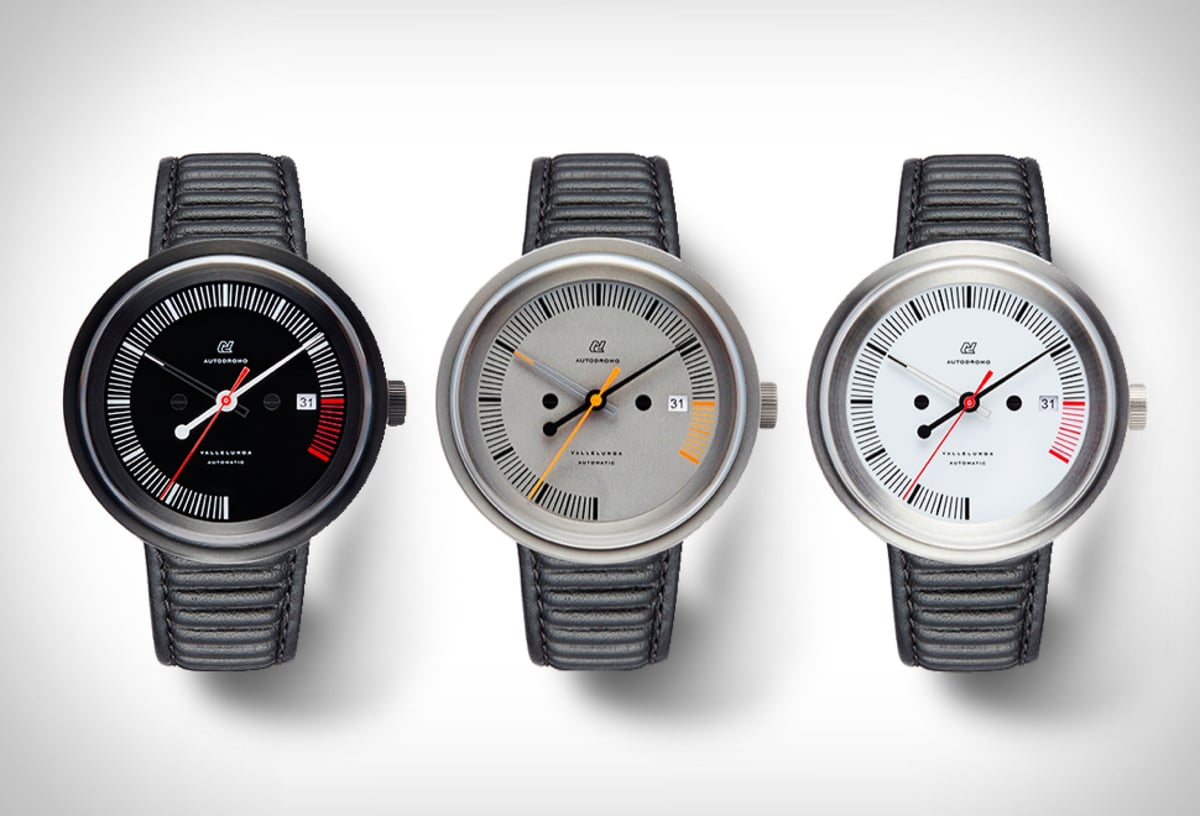
Autodromo Prototipo Chronograph: A Racer's Take
Dissecting the Mecha-Quartz Marvel's Market Performance & Collectibility for the Discerning Young Collector.
In the hyper-accelerated world of horological acquisitions, discerning the true value proposition often requires looking beyond the obvious Swiss powerhouses. Enter Autodromo, a brand that has carved a formidable niche by channeling the visceral thrill of mid-century motorsport into wrist-bound art. The Prototipo Chronograph, a discontinued fan favorite, stands as a prime example of their aesthetic prowess and market savvy.
For the Vivir.com readership—those sophisticated young collectors who understand that a watch is as much an asset as it is an accessory—the Prototipo demands a closer look. Is this mecha-quartz marvel merely a stylish nod to racing's golden age, or does it possess the underlying market dynamics to warrant a spot in a diversified portfolio? Let's peel back the layers of its vintage charm and assess its true investment potential.
The Genesis of Autodromo: A Niche Carved with Precision
Founded in 2011 by industrial designer Bradley Price, Autodromo emerged from a passion for classic automobiles and mid-century design. Unlike many microbrands that cast a wide net, Autodromo sharpened its focus, dedicating itself entirely to crafting timepieces inspired by the golden age of motoring. This singular vision has been instrumental in building a loyal following and establishing a distinct brand identity. Their commitment to detail, from the typography on the dials to the construction of the cases, speaks volumes about their dedication to authenticity. The brand’s relatively young age belies its impact; it quickly ascended to cult status among automotive enthusiasts and watch collectors alike, proving that a compelling narrative and impeccable execution can transcend decades of heritage.
Design & Aesthetics: A Masterclass in Mid-Century Motorsport
The Autodromo Prototipo isn't just a watch; it's a time machine, transporting the wearer directly to the pit lanes of Le Mans or the Targa Florio in the 1960s. Its design language is a direct homage to the iconic chronographs worn by racing legends, drawing inspiration from the likes of Heuer Carrera, Universal Geneve Compax, and the early Rolex Daytona. The 40mm stainless steel case, while contemporary in size, features a sleek, almost cushion-shaped profile that feels distinctly vintage. The brushed and polished finishes are executed with a precision that belies its price point, showcasing a level of attention to detail often reserved for watches several tiers above.
The dial is where the Prototipo truly shines. Available in several captivating configurations, including the highly coveted 'Panda' (white dial, black subdials) and 'Reverse Panda' (black dial, white subdials), each variant meticulously recreates the high-contrast legibility essential for a racing chronograph. The recessed, circular-grained subdials for the 60-minute counter and 24-hour indicator (the running seconds subdial at 6 o'clock is often omitted for a cleaner look, or included in later iterations depending on the VK63 module) add depth and visual interest. The applied indices, often filled with Super-LumiNova, provide excellent low-light visibility, while the slender hands maintain a period-correct aesthetic. The domed K1 mineral crystal, while not sapphire, contributes significantly to the vintage feel, distorting the dial at extreme angles in a charming, nostalgic way that sapphire simply cannot replicate. The pushers, reminiscent of pump pushers found on vintage mechanical chronographs, offer a satisfyingly crisp action, a testament to the underlying mecha-quartz movement.
Movement Analysis: The Seiko VK63 Mecha-Quartz Advantage
At the heart of the Autodromo Prototipo beats the Seiko VK63 Mecha-Quartz movement. For the uninitiated, this isn't your grandfather's basic quartz. This innovative hybrid bridges the gap between traditional mechanical chronographs and modern quartz efficiency. The timekeeping functions are regulated by a quartz crystal, ensuring superb accuracy and minimal maintenance. However, the chronograph complication itself is driven by a mechanical module. This ingenious setup delivers the best of both worlds: the reliability and precision of quartz for telling time, combined with the satisfying, tactile experience of a mechanical chronograph.
What does this mean for the collector? Firstly, the chronograph pushers offer a crisp, definitive click, far removed from the mushy feel of typical quartz chronographs. More importantly, the chronograph seconds hand sweeps smoothly at 5 beats per second (equivalent to a 36,000 vph mechanical movement), rather than ticking once per second. Upon resetting, the hands snap back to zero instantly, just like a high-end mechanical flyback chronograph. This mechanical element is a crucial differentiator and a significant value add, especially at the Prototipo's price point. It allows Autodromo to offer a compelling vintage chronograph experience without the inherent cost, complexity, and servicing expense of a fully mechanical movement. For those who appreciate the aesthetic and function of a chronograph but prioritize accuracy and convenience, the VK63 is a revelation.
On the Wrist: Ergonomics Meet Elegance
The Prototipo's wearability is a significant selling point, particularly for those with a diverse collection or who appreciate understated comfort. The 40mm case diameter hits a sweet spot for most wrists, providing ample presence without overwhelming smaller frames. Its svelte 11.5mm thickness allows it to slip effortlessly under shirt cuffs, making it surprisingly versatile for both casual and more semi-formal settings. The 48mm lug-to-lug distance ensures the watch conforms beautifully to the wrist's curvature, preventing any awkward overhang – a common issue with many chronographs. The integrated lug design, a subtle nod to vintage racing watches, also contributes to this streamlined profile.
Paired with Autodromo's signature perforated leather racing straps, the Prototipo feels secure yet supple. The strap itself is often a point of praise, designed not just for aesthetics but for comfort during prolonged wear. While it might lack the substantial heft of a full stainless steel bracelet, its lightweight nature adds to its all-day comfort, making it an ideal companion for road trips, weekend drives, or simply navigating the daily grind. The overall impression is one of thoughtful design and ergonomic excellence, a watch that feels right at home on the wrist of a vintage car enthusiast or a young professional on the go.
Performance & Practicality: Beyond the Track
While primarily a style statement, the Autodromo Prototipo doesn't skimp on practical performance. The inherent accuracy of the Seiko VK63 mecha-quartz movement means reliable timekeeping, typically within +/- 15 seconds per month. This level of precision ensures you're never late for that crucial board meeting or that exclusive track day. The Super-LumiNova on the hands and indices provides adequate legibility in low-light conditions, though it's not designed for deep-sea exploration. With a water resistance rating of 50 meters, the Prototipo is perfectly capable of handling splashes, rain, and incidental contact with water, but it's not intended for swimming or diving. This aligns with its intended purpose as a racing-inspired daily wear rather than a hardcore sports watch. Its robustness for everyday scenarios is more than sufficient, making it a dependable companion without demanding excessive caution from its owner.
Market Analysis & Investment Profile: The Discontinued Advantage
For the Vivir.com readership, the ultimate question often boils down to market performance. The Autodromo Prototipo, having been discontinued, now exists purely in the secondary market, which is where its true investment narrative unfolds. When new, the Prototipo retailed for approximately $625-$675 USD, an attractive entry point for such a design-forward piece with a unique movement.
In the current pre-owned market, prices for a well-maintained Prototipo typically range from $450 to $800 USD, depending heavily on condition, specific dial variant (Panda and Reverse Panda often fetch a slight premium), and completeness of the original box and papers. While this isn't a watch that will see meteoric appreciation akin to a Daytona, its value trend has remained remarkably stable. The discontinuation has, if anything, solidified its status as a desirable collector's item within its niche.
For the astute collector, this stability presents a compelling 'hold' recommendation. It's not a 'flip' candidate for quick profits, but rather a piece that retains its value well, offering strong liquidity should you ever decide to divest. Its niche appeal and distinctive design ensure a consistent demand among enthusiasts of automotive horology. As Autodromo continues to grow its brand presence and cultivate its legacy, early, iconic models like the Prototipo are likely to be viewed with increasing reverence. It's an excellent entry point into collecting watches with a strong aesthetic identity and a story to tell, without the exorbitant entry costs of more established brands. Consider it a tasteful, low-risk addition to a diversified collection, a piece that offers immense enjoyment and a solid hedge against rapid depreciation.
Reference Variants & Collectibility: Chasing the Panda
The Autodromo Prototipo was released in several compelling colorways, each contributing to its overall collectibility. The most sought-after variants are undoubtedly the classic 'Panda' (white dial with black subdials) and 'Reverse Panda' (black dial with white subdials), which directly echo the most iconic vintage racing chronographs. These versions tend to command the higher end of the pre-owned price spectrum due to their timeless appeal and visual impact.
Other notable variants included a vibrant blue dial, often paired with silver or white subdials, offering a slightly more contemporary yet still period-correct aesthetic. A limited-edition orange dial variant was also released, which, due to its scarcity and bold character, has become a true collector's piece, often seen at the absolute peak of the Prototipo's secondary market value. For those looking to invest, targeting the Panda or Reverse Panda offers the most robust resale potential, while the orange variant is for the dedicated enthusiast willing to pay a premium for rarity. Collecting all the primary variants could form a fascinating sub-collection, showcasing Autodromo's design versatility within a singular model line.
Alternatives & Competitors: Where Does it Stand?
When considering the Autodromo Prototipo, it's essential to understand its position relative to other watches in the market. In the realm of vintage-inspired racing chronographs, direct competitors can range significantly in price and movement type.
- Higher-End Mechanical Alternatives: If budget permits, watches like the Heuer Carrera Re-Editions or even certain Zenith El Primero models offer a similar aesthetic with high-end mechanical movements, but at a significantly greater investment. These are for the collector who demands mechanical purism and has the capital to back it.
- Microbrand Mecha-Quartz Competitors: Brands like Dan Henry with their 1964 Gran Turismo Chronograph or Nezumi Studios with the Corbeau Chronograph offer very similar mecha-quartz experiences and vintage aesthetics at comparable price points. These are strong alternatives for someone specifically seeking the mecha-quartz value proposition.
- Budget-Friendly Homages: For those on a tighter budget, brands like Pagani Design with their PD-1644 or other generic homages provide a similar visual style, often with a Seiko VK63 movement, but with a noticeable drop in overall build quality, finishing, and brand cachet. While they mimic the look, they rarely capture the soul or the meticulous attention to detail that defines Autodromo.
The Prototipo carves out a compelling middle ground: it offers a premium microbrand experience with exceptional design and a desirable hybrid movement, significantly outperforming true budget options while remaining far more accessible than luxury mechanical counterparts. It's a smart play for the collector who values design integrity and smart engineering over brand snobbery or pure mechanical purism.
Servicing & Longevity: A Practical Choice
One of the often-overlooked advantages of the Autodromo Prototipo's Seiko VK63 movement is its ease and affordability of service. Unlike complex mechanical chronographs that require specialized tools and highly skilled watchmakers, leading to service costs that can often exceed the watch's original price, the VK63 is a workhorse. Its quartz base means fewer moving parts and less wear. When service is eventually needed—typically every 7-10 years, if at all, beyond battery changes—it's a straightforward process. A battery replacement, which might be needed every 2-3 years, is a simple, inexpensive task.
Should the mechanical chronograph module ever require attention, any competent independent watchmaker can handle it. Parts are readily available and affordable, contributing to a much lower cost of ownership over the long term compared to a mechanical counterpart. This practical aspect makes the Prototipo an excellent choice for a daily wearer or a piece that can be enjoyed without the lingering worry of prohibitive maintenance costs, a key consideration for any long-term hold in a collection.
Pros & Cons: A Balanced View for the Vivir Investor
Pros:
- Exceptional Vintage Racing Aesthetic: Unparalleled design for its price point, capturing the essence of 1960s motorsport chronographs.
- Reliable and Accurate Seiko VK63 Mecha-Quartz Movement: Offers the best of both worlds – quartz accuracy for timekeeping and mechanical feel for the chronograph.
- Comfortable and Ergonomic Wearability: Perfectly sized at 40mm, with a slim profile and well-integrated lugs for all-day comfort.
- Strong Secondary Market Demand for a Microbrand: Discontinued status bolsters its collectible appeal and value retention.
- Excellent Value for Design and Build Quality: Punches above its weight in terms of finishing and overall execution.
Cons:
- Mineral Crystal Instead of Sapphire: While contributing to the vintage aesthetic, it's more prone to scratching than sapphire.
- Limited Water Resistance (50m): Not suitable for swimming or extensive water activities.
- Discontinued: While good for collectibility, finding pristine examples can be challenging.
- Not a Mechanical Movement (for Purists): Some collectors will always prefer a fully mechanical heart, regardless of performance.
Final Verdict: A Smart Play in the Discerning Collector's Game
The Autodromo Prototipo Chronograph is more than just a stylish accessory; it's a meticulously designed homage to a bygone era of motorsport, offering robust performance and undeniable charisma. For the discerning collector, its discontinued status and consistent pre-owned value make it a compelling acquisition, especially for those seeking to diversify into the burgeoning microbrand segment with a proven track record. It's a smart, stylish play for anyone who appreciates thoughtful design and solid execution without succumbing to hype-driven premiums.