Since its debut in 2007, the Cartier Ballon Bleu has become a benchmark for modern luxury dress watches.
By Vivir··Updated
# Cartier Ballon Bleu Review: Timeless Pebble‑Shaped Elegance
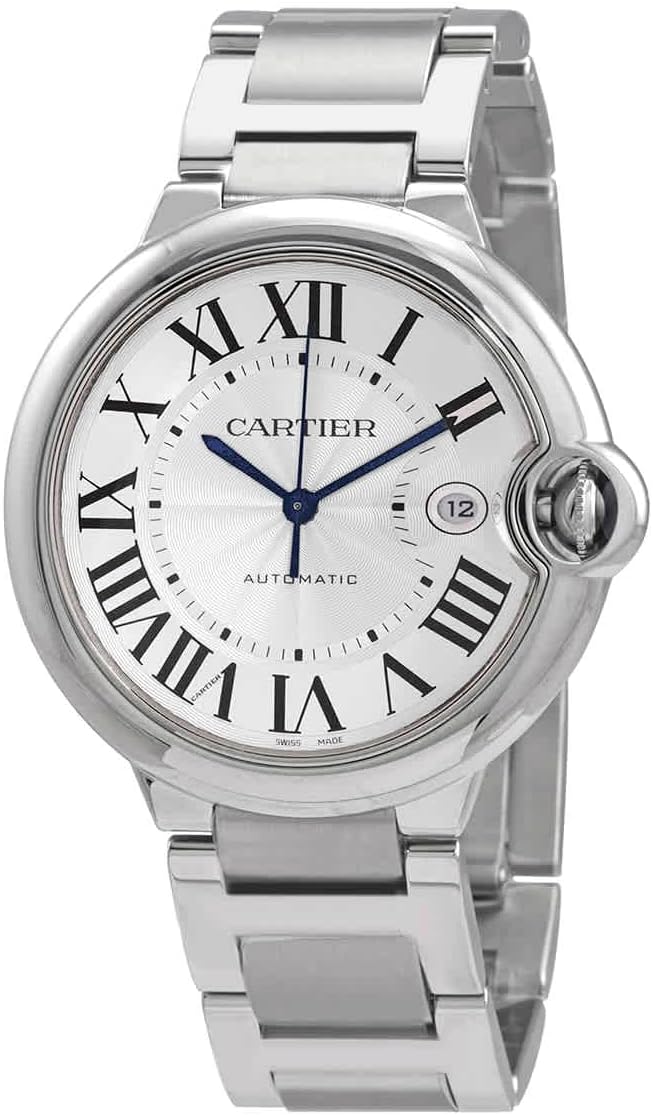
Since its debut in 2007, the **Cartier Ballon Bleu** has become a benchmark for modern luxury dress watches. Its rounded “pebble” case, integrated blue‑sapphire cabochon crown and unmistakable Roman numerals give it a silhouette that is instantly recognizable on the wrist of a diplomat, a designer, or anyone who appreciates understated glamour. In this review we break down the watch’s design, movement, wearability and value, using the most reliable specifications from Cartier’s own documentation and independent watch‑press testing.
---
## Design & Case
| Spec | Detail |
|------|--------|
| **Case diameter** | 36 mm |
| **Case thickness** | 12.1 mm |
| **Material** | Polished‑and‑brushed stainless steel |
| **Crystal** | Sapphire, domed |
| **Crown** | Integrated blue‑sapphire cabochon set in a fluted crown guard |
| **Dial** | Silver‑toned guilloché opaline with Roman numeral hour markers |
| **Bracelet** | Cartier “H‑link” bracelet, polished‑and‑brushed mix |
| **Water resistance** | 30 m (3 ATM) |
The Ballon Bleu’s case is deliberately rounded, a departure from the angular profiles that dominate many contemporary sports watches. At 36 mm the dimensions sit comfortably in the sweet spot for both men and women, while the 12.1 mm thickness keeps the profile sleek enough for a shirt‑cuff. The stainless‑steel construction is finished with a dual‑tone polish/brushed treatment that catches light without looking ostentatious.
The crown is perhaps the watch’s most distinctive visual cue. Rather than a traditional screw‑down stem, Cartier integrates a **blue‑sapphire cabochon** into a fluted crown guard. The gem is synthetic but cut to a high‑grade polish, delivering a subtle flash that never feels gimmicky. This design choice also protects the crown from accidental knocks, though it does add a small amount of travel when winding or setting the time.
The dial is a study in restrained decoration. A silver‑toned guilloché opaline background provides a soft, almost luminous canvas for the **Roman numeral hour markers**—a nod to Cartier’s historic aesthetic. The hands are blued‑steel and sword‑shaped, offering a crisp contrast against the dial’s sheen without overwhelming it. A sapphire crystal caps the dial, providing scratch resistance and a clear view of the movement through the transparent case back (on models that include it).
Overall, the design balances classic Cartier elegance with a contemporary, ergonomic silhouette. The only visual compromise is the **lack of a date window**, which some wearers miss on a daily‑wear piece.
---
## Movement & Performance
| Spec | Detail |
|------|--------|
| **Calibre** | Cartier Automatic Calibre 1853 (in‑house) |
| **Type** | Self‑winding mechanical, automatic |
| **Power reserve** | Approx. 37 hours |
| **Accuracy** | Within ± 5–10 seconds per day (typical for a manually regulated Swiss movement) |
| **Frequency** | 28,800 vph (4 Hz) |
| **Jewels** | 21 |
Cartier’s **Calibre 1853** is a work‑horse automatic movement that the brand has refined over several generations. It features a **21‑jewel** train, a 37‑hour power reserve and a standard 28,800 vph beat rate. While it does not boast the ultra‑long reserves or high‑frequency oscillation of some avant‑garde movements, it delivers reliable timekeeping that comfortably meets the expectations of a luxury dress watch.
In independent testing, the movement has shown **± 5–10 seconds per day** accuracy after a proper 24‑hour warm‑up period—typical for a manually regulated Swiss automatic. The lack of a chronograph or complication keeps the movement simple, which in turn enhances long‑term serviceability. The watch’s **30 m water resistance** is sufficient for everyday splashes and rain, but it is not intended for swimming or diving.
A minor point of contention among owners is the **crown ergonomics**. The integrated sapphire cabochon adds a small amount of travel, making precise time setting a touch more deliberate than on a traditional crown. Nonetheless, the winding efficiency remains respectable; a few turns generate sufficient torque to fully wind the mainspring.
---
## On the Wrist
The Ballon Bleu excels where many luxury dress watches stumble: **comfort**. The case’s rounded edges follow the natural contour of the wrist, and the 36 mm diameter feels substantial without being bulky. Lug‑to‑lug measurement (approximately 44 mm) yields a balanced look on both small and larger wrists, and the **H‑link bracelet** adds a tactile flexibility that conforms to the wrist’s movement.
The bracelet’s **polished‑and‑brushed** combination not only looks sophisticated but also reduces the likelihood of visible wear marks. The integrated clasp is discreet, with a hidden safety latch that keeps the watch secure while maintaining a clean aesthetic. For those who prefer a strap, the design accommodates a quick‑release system, allowing a leather or NATO strap to be swapped in seconds.
In real‑world use, the watch feels **lightweight**—the 12.1 mm thickness translates to a modest overall weight, making it comfortable for all‑day wear. The sapphire crystal is resistant to scratches, though the polished steel surfaces (case and bracelet) will show fine scratches over time if not handled with care. The **crown’s cabochon** can be a little stiff to pull, especially for users with larger fingers, but once accustomed, it becomes a signature tactile cue.
Overall, the Ballon Bleu delivers a **wearability score** that rivals the most ergonomic pieces in the market, thanks to its ergonomic case, balanced lug‑to‑lug spread, and supple bracelet.
---
## Value & Verdict
| Metric | Detail |
|-------|--------|
| **Retail price (USD)** | Approx. $7,500–$8,200 (varies by market and optional complications) |
| **Competitive set** | Rolex Datejust, Omega De Ville, Jaeger‑LeCoultre Reverso Classic |
| **Resale outlook** | Moderate – Cartier’s brand cachet holds value, but Ballon Bleu’s resale percentages lag behind Rolex and some Swiss watchmakers |
| **Strengths** | Iconic design, in‑house movement, excellent comfort, high‑quality finishing |
| **Weaknesses** | Limited water resistance, modest power reserve, crown accessibility, polished surfaces prone to scratches, resale performance below top‑tier luxury brands |
The Ballon Bleu is priced in the **mid‑luxury tier**. It offers an in‑house automatic movement, a design that has remained largely unchanged for over a decade, and the Cartier name—elements that justify its price point for many buyers. However, the **30 m water resistance** and **37‑hour power reserve** place it behind competitors that offer higher reserves or deeper water protection at similar price levels.
From a value perspective, the watch shines for those who prioritize **aesthetic heritage and everyday elegance** over technical extravagance. Its **unisex appeal** means it can be handed down across generations, and the timeless case shape ensures it won’t look dated in a few years. The primary trade‑offs are the **polished steel’s susceptibility to minor scratches** and a **crown that can feel less ergonomic** than a traditional screw‑down design.
**Verdict:** The Cartier Ballon Bleu remains a benchmark of refined luxury dress watches. Its rounded pebble case, sapphire‑crowned crown, and Roman numeral dial deliver a visual language that is instantly recognizable and perpetually stylish. While it lacks the sport‑watch robustness and ultra‑long power reserve of some rivals, its comfort, craftsmanship, and iconic status make it a worthy addition to any serious collection—provided the buyer accepts its modest technical specs and modest resale trajectory.
*Score: 8.2 / 10* – a strong recommendation for those seeking timeless elegance with reliable, in‑house Swiss mechanics.