The Cultural Iconography of the Panthère
To understand the Cartier Panthère Métiers d’Art Tortue Enamel, one must first understand the woman who made the panther a legend: Jeanne Toussaint. Known as 'La Panthère,' Toussaint was Cartier’s Director of Fine Jewelry from 1933. She was a woman of fierce independence and impeccable taste, and it was under her reign that the panther moved from a mere pattern on a cigarette case to a three-dimensional symbol of feminine power. Today, that same spirit is captured on the dial of this Tortue, but with a level of technical sophistication that Toussaint herself would have marveled at.
In the modern context, the Panthère has become a symbol of the 'new' luxury collector. We see it on the wrists of creative directors, tech moguls, and the Hollywood elite. It represents a shift away from the bulky, over-engineered divers that dominated the 2010s toward something more refined, more artistic, and frankly, more interesting. The Tortue Enamel is the pinnacle of this shift.
The Tortue Shape: A Lesson in 1912 Geometry
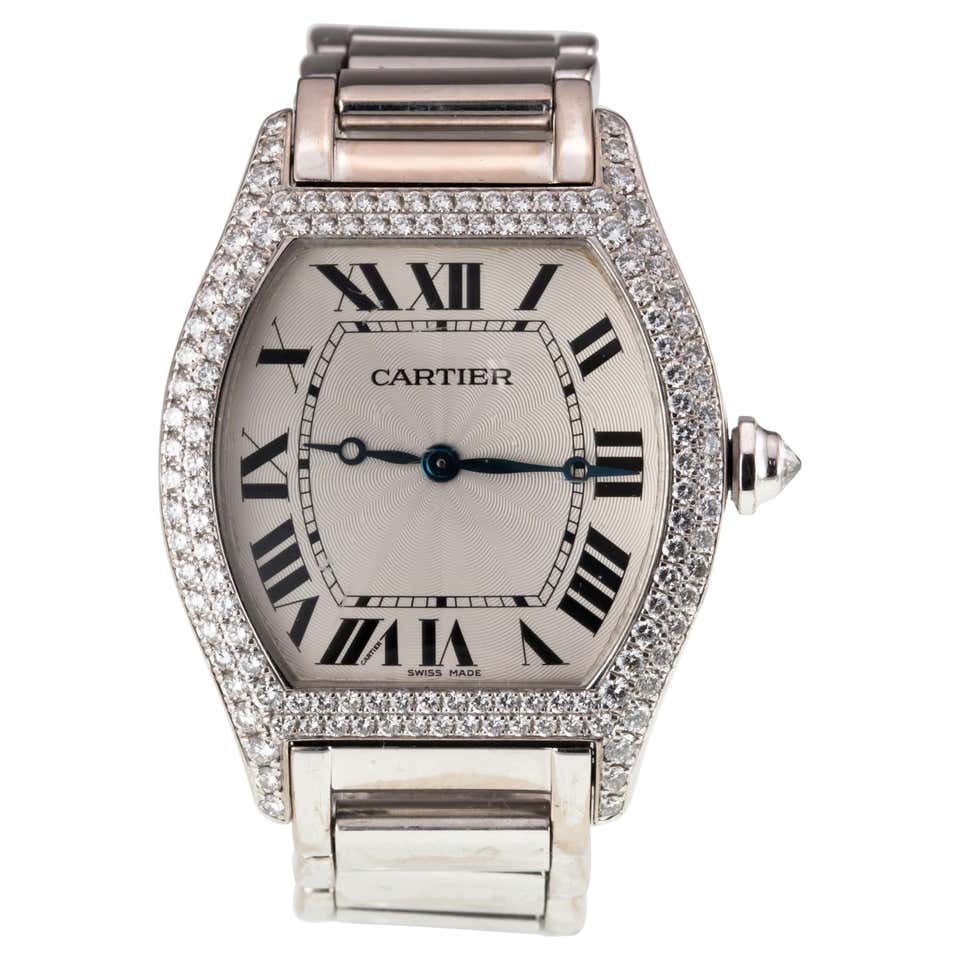
While the Tank often gets the lion's share of the glory, the Tortue is the true connoisseur’s Cartier. Introduced in 1912, it was Cartier’s second wristwatch design after the Santos. Its name, French for 'turtle,' refers to the shell-like silhouette of the case. In an era when round pocket watches were the norm, the Tortue was a radical departure. It wasn't just a square or a rectangle; it was a complex series of curves that required immense skill to manufacture.
In this Métiers d’Art version, the 18k white gold case serves as the perfect frame for the enamel work. The lugs are integrated seamlessly into the case body, creating a continuous flow that makes the watch feel organic. It’s a shape that looks vintage because it is, yet it feels contemporary because of its bold proportions and the way it interacts with light. For the young collector, the Tortue offers a level of 'if you know, you know' credibility that a standard Tank simply cannot match.
Champlevé Enamel: The Art of Fire and Gold
The star of the show here is the dial. The champlevé enamel technique is one of the most difficult to master in the world of horology. It begins with a solid gold base, into which a master engraver carves out cells or 'fields' (the 'champs' in champlevé) that will hold the enamel. These cells form the anatomy of the panther—the spots, the musculature, the piercing gaze.
Once the engraving is complete, the enameller fills these cavities with powdered glass. The dial is then fired in a kiln at temperatures exceeding 800 degrees Celsius. This process is repeated multiple times, as the enamel shrinks and changes color with each firing. One small mistake—a bubble in the glass, a slight variation in temperature—and the dial is ruined. The result is a dial with incredible depth and vibrance. The black enamel of the panther’s spots against the shimmering white gold background creates a high-contrast masterpiece that looks different from every angle. It’s not just a flat image; it’s a miniature sculpture protected by a sapphire crystal.
The Movement: Ultra-Thin Elegance
Powering this artistic marvel is the Caliber 430 MC. This is a manual-winding movement that Cartier has used in its most elegant 'Collection Privée' pieces for decades. Based on the Piaget 430P, it is one of the thinnest movements in the world, measuring just 2.1mm in height. This thinness is not just a flex of engineering; it is a functional necessity. To accommodate the thickness of the enamel layers on the dial without making the watch bulky, the movement must be as slim as possible.
Winding the 430 MC is a tactile delight. The resistance is smooth, and the click is refined. With a 36-hour power reserve, it encourages a daily ritual of engagement with the watch. While some might lament the lack of an automatic rotor, a manual wind is far more appropriate for a piece of this pedigree. It keeps the case profile slim and allows the owner to feel the mechanical heartbeat of the piece every time they prepare for an evening out.
Wrist Presence and Social Context
Wearing the Cartier Panthère Métiers d’Art Tortue Enamel is an experience in social magnetism. In a room full of steel Daytonas and Royal Oaks, this watch stands out like a Rothko in a room of prints. It signals that the wearer isn't just following a trend—they are participating in a tradition of high art. It’s a watch that pairs as well with a bespoke tux as it does with a high-end streetwear ensemble, provided the wearer has the confidence to pull it off.
The 34mm x 42.5mm dimensions might sound small on paper, but because of the Tortue’s 'all-dial' presence and the brilliance of the white gold, it wears much larger. It has a 'visual weight' that transcends its physical measurements. It’s a power move, plain and simple. It says you’ve moved past the need for utility and into the realm of pure aesthetic appreciation.
The Investment Landscape
From an investment standpoint, Cartier is currently in a 'Golden Age.' The market for rare, shaped, and artisanal Cartier watches has exploded over the last three years. Collectors are no longer just looking for 'new' watches; they are looking for 'special' watches. The Métiers d’Art pieces are produced in such small quantities—often numbered editions of 30, 50, or 100—that they rarely hit the secondary market. When they do, they are often snapped up by private collectors before they ever reach a public listing.
The Tortue Enamel is particularly desirable because it combines three of the most sought-after Cartier attributes: the Tortue case, the Panthère motif, and the enamel craftsmanship. For a young collector with the capital to enter this level of the market, this watch represents a stable, and likely appreciating, asset. It is a piece of 'blue chip' horology that will always have a place in the world’s most prestigious collections.
Final Thoughts
The Cartier Panthère Métiers d’Art Tortue Enamel is a triumph. It is a reminder that at its best, horology is not just about keeping time; it is about capturing a moment, a mood, and a legacy. Cartier has managed to take a design from 1912 and a motif from 1933 and make them feel like the most avant-garde thing you could wear in 2024. It is sharp, it is culture-forward, and it is, quite simply, a masterpiece. If you have the means, there is no better way to signal your arrival in the world of serious watch collecting.