The Drop That Broke the Internet (Quietly)
When Cartier drops a new Privé model, the watch world doesn’t buzz—it murmurs. That’s because the Privé collection isn’t for the masses. It’s for the 200 people who get the call before the email even goes out. The Tortue, released in 2023, was no exception. Within hours of its unveiling, allocation lists were closed, and the secondary market began its inevitable markup. This is the new normal for Cartier’s most rarefied line, and the Tortue is its latest, most compelling chapter.
A Shape Born in 1912
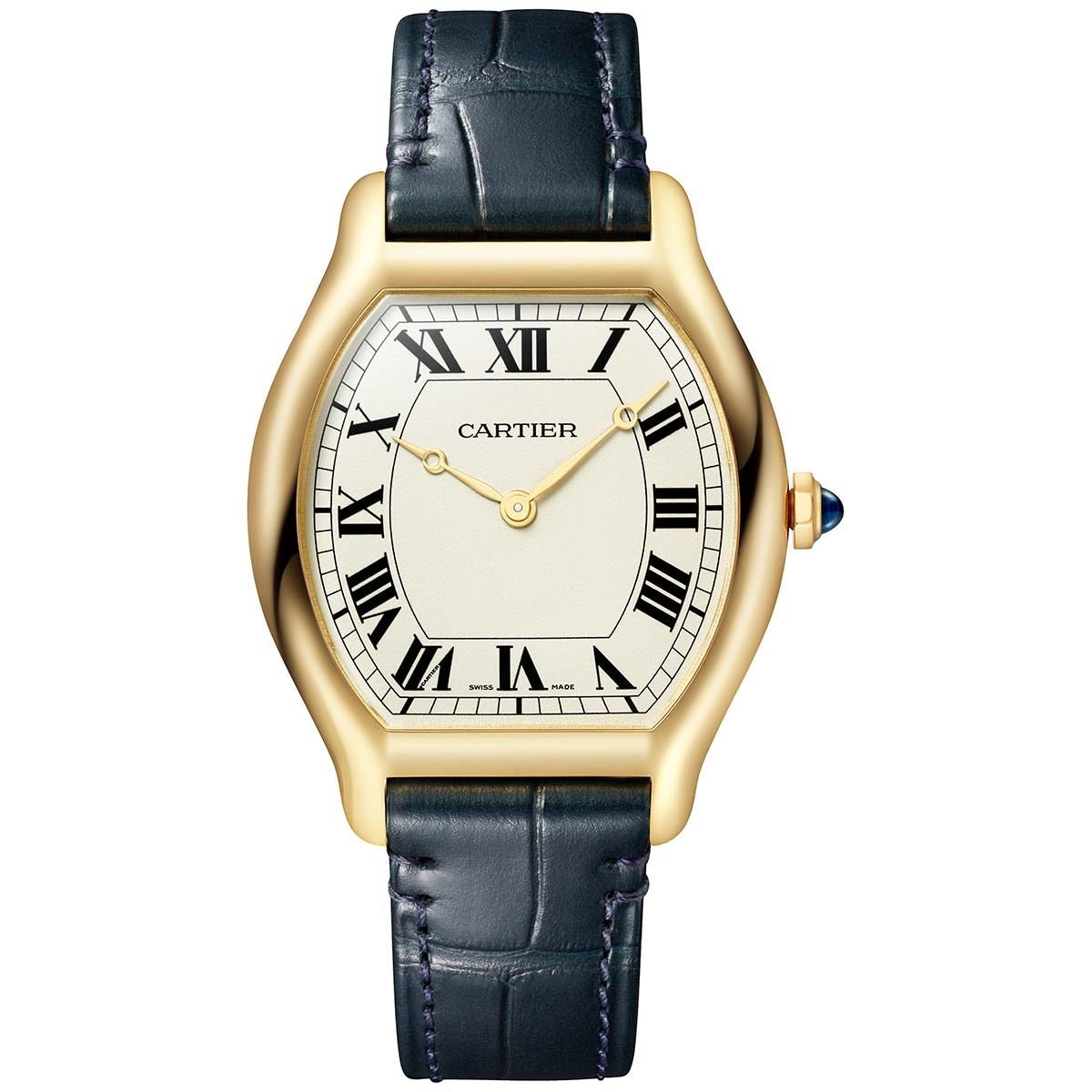
Louis Cartier had a thing for geometry. The Santos was a square with a mission; the Tank was a rectangle with a purpose. The Tortue, however, was something else entirely—a shape that defied easy categorization. Part circle, part tonneau, it was named after the tortoise, a creature that carries its home on its back. The watch, too, feels self-contained, a perfect little world on the wrist. The 2023 Privé reissue stays remarkably faithful to the original, right down to the Roman numerals, the chemin de fer minute track, and the blued sword hands. But it’s been refined for modern tastes: the case is slightly larger, the movement is visible through a sapphire back, and the finishing is, frankly, obsessive.
The Movement: Thin Is In
Inside the time-only Tortue beats the Caliber 430 MC, a manual-wind movement based on the legendary Piaget 430P. At just 2.1mm thick, it allows the case to remain a svelte 7.2mm overall. That’s thinner than a stack of credit cards, and it makes the watch disappear under a cuff like a secret. The finishing is pure Cartier: Côtes de Genève, blued screws, and beveled edges that catch the light just so. It’s not an in-house caliber, but it’s one of the most respected ultra-thin movements in the industry, and it’s been a staple of Cartier’s high-end offerings for years. For those who need a bit more mechanical theater, the monopusher chronograph version packs the in-house Caliber 1928 MC, a column-wheel marvel that’s already being hailed as one of the best-looking chronograph movements on the market.
On the Wrist: The Art of Discretion
Wearing the Tortue is an exercise in restraint. It doesn’t announce itself; it reveals itself slowly. The curved caseback nestles against the wrist, and the elongated lugs create a sense of flow that makes the watch feel smaller than its 41.4mm lug-to-lug length suggests. On my 6.5-inch wrist, it was perfection—a sliver of gold that caught the eye only when I gestured. On larger wrists, it reads as a deliberate vintage choice, a nod to an era when watches were jewelry first and tools second. The alligator strap is supple and requires no break-in period, and the pin buckle is a refreshing change from bulky deployants. This is a watch you wear for you, not for Instagram.
Accuracy and Everyday Life
The 430 MC isn’t going to win any chronometry competitions, but it doesn’t need to. Over a week of wear, I observed a consistent +4 seconds per day, well within acceptable limits for a non-COSC movement. The lack of a date or seconds hand means you’re not obsessing over precision anyway. You wind it in the morning, set it to the minute, and forget about it. That’s the point.
Occasions: From Boardroom to Bar
The Tortue is, first and foremost, a dress watch. It belongs with a tuxedo at the opera or a crisp white shirt at a wedding. But Cartier has always blurred the lines between formal and casual, and the Tortue is no exception. I wore it with a linen suit, with a leather jacket, even with a hoodie and jeans—and it worked every time. It’s a chameleon, adapting to the wearer’s confidence. If you can pull off a Tank with a T-shirt, you can pull off a Tortue with anything.
The Variants: Choose Your Metal
Cartier offered the Tortue in two metals and two complications. The time-only model comes in yellow gold (ref. WGTA0110, limited to 200 pieces) and platinum (ref. WGTA0111, 150 pieces). The chronograph adds a monopusher and two subdials, in yellow gold (ref. WGTA0112, 200 pieces) and platinum (ref. WGTA0113, 150 pieces). The platinum models feature a subtle ruby cabochon on the crown, while the gold models have a sapphire. Dials are uniformly silvered opaline with black Roman numerals and blued hands. The chronograph adds a 30-minute counter at 3 o’clock and a running seconds at 9, perfectly balanced and never cluttered.
Family Ties: The Privé Dynasty
The Tortue doesn’t exist in a vacuum. It’s the latest in a line of Privé reissues that have become the most sought-after Cartiers on the market. The Tank Cintrée, with its elongated curves, set the template. The Tonneau, with its barrel-shaped case, cemented it. The Cloche, a bell-shaped oddity, proved that Cartier could sell anything if it was rare enough. And the Asymétrique, a twisted Tank, showed that the maison wasn’t afraid to get weird. The Tortue is the most balanced of the bunch—weird enough to be interesting, classic enough to be timeless.
What Else Is Out There?
If you’re considering a Tortue, you’re probably also looking at the Patek Philippe Gondolo, the Vacheron Constantin Historiques American 1921, or the Jaeger-LeCoultre Reverso. All are manual-wind, all are shaped, all are steeped in history. But the Tortue has a je ne sais quoi that the others lack—a sense of playfulness, a willingness to be jewelry without apology. It’s the watch you buy when you’ve already owned the Reverso and found it too serious.
The Homage Game
Shaped watches are having a moment, and microbrands are taking note. Furlan Marri’s Tonneau Sector offers a similar vintage vibe at a fraction of the price, with a manual-wind movement and sector dial. Baltic’s HMS 003 plays with tonneau shapes in a more casual, steel package. But these are homages in spirit only; nothing comes close to the Tortue’s level of finishing, heritage, or sheer presence. You’re not buying a look; you’re buying a piece of history.
Investment: The Quiet Appreciator
Cartier Privé models don’t depreciate. They can’t—there aren’t enough of them. The Tank Cintrée in platinum now trades for nearly double its retail price on the secondary market. The Tortue is following the same trajectory. Time-only models in yellow gold are already commanding $28,000-$32,000 pre-owned, while platinum chronographs are pushing $60,000. If you can get one at retail, you’re not just buying a watch; you’re making a down payment on a future auction record. Cartier’s auction presence has exploded in recent years, with Privé pieces leading the charge. A 2021 Phillips sale saw a platinum Cintrée hammer for over $40,000, and the Tortue is already appearing in catalogs with estimates that would make a Daytona blush.
Service and Maintenance
The 430 MC is a known quantity. Any watchmaker worth their loupe can service it, and parts are readily available. Cartier recommends a service every 5 years, which will run you around $600 at an independent or slightly more at the boutique. The chronograph’s 1928 MC is more complex, but Cartier’s service network is robust. Either way, you’re not looking at the multi-year wait times of some independent brands.
Pros and Cons
Let’s be real: the Tortue is not a practical watch. It has no lume, no date, and you can’t swim with it. It’s expensive for a time-only piece, and you’ll probably never see one in a store. But that’s not why you buy it. You buy it because it’s beautiful, because it’s rare, and because it makes you feel something every time you look at it. The pros—design, exclusivity, wearability, movement finishing—far outweigh the cons for the right buyer.
The Final Verdict
The Cartier Privé Tortue is a watch for the collector who has nothing left to prove. It’s not a status symbol; it’s a taste symbol. In a market obsessed with hype and scarcity, the Tortue is genuinely scarce and genuinely hyped—but only among the people who matter. If you have the chance to buy one, do it. If you don’t, start making friends at Cartier. This is the kind of watch that doesn’t come around often, and when it does, it disappears fast.