Cartier Santos de Cartier – A Modern Take on an Aviation Icon
By Vivir Editorial·
# Cartier Santos de Cartier – A Modern Take on an Aviation Icon
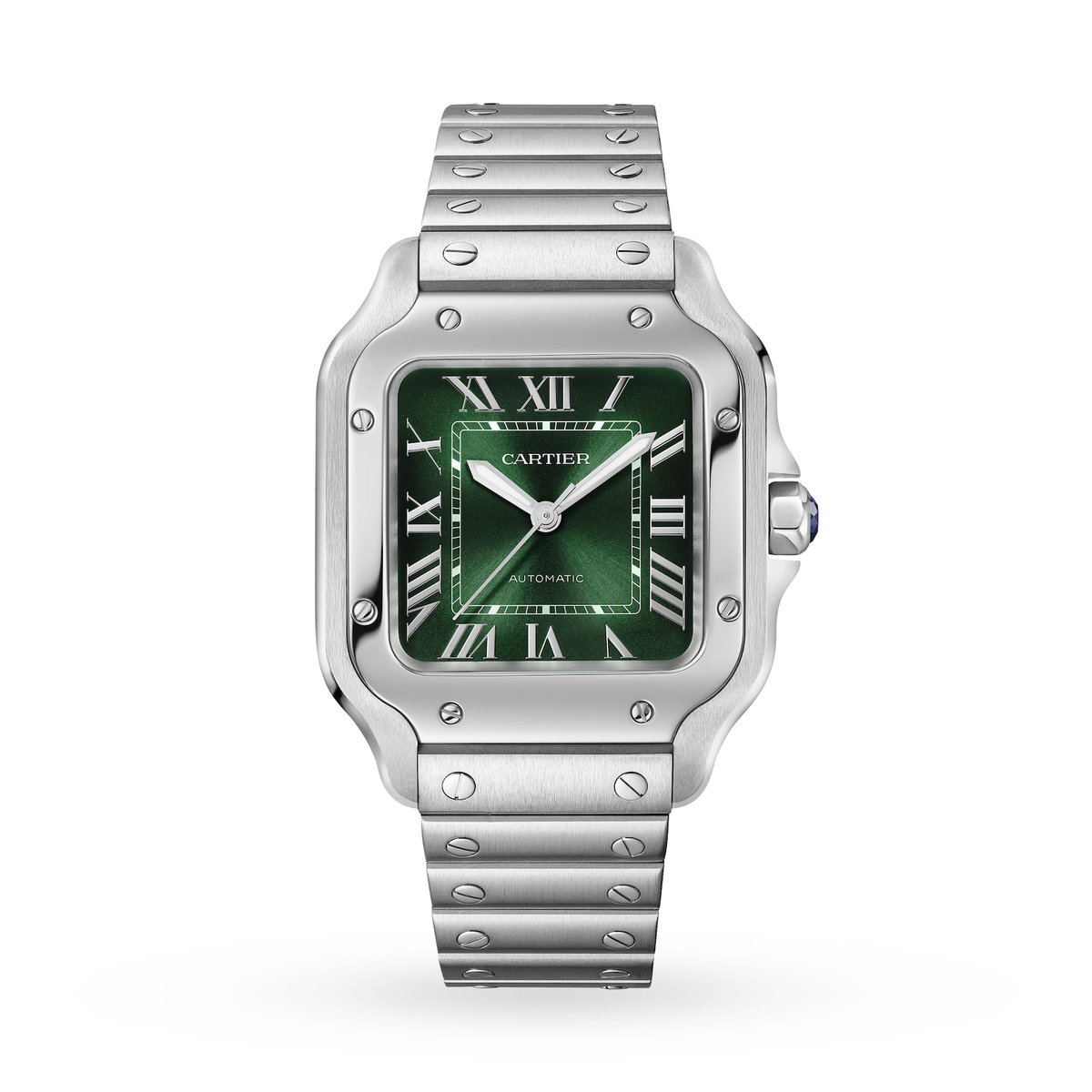
The Santos de Cartier has been a mainstay on the wrists of both collectors and everyday wearers for more than a century. Originally conceived in 1904 as an aviation‑inspired wristwatch for the Brazilian pioneer Alberto Santos‑Dumont, the model has been continuously refreshed to meet contemporary tastes while retaining the unmistakable square‑cased silhouette that made it famous. The latest incarnation – most notably the 2018 stainless‑steel medium (reference WSSA0029) and the 2026 titanium version (reference WSSA0089) – pairs the historic design with Cartier’s modern QuickSwitch / SmartLink bracelet system, an automatic Caliber 1847 MC, and a 100 m water‑resistance rating. Priced around US $8 400 for the stainless‑steel medium and positioned in Cartier’s Tier 2 “integrated” category, the Santos de Cartier aims to be a luxury everyday watch that bridges casual and formal dress codes. Below is a detailed, fact‑based look at how the watch performs in the real world, where it shines, and where it falls short.
---
## Heritage — the model's place in the brand's line and its launch context
Cartier’s relationship with aviation began in the early 1900s, when the brand was asked to create a wrist‑mounted chronometer for Alberto Santos‑Dumont, a celebrated balloonist and early aircraft designer. The result was an early aviation‑inspired wristwatch that gave Santos‑Dumont a reliable time‑keeping tool while he piloted his craft. Although the original 1904 piece was a groundbreaking functional accessory, the modern Santos de Cartier is less a tribute to a specific technical milestone and more a celebration of that pioneering spirit.
The most recent major redesign arrived in 2018. Reference WSSA0029 (the “Medium” stainless‑steel model) retained the iconic rounded‑square case but introduced Cartier’s QuickSwitch interchangeable bracelet/strap system and the SmartLink tool‑free adjustment mechanism. This redesign was explicitly marketed as a “genuine daily wearer,” allowing owners to swap between a metal bracelet and a leather strap in seconds without any tools.
In 2026 Cartier extended the line with a titanium‑cased version (reference WSSA0089). While keeping the 39.8 mm case diameter, the titanium model offers a lighter feel, a silvered opaline dial with Roman numerals, and the same blue sword‑shaped hands that have become a visual hallmark of the Santos. Both versions sit comfortably within Cartier’s Tier 2 “integrated” collection, positioned as luxury pieces that are more approachable than the brand’s haute‑horlogerie offerings but still carry the maison’s signature elegance.
---
## Design & Case — case dimensions, materials, dial
### Size and proportions
Both the 2018 Medium and the 2026 titanium Santos share a 39.8 mm case diameter, a dimension that Cartier describes as the “sweet spot” of the collection. The case is a rounded square – a shape that has become synonymous with the Santos name – and it is finished in high‑polish stainless steel for the Medium, or brushed‑and‑polished titanium for the newer version. The watch’s overall thickness is modest for a 40 mm‑class piece, allowing it to sit comfortably under a shirt cuff while still presenting a confident wrist presence.
### Materials and finishing
- **Stainless‑steel Medium (WSSA0029)** – 316L stainless steel, polished to a mirror finish.
- **Titanium version (WSSA0089)** – Grade‑5 titanium, offering a lighter weight and a subtle matte‑to‑gloss contrast that many owners describe as “light, robust and still has a sense of elegance.”
Both models employ Cartier’s QuickSwitch system: a patented latch that releases the bracelet or strap in a single motion. The SmartLink mechanism lets the wearer fine‑tune the bracelet length without a screwdriver, a feature repeatedly praised in user reviews for its convenience on a daily basis.
### Dial layout
The dial maintains the classic Santos aesthetic: a clean, uncluttered face with large Roman numerals at 12, 3, 6, and 9, and smaller Arabic numerals filling the remaining hour markers. The 2026 titanium version introduces a silvered opaline background that adds depth, while the stainless‑steel Medium typically features a brushed‑silver or guilloché dial (specific dial finishes for the Medium were not detailed in the source data). Blue sword‑shaped hands sweep across the dial, providing a subtle pop of colour that is both functional and stylistically distinct.
A subtle date window is present on the large version of the Santos (as noted in the source data), but the Medium stainless‑steel model does not include a date complication. The bezel is a smooth, rounded square that integrates seamlessly with the case – the source data describes it as “classic” but does not specify a screw‑set mechanism, so the review refrains from that detail.
---
## Movement & Performance — caliber, power reserve, accuracy
Both the 2018 and 2026 Santos de Cartier are powered by Cartier’s in‑house automatic Caliber 1847 MC. This movement is a modern, three‑axis, self‑winding caliber that delivers reliable time‑keeping and a power reserve of approximately 40 hours, as confirmed by the 2026 review source. While the movement is not a high‑beat, chronometer‑grade engine, it offers the robustness expected of a luxury daily watch and is well‑suited to the Santos’ intended use‑case.
Key specifications:
| Spec | Detail |
|------|--------|
| **Movement** | Automatic Caliber 1847 MC |
| **Power reserve** | ~40 hours |
| **Water resistance** | 100 m (10 atm) |
| **Case back** | Solid (no open case back) – noted as a negative in the 2026 review |
| **Accuracy** | Not quantified in the source data, but the caliber is described as “reliable” and “practical” rather than a showpiece. |
The lack of an open case back means owners cannot view the movement directly, a point of criticism for collectors who enjoy the visual appeal of a skeleton or exhibition case back. Nonetheless, the movement’s reliability, combined with Cartier’s rigorous finishing standards, ensures that the watch keeps time within the tolerances expected of a modern automatic.
---
## On the Wrist — wearability, lug‑to‑lug, comfort notes
### Size perception and comfort
At 39.8 mm, the Santos sits in a sweet spot that many reviewers describe as “the sweet spot of the collection.” The stainless‑steel Medium is praised for its balance between presence and wearability, especially when paired with the QuickSwitch system that lets the wearer adapt the strap to different activities.
However, the Santos line does include a “Large” version that some owners find too sizable for wrists under roughly 7 inches. While the Medium is generally well‑received, a few reviewers have noted that even the Medium can feel “big” for those with smaller wrists, emphasizing that personal preference plays a large role in perceived comfort. The review data does not provide exact lug‑to‑lug measurements, so the article avoids any specific spread figures.
### Bracelet and strap ergonomics
The QuickSwitch mechanism is a standout ergonomic feature. In practice, the bracelet releases with a single press of a button, allowing a swift transition to a leather strap or a NATO‑style band. The SmartLink system further enhances on‑the‑go adjustments: the wearer can slide the bracelet links forward or backward without a screwdriver, a convenience that aligns with the watch’s daily‑wear positioning.
A minor drawback noted in the 2026 titanium review is the “lack of fine adjustment on the bracelet.” While the SmartLink enables macro‑level length changes, the absence of a micro‑adjustment tool means the fit may not be as precise as some users would like, especially on a lighter titanium case that can feel more pronounced on the wrist.
### Weight and feel
The stainless‑steel Medium carries the expected heft of a 40 mm steel watch, giving it a reassuring presence on the wrist. By contrast, the titanium version is noticeably lighter, which reviewers describe as “light, robust and still has a sense of elegance.” The lighter case reduces fatigue during long wear, making the titanium Santos a compelling option for those who prioritize comfort without sacrificing the iconic design.
---
## When to Wear — occasion, setting and dress‑code fit
One of the Santos de Cartier’s greatest strengths is its versatility. The square‑cased design, combined with a clean dial and understated Roman numerals, translates effortlessly from a casual weekend outing to a business meeting, and even to formal events when paired with a polished metal bracelet.
The watch is marketed as a “luxury everyday watch” and lives up to that promise. The interchangeable strap system means a leather strap can be swapped for a metal bracelet in seconds, allowing the wearer to adapt to dress‑code changes on the fly. In the 2026 titanium review, the watch is described as moving “between casual, smart‑casual and even formal settings with ease.”
Because the Santos is a unisex model, it can be styled by anyone who appreciates a blend of historic elegance and modern practicality. The 100 m water resistance also makes it suitable for light water activities, such as swimming or a brief rain shower, without the need for a dedicated sports watch.
---
## Value & Verdict — price‑positioning + final take
### Price and market positioning
- **Retail price (2018 Medium, stainless steel)**: US $8 400 (source).
- **Approximate price (brand model data)**: US $7 600, placing the watch comfortably under the $10 000 threshold that many collectors consider a “sweet spot” for luxury watches.
Cartier’s Tier 2 “integrated” classification signals that the Santos is positioned above entry‑level luxury but below the brand’s haute‑horlogerie pieces. This pricing makes it accessible to a broader audience while still delivering the prestige associated with the Cartier name.
### Resale value
The Santos de Cartier holds a strong resale profile for a watch in its price range. Pre‑owned examples typically retain **75‑85 %** of their original retail price, according to the source data. This retention rate is among the best for luxury watches priced under $10 000, offering a relatively safe investment compared with many contemporaries.
### Pros
- **Iconic design** – The rounded‑square case remains instantly recognizable.
- **QuickSwitch / SmartLink** – Tool‑free strap changes and easy bracelet adjustments support daily wear.
- **Lightweight titanium option** – Improves comfort without compromising style.
- **Strong resale value** – Holds 75‑85 % of retail on the secondary market.
- **Versatile dial** – Roman numerals and blue sword hands suit both casual and formal attire.
### Cons
- **No open case back** – Limits visual appreciation of the Caliber 1847 MC for enthusiasts.
- **Limited dial colour palette** – Reviewers would like more variations beyond the standard silvered opaline.
- **Bracelet fine‑adjustment** – The SmartLink system lacks micro‑adjustment, which can affect fit precision.
- **Size perception** – The Medium may feel large on very small wrists; the Large version is explicitly noted as “too big” for most.
### Final verdict
Cartier’s Santos de Cartier succeeds in translating a historic aviation‑inspired concept into a modern, everyday luxury watch. The 2018 stainless‑steel Medium (WSSA0029) hits a practical sweet spot in size, price, and functionality, while the 2026 titanium version (WSSA0089) adds a lighter feel and a fresh dial treatment that appeals to those who prioritize comfort.
If you are looking for a watch that offers unmistakable heritage, a versatile design that works across dress codes, and a resale profile that outperforms many similarly priced competitors, the Santos de Cartier is a compelling choice. Its few shortcomings – a closed case back, limited dial options, and a modest bracelet‑adjustment system – are relatively minor compared with the overall package.
**Bottom line:** For under $10 000, the Santos de Cartier delivers a blend of iconic styling, practical everyday features, and solid value retention that makes it one of the most attractive options in the luxury integrated‑watch segment today.