The Design That Broke the Mold
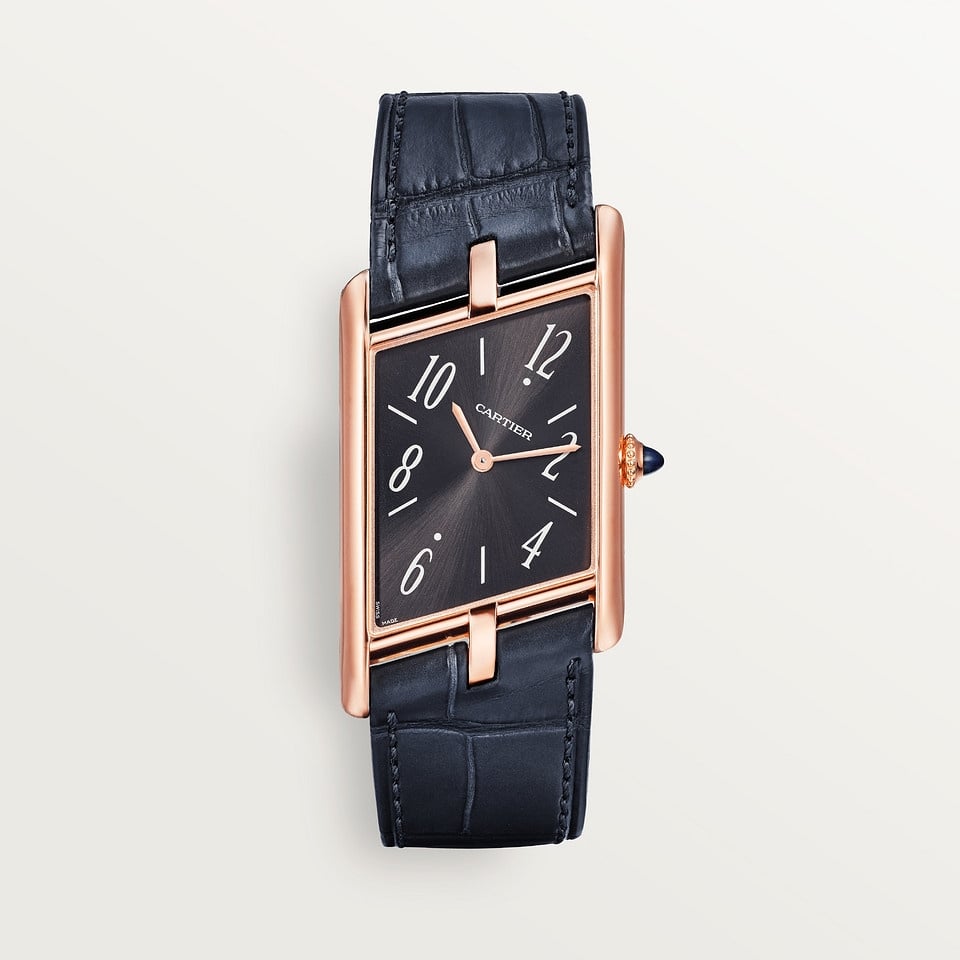
When Louis Cartier unveiled the Tank Asymétrique in 1936, he defied the horological establishment. The case is a parallelogram, with the dial and movement rotated 45 degrees to align with the wearer's natural reading angle. This radical departure from the symmetrical norm was not just a stylistic whim; it was a functional innovation that anticipated ergonomic design.
The ref. 2488 is a prime example of this architectural approach. The yellow gold case, with its sharp lines and geometric purity, is a work of art. The silvered dial features Roman numerals that follow the tilted axis, and the blued steel hands add a touch of classic Cartier elegance. The crown is set at the 4 o'clock position, further emphasizing the asymmetry.
Historical Significance
The Tank Asymétrique was produced in small numbers during the 1930s, making it one of Cartier's rarest Tank variations. It was designed for a clientele that appreciated the unconventional—artists, intellectuals, and royalty. This exclusivity has only grown over time, as surviving examples are few and far between.
For collectors, the ref. 2488 represents the pinnacle of Cartier's pre-war creativity. It is a bridge between the traditional Tank and the more experimental designs of the mid-century. Owning one is like holding a piece of design history that continues to influence contemporary watchmaking.
Market Performance and Investment Potential
The vintage Cartier market has seen a steady appreciation over the past decade, and the Tank Asymétrique is no exception. While exact auction records are scarce, comparable models have fetched between $20,000 and $40,000 at major houses. The trend is upward, driven by a growing appreciation for unconventional designs and the enduring allure of the Cartier brand.
For the investor, this watch is a long-term hold. Its rarity ensures that supply will never outpace demand. Unlike mass-produced modern pieces, the Tank Asymétrique is a finite asset. As younger collectors enter the market with a taste for the avant-garde, the desirability of this reference is set to climb.
Wearing the Asymétrique
Despite its small size—typically under 30mm in width—the Tank Asymétrique wears with surprising presence. The elongated shape and the distinctive dial draw the eye, making it a statement piece even in a room full of oversized sports watches. The leather strap and pin buckle keep it classic, while the gold case adds a subtle warmth.
It's a dress watch at heart, but its uniqueness allows it to be worn casually. Pair it with a tailored suit for maximum effect, or with a simple t-shirt to let the design speak for itself. The comfort is excellent; the case hugs the wrist and the light weight means you'll forget it's there—until you glance at the time and smile at the quirkiness.
Accuracy and Maintenance
As a vintage manual wind, the movement requires regular winding and will not keep modern COSC standards. Expect a daily drift of ±30 seconds, which is acceptable for a piece of this age. A thorough service by a specialist can improve accuracy, but don't expect perfection.
Service intervals are typically every 5-7 years, and costs can range from $500 to $1,000 depending on the condition. The acrylic crystal is prone to scratches but can be easily polished. Water resistance is negligible—keep it away from moisture.
Final Thoughts
The Cartier Tank Asymétrique ref. 2488 is more than a watch; it's a piece of art that has stood the test of time. It offers a unique combination of style, history, and investment security. While the price is steep, the returns—both emotional and financial—are unmatched. If you can secure one, you're not just buying a timepiece; you're acquiring a legacy.