Chopard Happy Diamonds Review: Investment or Jewelry?
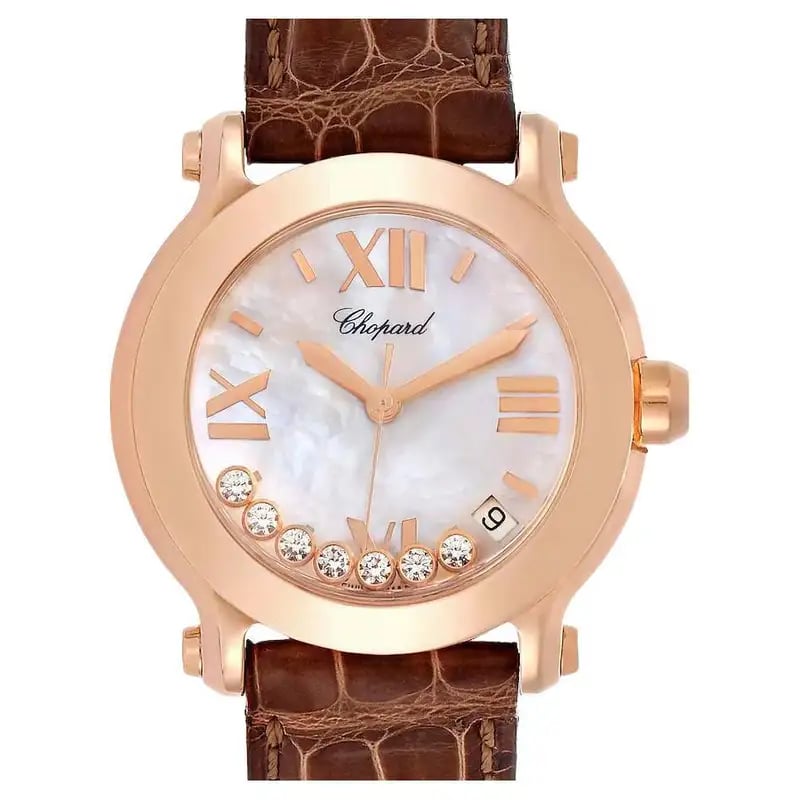
The Chopard Happy Diamonds is one of the most recognizable jewelry watches in the world. Since its debut in 1976, the concept of free-floating diamonds between two sapphire crystals has captivated buyers who want their timepiece to double as a conversation starter. But for the young collector with a portfolio mindset, the question isn't just about aesthetics – it's about resale value, hype cycles, and whether this watch holds its weight in a secondary market dominated by steel sports models.
In this review, we'll dissect the Happy Diamonds from a market-driven perspective. We'll look at the brand's heritage, the movement (spoiler: it's quartz), the wrist presence, and most importantly, the investment value. Is this a watch to flip, or a piece to hold for decades? Let's dive into the data.
For the trust-fund-baby crowd, the Happy Diamonds is often a first 'serious' watch – a gateway into horology that prioritizes sparkle over mechanics. But as the market shifts toward in-house movements and limited editions, the Happy Diamonds faces an identity crisis: is it a watch or a piece of jewelry? The answer affects its long-term value.
Manufacture History
Chopard was founded in 1860 by Louis-Ulysse Chopard in Sonvilier, Switzerland. The brand initially focused on precision pocket watches and chronometers. In 1963, the Scheufele family acquired Chopard and pivoted toward luxury jewelry and watchmaking. The Happy Diamonds concept was born in 1976, when designer Ronald Kurowski created a ring with free-floating diamonds. The idea was soon applied to watches, and the Happy Diamonds collection became an instant icon. Today, Chopard is one of the few family-owned luxury watch and jewelry houses, with a strong presence in both sectors.
Movement
The modern Happy Diamonds is powered by a quartz movement, typically the Chopard caliber 09.01-C. This is a basic Swiss quartz movement with a date complication. It is not COSC-certified, not in-house, and offers no horological interest. The battery lasts 2-3 years, and accuracy is excellent (+/-10 seconds per month). For the price point (MSRP around $8,000), the lack of a mechanical movement is a significant drawback for collectors. However, for the target audience – buyers who prioritize design over mechanics – it's a non-issue.
Specifications
- Case diameter: 36mm
- Case thickness: 10.5mm
- Lug-to-lug: 42mm
- Case material: Stainless steel
- Crystal: Sapphire
- Water resistance: 30m
- Lume: None
- Bracelet: Steel bracelet with folding clasp
Wrist Feel
The 36mm case is a classic women's size, but the Happy Diamonds wears larger due to the open, airy design. The bracelet is comfortable and well-articulated, though the clasp feels a bit flimsy for the price. The watch is light – around 80g – making it easy to wear all day. The floating diamonds create a subtle rattle and shimmer that draws attention without being obnoxious. On the wrist, it's more jewelry than tool, and the lack of lume or high water resistance means it's best suited for social occasions rather than active wear.
Accuracy
As a quartz watch, accuracy is excellent – within +/-10 seconds per month. The battery lasts 2-3 years, and replacement is straightforward at any jeweler. No winding or setting fuss, which appeals to the low-maintenance buyer.
Occasions
The Happy Diamonds is best suited for formal events, dinner parties, and daily wear in non-sporty settings. Its 30m water resistance means it can handle hand washing but not swimming. The lack of lume makes it less practical in low light.
Wrist Presence
4/5 – The floating diamonds and open dial create a unique, eye-catching effect. It's a statement piece that commands attention, especially in good lighting. However, the 36mm size may feel small on larger wrists, and the lack of lume limits its presence in low light.
Reference Variants
Common modern references include the 278573-3001 (silver dial), 278573-5001 (blue dial), and 278573-6001 (black dial). All feature the same floating diamond configuration and steel bracelet. Vintage references from the 1980s and 1990s often have smaller cases (28mm) and different dial designs.
Investment Value
The Happy Diamonds has a poor investment track record. MSRP is around $8,000, but pre-owned prices range from $3,000 to $6,000, representing a 40-50% depreciation. The trend is stable to depreciating, with no signs of appreciation. Auction history is minimal, with vintage pieces occasionally selling for $2,000-$4,000. For the trust-fund-baby buyer, this is a 'buy pre-owned and enjoy' watch, not a 'hold for profit' piece.
Service Interval
Battery replacement every 2-3 years is the only regular service. A full service at Chopard costs around $200-$300, but is rarely needed. Any competent jeweler can replace the battery for under $50.
Pros and Cons
Pros: Unique floating diamond design, light and comfortable, strong brand recognition, easy maintenance.
Cons: Quartz movement at luxury price, poor resale value, low water resistance, no lume.
Final Verdict
The Chopard Happy Diamonds is a beautiful piece of jewelry that happens to tell time. For the young collector focused on investment, it's a poor choice – the quartz movement and fashion-driven design ensure it will never appreciate. However, if you want a conversation-starting accessory and don't care about resale, it's a fun, iconic watch. Buy pre-owned, enjoy the sparkle, and don't expect to flip it for profit.