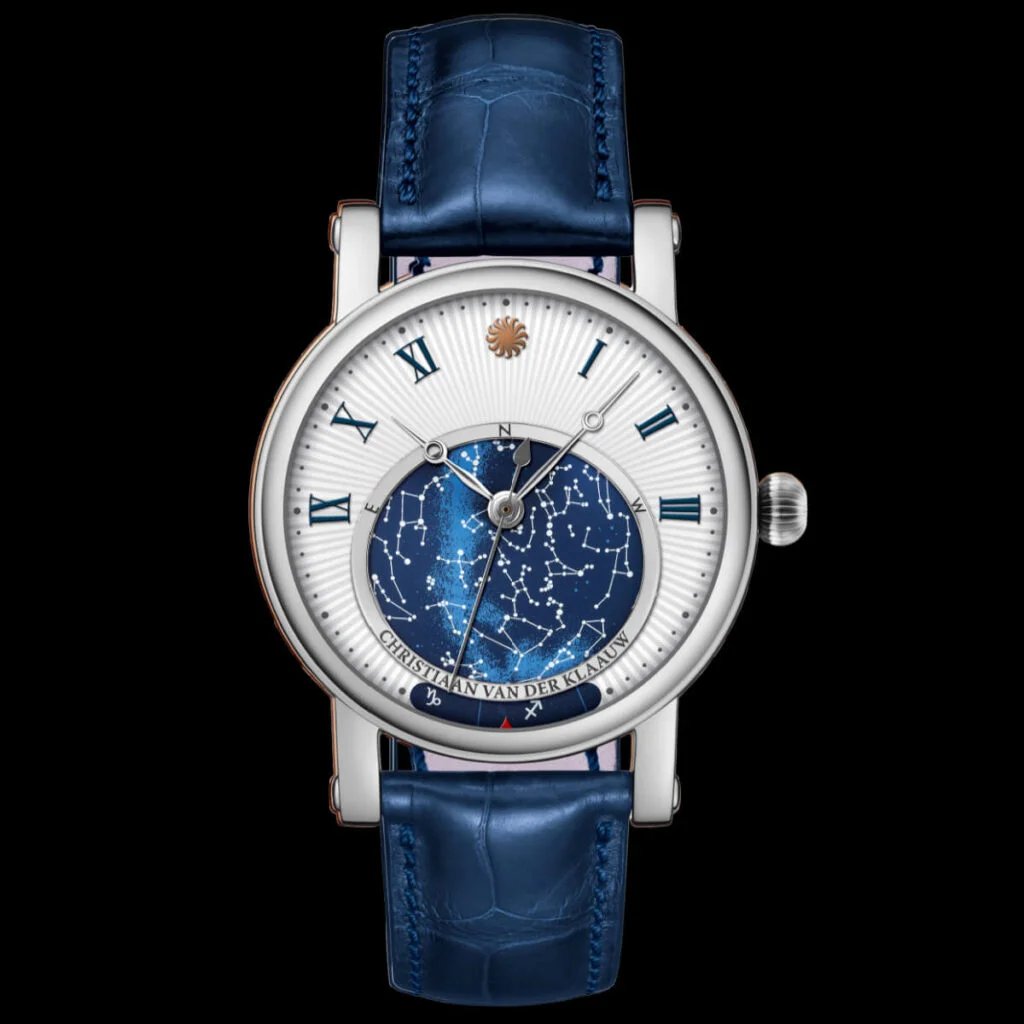
A Week on the Wrist: Christiaan van der Klaauw Orion
I have a confession: I am a sucker for a watch that tells a story. Not the kind that requires a decoder ring, but the kind that quietly reminds you of the cosmos every time you check the time. The Christiaan van der Klaauw Orion, reference CKOR3326, is exactly that kind of watch. It is a dress watch with a moonphase, a starry dial, and a Dutch independent spirit. I wore it for a full week—through meetings, dinners, a flight, and a weekend of errands—to see if it survives real life.
The Orion is not a sports watch. It is not a tool watch. It is a poetic object that happens to tell time. But that does not mean it cannot be a daily wearer. In fact, I found it surprisingly easy to live with. The case is stainless steel, the crystal is sapphire, and the strap is leather. Those are the basics. The magic is in the dial: a deep midnight blue with a scattering of stars and the Orion constellation rendered in gold. At six o'clock, a moonphase display adds a gentle astronomical complication. It is a watch that rewards a closer look.
In this review, I will cover everything that matters for a daily wearer: comfort, legibility, accuracy, and value. I will also place it in the context of the brand and its alternatives. If you are a young collector considering your first independent astronomical watch, the Orion deserves a spot on your shortlist.
Brand History: Christiaan van der Klaauw
Christiaan van der Klaauw founded his workshop in the Netherlands in 1974. He was a master watchmaker with a passion for astronomy, and he quickly became known for building some of the most complex astronomical watches in the world. The brand's Planetarium, Real Moon, and Venus models are modern marvels of mechanical engineering. The Orion is a more accessible entry into that universe. It carries the same DNA—the starry sky, the moonphase, the Dutch precision—but in a package that is easier to wear and easier to afford.
Today, the brand operates from Joure, in the Netherlands, and continues to produce limited numbers of hand-finished watches. The Orion is part of the current collection and represents the brand's commitment to astronomical complications at a more approachable level. If you are new to independent watchmaking, this is a gentle introduction.
The Case and Wearability
The Orion's case is stainless steel, and it is finished with a mix of polished and brushed surfaces. The lugs curve gently downward, which helps the watch hug the wrist. I have a 6.75-inch wrist, and the Orion sat comfortably without overhang or sliding around. The leather strap is supple and broke in quickly. The pin buckle is simple and secure, though I would not mind a deployant clasp for long-term strap preservation.
One of the first things I noticed was the balance. The watch is not top-heavy, and it does not feel like it is trying to be a sports watch. It slips under a cuff with ease. The crown is easy to grip and does not dig into the back of my hand. The case is not thick, which contributes to the dress-watch feel. It is the kind of watch you forget you are wearing—until someone asks you about the stars on your dial.
Water resistance is modest, so I kept it away from the pool and the shower. This is not a watch for swimming or vigorous sports. But for daily wear, it is perfectly fine. The sapphire crystal is scratch-resistant, and the stainless steel case can handle the usual desk-diving risks. The leather strap, however, will show wear if you expose it to moisture regularly. I would recommend keeping it dry and treating the leather occasionally.
Dial and Legibility
The dial is the star of the show. It is a deep midnight blue, almost black in low light, with a subtle shimmer that evokes a night sky. The Orion constellation is depicted in gold, with tiny stars that catch the light. At six o'clock, the moonphase display shows a golden moon and stars against a dark blue background. It is a classic moonphase layout, and it is beautifully executed.
Legibility is good for a dress watch. The hour and minute hands are polished and faceted, and they catch the light well. The indices are applied and polished. There is no lume, so reading the time in the dark is not possible. But this is not a watch for night operations. In daylight and indoor lighting, the time is easy to read. The moonphase is more of a decorative complication than a precise tool, but it is accurate enough for casual observation.
The dial has a lot of depth. The stars are not printed; they appear to be applied or set into the dial. The Orion constellation is a focal point, but it does not overwhelm the time-telling. There is no date window, which keeps the dial clean and symmetrical. I appreciated that. A date would have cluttered the composition. The overall effect is serene and cosmic.
The Movement
The Orion is powered by an automatic movement. Christiaan van der Klaauw does not disclose the base caliber in the materials I reviewed, but it is a modified Swiss ébauche with an in-house astronomical module. The finishing is traditional: blued screws, Geneva stripes, and a custom rotor. The movement beats at 28,800 vibrations per hour, which is standard for a modern automatic. Power reserve is not specified, but expect about two days of autonomy when fully wound.
Setting the moonphase is straightforward. The crown pulls out to the first position for winding and the second for setting the time. There is no quick-set date, which is not an issue since there is no date. The moonphase is adjusted via a corrector or by cycling through the crown, depending on the movement. I found it easy to set and forget. The movement is not COSC-certified, but it is a reliable workhorse with a poetic twist.
Accuracy
Over my week of wear, the Orion averaged about +6 seconds per day. That is well within the acceptable range for a non-chronometer automatic. It varied slightly depending on position: dial up it gained a bit more, crown down it lost a second or two. For a dress watch, this is perfectly fine. You are not going to use it to time a race. You are going to wear it to dinner and enjoy the moonphase.
If you are obsessive about accuracy, you can have it regulated by a watchmaker. But I would not bother. The Orion is about the experience, not the split-second precision. The movement feels solid and winds smoothly. The crown action is crisp, and there is no wobble in the stem.
Occasions and Wrist Presence
The Orion is a formal and dress watch first, but it can stretch to daily wear and travel. It looks excellent with a suit, but it also works with a cashmere sweater and jeans. It is not a sport watch, so I would not wear it to the gym or the beach. But for the office, dinners, and weekends, it is a charming companion.
Wrist presence is a 4 out of 5. It is not a flashy watch, but the starry dial and moonphase attract attention from those who know watches. It is a conversation starter. The gold constellation adds a touch of luxury without being ostentatious. It sits in that sweet spot where it feels special but not precious. I wore it to a dinner party and received two compliments from non-watch people. That is a good sign.
Reference Variants and Family
The reference CKOR3326 is the stainless steel model with a midnight blue dial and a leather strap. Christiaan van der Klaauw may offer other variants with different dials or case metals, but this is the core configuration. The Orion family sits alongside the brand's other astronomical models: the Real Moon Joure, the Planetarium, the Venus, the Ceres, and the Eclips. Each of these offers a different astronomical complication, from a 3D moon to a full planetarium. The Orion is the most accessible entry point.
Other notable models by Christiaan van der Klaauw include the Planetarium, the Real Moon Joure, the Venus, the Ceres, the Eclips, the Kepler, and the Zodiac. If you fall in love with the Orion, you will find plenty of rabbit holes to explore. The brand's universe is deep and rewarding.
Similar Watches
If you are considering the Orion, you might also look at the Jaeger-LeCoultre Master Ultra Thin Moon. It is a classic moonphase dress watch with a similar astronomical focus, though it is more expensive and more widely recognized. The Omega De Ville Trésor Moonphase is another elegant option, with a slightly more modern feel. The Frederique Constant Slimline Moonphase offers a similar look at a much lower price, though it lacks the independent Dutch charm. Each of these watches tells time and shows the moon, but the Orion does it with a unique starry dial that none of them can match.
If you want something more exotic, you could look at the Arnold & Son HM Perpetual Moon or the H. Moser & Cie Endeavour Moon. But those are in a different price bracket. The Orion sits in a sweet spot for collectors who want an independent astronomical watch without spending six figures.
Homages and Affordable Alternatives
If you love the Orion's look but cannot justify the price, there are affordable moonphase watches that capture a similar vibe. The Seagull M199S is a mechanical moonphase with a starry dial and a classic layout. It costs around $250 and offers a lot of character for the money. It is not in the same league in terms of finishing or brand heritage, but it scratches the itch. Other options include the Orient Sun and Moon, though it is not a true moonphase. For a true moonphase on a budget, the Seagull is a solid choice.
You could also consider a vintage moonphase from Omega or Longines, but those come with their own risks and service costs. The Seagull is a modern, reliable alternative that lets you enjoy the complication without the anxiety.
Investment Value
The Orion CKOR3326 has a retail price of around $8,500. On the pre-owned market, expect to pay between $6,500 and $7,500, depending on condition and box and papers. The trend is stable. Christiaan van der Klaauw is a niche independent, so it does not have the liquidity of a Rolex or Patek Philippe. However, it holds value better than many small brands because of its astronomical complications and limited production. If you are looking for a quick flip, this is not it. If you are looking for a watch to love and eventually pass on, it is a solid hold. There is no major auction history for this reference.
The Orion is a value proposition in the world of independent watchmaking. You are getting a hand-finished astronomical complication for less than the price of a steel Rolex Datejust. The verdict: it is a fair price for a poetic object. Just do not expect it to double in value overnight.
Service and Ownership
Service intervals for the Orion are typical for a Swiss automatic: every 5 to 7 years, or when accuracy degrades. The cost is not specified, but expect a few hundred dollars for a standard service. Christiaan van der Klaauw recommends servicing through authorized channels, but a qualified independent watchmaker can handle it. Parts may require factory support, so it is best to use an authorized service center if possible. The brand is based in the Netherlands, so service in Europe is straightforward. In the US, you may need to ship it to a service center.
Ownership is a pleasure. The watch comes with a warranty, and the brand is responsive to inquiries. The community of CVDK owners is small but passionate. You will not see another one on every wrist, which is part of the appeal.
Final Verdict
The Christiaan van der Klaauw Orion CKOR3326 is a delightful dress watch that brings the night sky to your wrist. It wears comfortably, looks stunning, and offers a genuine astronomical complication. It is not a sports watch, and it is not an investment piece in the traditional sense. But for the collector who values story, craft, and a bit of Dutch poetry, it is a compelling choice. I would happily wear it for another week—and many more after that.
If you are in the market for a moonphase dress watch and want something different from the usual Swiss suspects, the Orion is worth seeking out. It is a watch that makes you smile. And in the end, that is what matters most.