Introduction
In an era where connectivity defines status, the Citizen Satellite Wave GPS stands as a quiet declaration of global fluency. This isn't just a watch that tells time—it's a wrist-bound satellite receiver that syncs with atomic clocks in orbit, delivering accuracy that borders on the obsessive. For the young collector who splits time between Tokyo, New York, and a co-working space in Lisbon, the Satellite Wave is the ultimate tool watch, stripped of unnecessary pretense and loaded with genuine utility.
Citizen has long been the underdog of Japanese horology, overshadowed by Seiko's cult status but quietly innovating in solar and radio-controlled timekeeping. The Satellite Wave GPS line represents the apex of that innovation: a quartz movement that pulls time signals from GPS satellites, adjusting for time zones automatically. It's the kind of watch that appeals to the data-driven, efficiency-obsessed generation—people who value accuracy over tradition, and who see a watch as a piece of wearable tech rather than a heirloom.
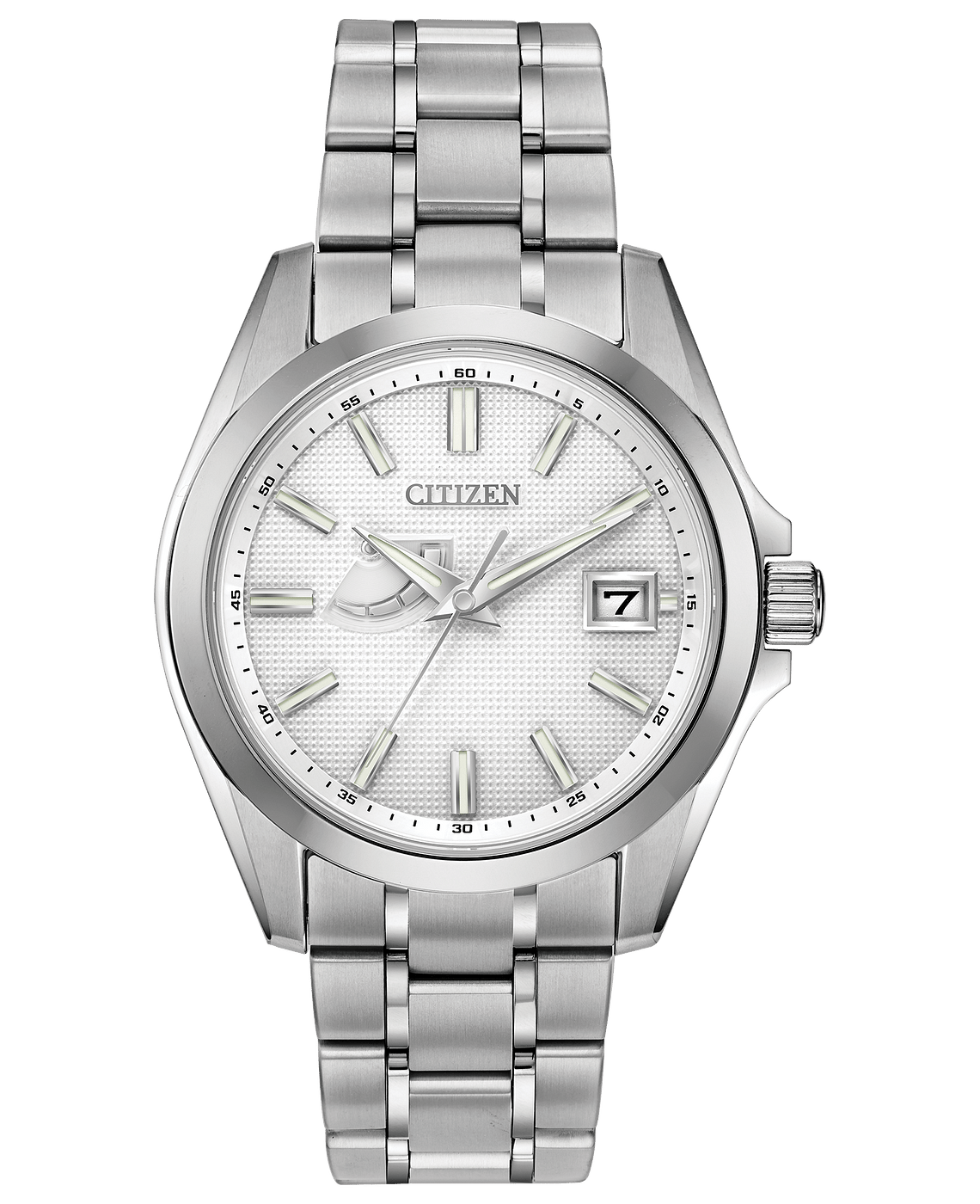
But the Satellite Wave isn't just a gadget. Its design language—sharp angles, brushed titanium, a dial that looks like a satellite dish—has a distinct streetwear appeal. It's the watch you'd spot on a sneaker influencer in Seoul or a crypto trader in Miami. It's functional, yes, but it also makes a statement: I'm always on time, and I'm always connected.
Manufacture History
Citizen was founded in 1918 in Tokyo, Japan, originally as the Shokosha Watch Research Institute. The brand adopted the name 'Citizen' in 1930, aiming to create watches for the global citizen. Citizen pioneered quartz technology in the 1970s and introduced the world's first solar-powered analog watch, the Eco-Drive, in 1976. The Satellite Wave GPS line debuted in 2014, combining Eco-Drive solar charging with GPS satellite synchronization. This model represents Citizen's most advanced timekeeping technology, designed for the modern traveler who demands atomic accuracy without the need for battery changes.
Movement
The heart of the Satellite Wave GPS is the in-house Caliber F150, a solar-powered quartz movement that receives GPS signals to automatically adjust time and time zone. It features a perpetual calendar accurate to 2100, a date complication, and a world time function. The movement is entirely manufactured by Citizen, ensuring reliability and ease of service. While it lacks the mechanical complexity of a Swiss automatic, the F150 is a marvel of micro-engineering, with a power-saving mode that extends battery life when not exposed to light. The solar cell is rated for the lifetime of the watch, making it a truly maintenance-free experience.
Specifications
- Case Diameter: 44mm
- Case Thickness: 13.5mm
- Lug-to-Lug: 50mm
- Case Material: Titanium
- Crystal: Sapphire with anti-reflective coating
- Water Resistance: 100 meters
- Lume: Luminous hands and markers
- Bracelet/Strap: Titanium bracelet with deployant clasp
Wrist Feel
The titanium case makes the 44mm diameter surprisingly wearable. At 13.5mm thick, it sits tall on the wrist, but the lightweight material—roughly 40% lighter than stainless steel—prevents it from feeling like a brick. The bracelet is well-articulated with solid end links, and the deployant clasp offers a secure fit. On a 7-inch wrist, the lugs overhang slightly, but the overall balance is good. The crown is signed and easy to grip, though the pushers for GPS sync are recessed to avoid accidental activation.
Where the Satellite Wave truly shines is in its ergonomics for travel. The quick-set time zone adjustment via GPS is seamless: press a button, wait a few seconds, and the watch aligns to your local time. The dial is legible, with large hour markers and a prominent date window. The titanium bracelet can feel a bit light and 'tinny' to those used to steel, but it's comfortable for all-day wear and doesn't pull arm hair.
Accuracy
The Citizen Satellite Wave GPS is accurate to within one second per 100,000 years when synced to GPS. In daily use without sync, the quartz oscillator holds to about ±15 seconds per month. With the push-button GPS sync, you can achieve atomic accuracy anytime you have a clear view of the sky. For the frequent traveler, this means never having to manually adjust for time zones—the watch does it for you in under 10 seconds.
Occasions
The Satellite Wave is best suited for travel, sport, and daily wear. Its large size and tool-watch aesthetic make it less appropriate for formal occasions, but it pairs well with casual and athleisure outfits. The titanium construction and 100m water resistance make it a capable companion for swimming and outdoor activities.
Wrist Presence
4/5 - The large case and angular lugs command attention, but the matte titanium finish keeps it from being flashy. It's a tool watch that looks like it means business.
Reference Variants
The CC4000 series includes several dial options: the CC4000-58L with a blue gradient dial, the CC4000-59L with a black dial, and the CC4000-57L with a white dial. All share the same titanium case and bracelet, with the same movement and functionality. The blue dial is the most popular, offering a subtle sunburst effect that catches light.
Family References
The Satellite Wave GPS family includes the CC3000, CC5000, and CC7000 series, which offer different case sizes and dial layouts. The CC3000 is slightly smaller at 42mm, while the CC5000 adds a chronograph complication. The CC7000 is a limited edition with a more premium finish.
Other Notable Models by Citizen
Citizen's lineup includes the Promaster Diver (a classic ISO-certified dive watch), the Chronomaster (high-accuracy quartz with perpetual calendar), and the Eco-Drive One (ultra-thin solar watch). Each offers a different take on Citizen's core values of precision and sustainability.
Similar Watches
The Seiko Astron GPS Solar is the direct competitor, offering similar GPS sync and solar charging with a slightly more traditional design. The Casio Oceanus OCW-T2600 combines GPS with multi-band radio sync for even more coverage. The Garmin MARQ Captain is a smartwatch alternative with GPS, but lacks the analog charm and perpetual solar power of the Citizen.
Homages
There are few direct homages to the Satellite Wave due to its proprietary technology. The Timex Expedition North Solar offers a budget solar watch with a rugged look, but no GPS or atomic sync.
Investment Value
The MSRP of the CC4000-58L is $1,800, and it typically retails for around that price. Pre-owned examples range from $800 to $1,200, depending on condition. The trend is stable, as the watch is not a limited edition but holds value well for a quartz piece. It is not a strong investment, but it is a great value for the technology. No major auction history exists.
Service Interval
Citizen recommends a service every 5 years, which typically costs around $200 for a quartz movement check and gasket replacement. The solar cell is rated for the lifetime of the watch, so no regular battery changes are needed. Service can be performed by any authorized Citizen dealer or sent to Citizen's service center.
Pros and Cons
Pros
- Atomic accuracy via GPS sync
- Solar-powered, no battery changes
- Lightweight titanium case
- Automatic time zone adjustment
- Perpetual calendar
Cons
- Large case may not suit small wrists
- Quartz movement lacks mechanical romance
- Limited aftermarket strap options due to integrated lugs
- Not suitable for formal occasions
Final Verdict
The Citizen Satellite Wave GPS is a masterclass in utilitarian design and technological precision. It's the perfect watch for the modern nomad who values accuracy, sustainability, and a no-nonsense aesthetic. While it won't satisfy the mechanical purist, it offers a level of convenience and reliability that few watches can match. For the young collector who lives across time zones, this is the ultimate daily driver.