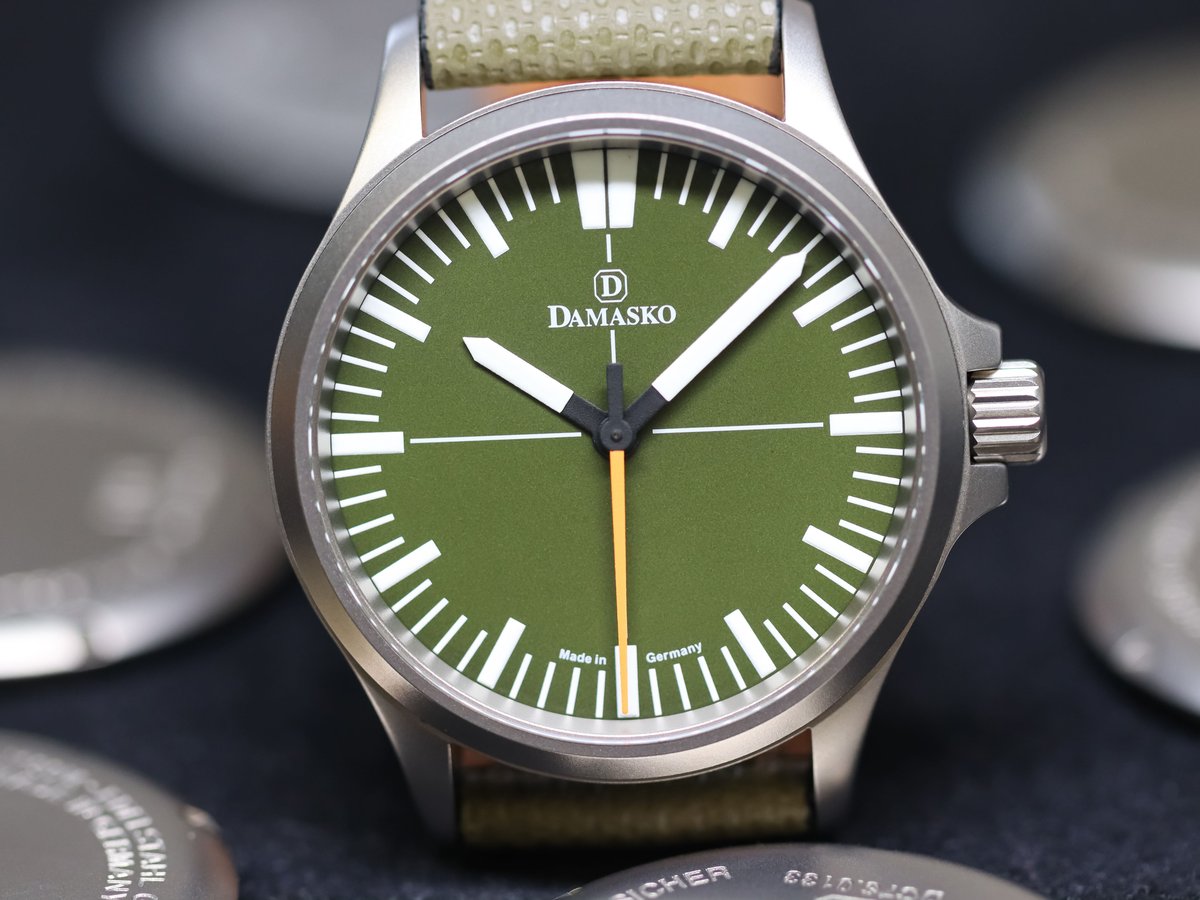
Damasko DK30 Review: The Submarine Steel Sleeper
A tool watch that out-engineers the hype — and your trust fund won't even flinch.
Introduction
There's a certain kind of collector who has moved past the obvious. They've done the Submariner, the Speedmaster, the Royal Oak — and now they're looking for something that speaks in a lower register. The Damasko DK30 is that watch. It doesn't shout; it just performs, with a case made from the same nickel-free steel used in German submarine construction, hardened to 60 HRC, and an in-house movement that quietly out-specs half the Swiss catalog at twice the price.
I first noticed the DK30 on the wrist of a friend who runs a boutique cycling brand in Berlin. He was wearing it on a faded NATO, scratched to hell, and it still looked better than most new watches. That's the Damasko promise: a watch that takes abuse and asks for more. It's not a fashion statement; it's a piece of equipment. And in a market drowning in vintage reissues and limited-edition hype, that's refreshing.
This review is for the collector who wants the engineering story, the real-world wearability, and the honest assessment of whether the DK30 deserves a slot in a rotation that already includes the usual suspects. Spoiler: it does.
Manufacture History
Damasko was founded in 1994 by Konrad Damasko, a former engineer in the German aerospace industry. The brand made its name with hardened steel cases, using a proprietary process that achieves a surface hardness of 60 HRC — roughly four times harder than standard 316L stainless. The DK30 is part of the brand's in-house movement era, powered by the Damasko caliber A26-1, which was introduced in 2010 and marked Damasko's transition from using ETA movements to manufacturing its own.
Movement
The DK30 is powered by the Damasko caliber A26-1, an automatic movement with a 42-hour power reserve, 28,800 vph frequency, and 26 jewels. It features a bidirectional winding rotor, hacking seconds, and a quickset date. The movement is regulated in-house to within 0 to +5 seconds per day, which is COSC-level performance without the certificate. The finishing is industrial rather than decorative — perlage on the bridges, blued screws — but the architecture is clean and serviceable.
Specifications
- Case diameter: 40mm
- Case thickness: 12.5mm
- Lug-to-lug: 48mm
- Case material: Hardened submarine steel (60 HRC)
- Crystal: Sapphire with anti-reflective coating
- Water resistance: 100m
- Lume: Super-LumiNova X1
- Strap: Leather with pin buckle (steel bracelet optional)
Wrist Feel
On the wrist, the DK30 wears exactly as its dimensions suggest: present but not obnoxious. The 40mm diameter and 48mm lug-to-lug sit comfortably on wrists from 6.5 to 7.5 inches, and the 12.5mm thickness slides under a shirt cuff without drama. The case is noticeably heavier than a standard steel watch of the same size — submarine steel is denser — but the weight is balanced, not top-heavy. The signed crown is large and grippy, easy to operate even with gloves.
The stock leather strap is decent but unremarkable; most owners will swap it for a NATO, a rubber strap, or Damasko's own steel bracelet (which adds about $300 and is worth every cent). The bracelet has solid end links, a milled clasp, and the same hardened finish as the case, so it won't scratch like a typical bracelet. Overall, the DK30 feels like a tool that happens to tell time — and that's exactly the point.
Accuracy
In real-world wear, the A26-1 consistently runs between +1 and +4 seconds per day, which is outstanding for a watch at this price. Damasko regulates each movement in five positions before it leaves the factory, and the results hold up over months of daily wear. You can expect to set it once a week and never think about it again. There's no silicon hairspring or exotic materials, just careful adjustment and a solid architecture.
Occasions and Wrist Presence
The DK30 is a daily wearer, a sports watch, and a travel companion. It's not a dress watch, but it won't embarrass you at a nice dinner. Wrist presence is 4/5 — the matte black dial, crisp white numerals, and hardened case give it a quiet authority. It reads as serious and intentional, the kind of watch that gets a nod from other enthusiasts but never a second glance from a mugger.
Reference Variants
The DK30 comes in three main configurations: black dial on leather, blue dial on leather (limited), and black dial on steel bracelet. All share the same case and movement.
Family and Other Models
Within the Damasko family, the DK30 sits alongside the DK32, DK36, and DK105. Other notable models from the brand include the DA36, DA46, DC56, and DS30.
Similar Watches
If you're cross-shopping, the Sinn 556 I offers a similar German tool-watch ethos but with an ETA movement and no hardened case. The Archimede Outdoor 39 is another hardened-case option with a Sellita movement. And Damasko's own DA36 is a cheaper entry point with the same case technology but an ETA 2836.
Homages
There aren't many direct homages to the DK30, but the Steinhart Ocean 39 and San Martin SN004-G capture some of the tool-watch spirit at lower prices.
Investment Value
The DK30 has an MSRP of $1,650 and holds steady on the pre-owned market at $1,100-$1,400. It's not an investment piece; it's a wear-it-forever tool watch. No major auction history.
Service
Service interval is 5 years, costing around $350 at Damasko's German service center. Independent watchmakers can also handle it.
Price and Verdict
At $1,650-$1,950, the DK30 is a no-brainer for anyone who values engineering over branding. It's the anti-hype purchase that actually makes sense. Final verdict: if you know, you know.