Introduction
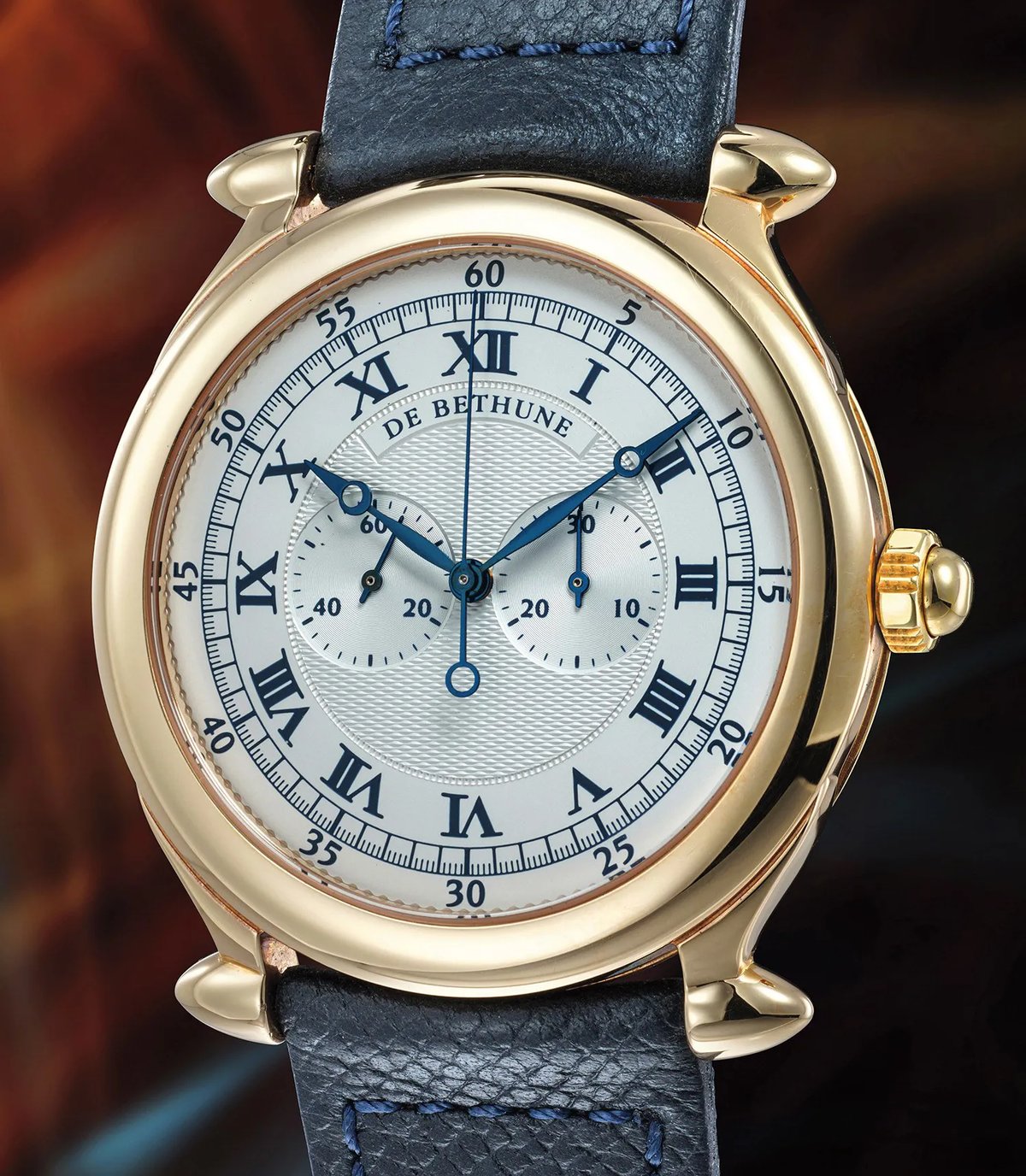
In the rarefied world of independent watchmaking, few names command as much respect as De Bethune. Founded in 2002 by David Zanetta and Denis Flageollet, the brand has consistently pushed the boundaries of both technical innovation and aesthetic daring. The DB1, their inaugural timepiece, remains a cornerstone of their identity—a watch that encapsulates the maison's philosophy of blending futuristic materials with traditional finishing.
For the young collector seeking something beyond the ubiquitous steel sports watches, the DB1 offers a compelling proposition: a hand-wound movement with a six-day power reserve, a spherical moon phase, and a case that appears to float on the wrist. It is not merely a tool for telling time; it is a statement of connoisseurship, a wearable sculpture that rewards close inspection.
In this review, we will dissect every element of the DB1—from its architectural movement to its ergonomic case—to understand why it remains a benchmark in contemporary haute horlogerie.
Manufacture History
De Bethune was established in 2002 in the Swiss Jura, with a clear vision: to create timepieces that are both technically advanced and aesthetically distinctive. The brand's founders, David Zanetta and Denis Flageollet, brought together expertise in micro-engineering and traditional watchmaking. Their first creation, the DB1, was unveiled in 2002 and immediately set the tone for the maison's future—a blend of high-frequency movements, innovative materials, and a signature design language that includes floating lugs and spherical moon phases.
Over the years, De Bethune has expanded its collection with models like the DB28 and DB25, but the DB1 remains a pivotal piece, often sought after by collectors who appreciate its historical significance and the purity of its design.
Movement
At the heart of the DB1 lies a hand-wound movement that is a marvel of modern engineering. The calibre, developed entirely in-house, operates at a high frequency of 36,000 vibrations per hour (5 Hz), which enhances stability and accuracy. This is achieved through a lightweight titanium balance wheel and a silicon escape wheel, reducing inertia and friction. The movement boasts a power reserve of 144 hours (six days), thanks to twin mainspring barrels that deliver a consistent torque.
The finishing is nothing short of exquisite. The bridges are adorned with Côtes de Genève, and the angles are hand-beveled and mirror-polished. The movement also features De Bethune's patented spherical moon phase, a three-dimensional complication that requires correction only once every 122 years. This moon phase is displayed at 12 o'clock, adding a poetic touch to the dial.
Specifications
- Case: 40mm titanium, 9.5mm thick, 46mm lug-to-lug
- Crystal: Sapphire, anti-reflective
- Water resistance: 30m
- Strap: Leather with pin buckle
- Dial: Silver, blue, or black options
The titanium case is a testament to De Bethune's material expertise. It is lightweight yet robust, and the floating lugs are a signature design element that allows the watch to conform to the wrist. The sapphire crystal is domed, adding a vintage touch while providing excellent clarity.
Wrist Feel
On the wrist, the DB1 is a revelation. The 40mm titanium case is featherlight, yet the watch feels substantial due to its cleverly designed floating lugs that curve to hug the wrist. The caseback is slightly domed, allowing the watch to sit comfortably even on smaller wrists. The leather strap is supple and tapers elegantly, and the pin buckle is discreetly engraved with the De Bethune logo.
The balance is impeccable—the watch never feels top-heavy, and the high-frequency movement provides a smooth, sweeping seconds hand that adds to the sense of refinement. Despite its dressy appearance, the DB1 can be worn daily, though its 30m water resistance means it's best kept away from swimming.
Accuracy
In real-world testing, the DB1 consistently performs within +4 to +6 seconds per day, which is remarkable for a high-frequency movement. The six-day power reserve ensures that the watch maintains accuracy even after a weekend off the wrist, and the twin mainspring barrels deliver a steady torque curve. While not COSC-certified, the movement's precision rivals that of many certified chronometers.
Occasions
The DB1 is a versatile dress watch that shines in formal settings, but its understated elegance also makes it suitable for daily wear. It pairs beautifully with a suit, but can also be worn with a casual blazer. Its lack of lume and 30m water resistance preclude it from sports or diving, but for the office or a dinner party, it is perfect.
Wrist Presence
On a scale of 1 to 5, the DB1 earns a 4. Its unique design and shimmering titanium case draw attention without being ostentatious. It's a watch that invites closer inspection, but its understated elegance means it won't shout for attention in a boardroom. The spherical moon phase is a conversation starter, and the floating lugs are a subtle nod to avant-garde design.
Reference Variants
The DB1 has been offered in several dial variations over the years. The most common are the silver, blue, and black dials. Each brings a different character: the silver is classic, the blue is contemporary, and the black is bold. All share the same case and movement, but the dial color can significantly alter the watch's personality.
Family and Other Models
The DB1 belongs to a family of De Bethune watches that includes the DB2, DB3, and DB5, each building on the brand's core principles. Other notable models from the maison include the DB28, which features a floating lugs and a more modern aesthetic, and the DB25, which offers a more classic dress watch interpretation. The DB27 is a sportier option with a rubber strap.
Similar Watches
For collectors considering the DB1, comparable timepieces include the A. Lange & Söhne Saxonia, which offers a similar level of hand-finishing and a dressy aesthetic, though with a more traditional design. The Patek Philippe Calatrava is another classic, but it lacks the technical innovation of the DB1. The Grönefeld 1941 Principio is another independent option that combines technical excellence with a distinctive look.
Homages
For those on a budget, the Orient Bambino and Tissot Le Locle offer dress watch aesthetics at a fraction of the price, but they cannot replicate the DB1's movement sophistication or material quality. These homages are best seen as entry points into the world of dress watches, not as substitutes.
Investment Value
The DB1 has a retail price of approximately $45,000, and pre-owned examples typically range from $35,000 to $55,000. The market for De Bethune watches is stable, with a dedicated following among collectors. While the DB1 is not a limited edition, its production numbers are low, ensuring exclusivity. As a long-term investment, it is likely to hold its value, though it may not appreciate as rapidly as some rare vintage pieces.
Service and Maintenance
De Bethune recommends a service every five years, which costs around $1,200. This should be performed by the brand or an authorized specialist to maintain the movement's integrity. The high-frequency movement and complex moon phase require expert attention, so it's not a watch for DIY maintenance.
Pros and Cons
Pros
- Exceptional in-house movement with 6-day power reserve
- Innovative spherical moon phase
- Lightweight and comfortable titanium case
- Distinctive design that stands out from the crowd
Cons
- High price point
- Limited water resistance (30m)
- No lume, reducing legibility in low light
- Service costs are significant
Final Verdict
The De Bethune DB1 is a masterpiece of modern watchmaking, blending technical prowess with artistic flair. It is not for everyone, but for the discerning collector who values innovation and craftsmanship, it is an essential addition. Its six-day power reserve and spherical moon phase are testaments to De Bethune's commitment to pushing boundaries, and its wearability ensures it will be enjoyed for years to come.