De Bethune DB28 – A Modern Classic That Floats Between Tradition and Futurism
By Vivir Editorial··Updated
# De Bethune DB28 – A Modern Classic That Floats Between Tradition and Futurism
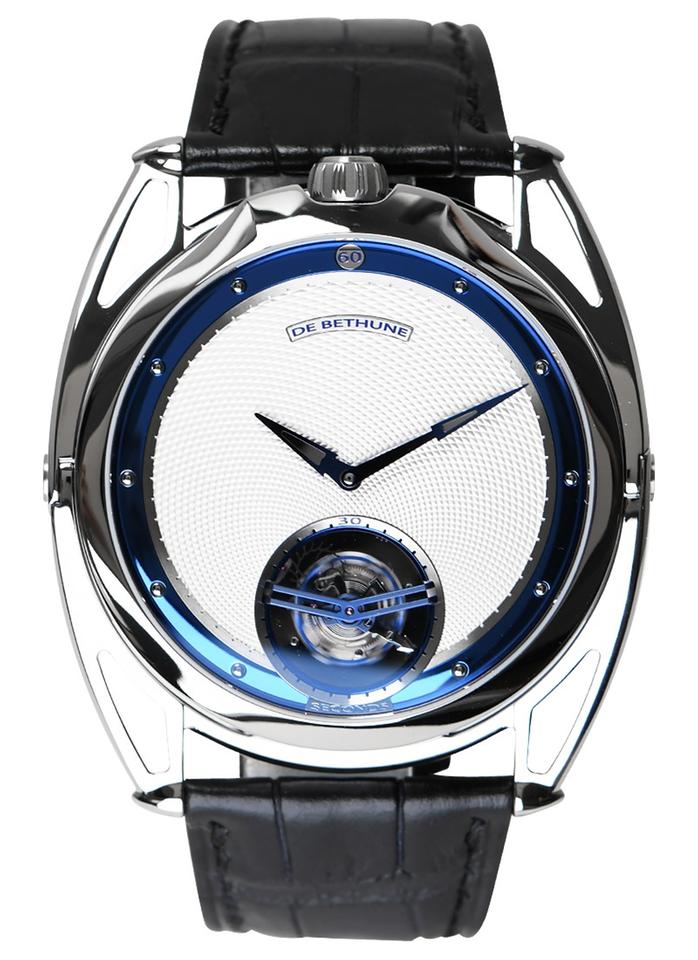
The De Bethune DB28 arrived as a bold statement from a house that has never shied away from engineering daring aesthetics. Its most visible hallmark – the “floating” lug system – is more than a visual gimmick; it is a functional response to the way our wrists move. Coupled with a handcrafted titanium case, a spherical moon‑phase display and a hand‑wound calibre that promises a full week of power, the DB28 asks whether haute‑horlogerie must always be heavy, ornate, and static. In the pages that follow we examine where the DB28 sits in De Bethune’s lineage, dissect its design language, evaluate the movement, and judge how it feels on the wrist and in the real world. The verdict will balance admiration for its technical bravado against the practical realities of price, wearability and everyday versatility.
## Heritage — the model's place in the brand's line and its launch context
De Bethune, founded in 2002, quickly built a reputation for marrying avant‑garde design with in‑house innovation. The DB28, introduced in the early 2010s, is positioned as a “classic” within the brand’s portfolio, echoing the company’s signature floating‑lug concept first seen on the earlier DB28‑type pieces.
Two source entries give slightly different launch years: the brand’s model list records a 2010 debut, while a detailed review notes a 2011 release for a specific variant. Both dates place the DB28 squarely in the period when De Bethune was consolidating its high‑tech identity, following the success of the DB25 and DB30 collections. The watch is offered in at least two reference numbers – DB28TIS5C3PN/S (a black‑finished version) and DB28TIS8C6PN/S (a mirror‑polished grade‑5 titanium version). Both share the same case dimensions, movement and core design philosophy, but differ in material finish and market positioning.
Within De Bethune’s hierarchy the DB28 is a Tier‑1 piece, meaning it sits among the brand’s flagship creations that showcase its patented technologies, such as the twin‑barrel power‑reserve system (patented 2004) and the spherical moon‑phase mechanism, also patented in 2004. The model therefore serves as both a showcase of the house’s engineering pedigree and a bridge between its more experimental pieces and the relatively “wearable” side of its catalogue.
## Design & Case — case dimensions, materials, dial
The DB28’s case measures 42.6 mm in diameter, a size that straddles the sweet spot between contemporary sport watches and classic dress pieces. The case is constructed from mirror‑polished grade‑5 titanium in the DB28TIS8C6PN/S reference, delivering a sleek, near‑weightless feel while retaining the durability expected of a high‑end watch. The alternative DB28TIS5C3PN/S version presents a black matte finish that extends the avant‑garde aesthetic. Both variants share a water‑resistance rating of 30 m, sufficient for everyday splashes but not for serious diving.
The most distinctive visual element is the “floating” lug system. Patented by De Bethune, the lugs are not fixed to the case but are instead mounted on a slim, adjustable bridge that can be rotated to accommodate the natural swing of the wrist. This engineering choice reduces the perceived width of the watch at the wrist, creating a slimmer profile despite the 42.6 mm case. Reviewers have repeatedly noted that the floating lugs “keep the span across the wrist well‑tailored to the user,” delivering a comfort level that feels almost weightless.
The dial is a study in restrained futurism. A black or dark‑toned background (depending on the version) is punctuated by a spherical moon‑phase indicator that sits prominently at 6 o’clock. The moon‑phase is claimed to be accurate to within one lunar day every 122 years, a precision that stems from a patented gear train. Hour markers are applied with a subtle, applied‑index finish, ensuring legibility without breaking the dial’s minimalist language. The overall visual balance is deliberately austere, allowing the floating lugs and the moon‑phase sphere to dominate the watch’s silhouette.
## Movement & Performance — calibre, power reserve, accuracy
At the heart of every DB28 lies De Bethune’s in‑house manual‑winding calibre DB2115V4. This movement is a direct evolution of the brand’s earlier manual calibres, incorporating a self‑regulating twin‑barrel architecture that delivers a 6‑day (144‑hour) power reserve – a notable achievement for a manually wound watch of this size. The twin‑barrel system, patented in 2004, helps smooth the torque delivery to the escapement, contributing to a steadier beat and, by extension, better time‑keeping stability.
The calibre is fully hand‑finished, with visible bridges and a sapphire‑crystal case‑back that showcases the twin barrels and the power‑reserve indicator. While the sources do not provide an official accuracy rating, De Bethune’s in‑house movements typically target a deviation of ± 3–5 seconds per day, consistent with the brand’s reputation for fine regulation. The manual winding mechanism requires the wearer to turn the crown regularly; the DB28’s crown is of the “bullhead” style, which must be unscrewed before winding – a ritual that some reviewers find “practical challenge” but also describe as part of the watch’s character.
The movement also drives the spherical moon‑phase complication. Its gear train, protected by a patented design, ensures the moon‑phase advances by one lunar day only once every 122 years, a claim substantiated by the brand’s technical documentation. This level of precision is rare even among high‑end moon‑phase watches and underscores De Bethune’s dedication to horological exactness.
## On the Wrist — wearability, lug‑to‑lug, comfort notes
The floating lug system is the DB28’s most tangible ergonomic advantage. By allowing the lugs to “float” and rotate, the watch adapts to the wearer’s wrist curvature, reducing the effective lug‑to‑lug spread that is often felt as a “bulge” on smaller wrists. Reviewers have repeatedly highlighted that the DB28 “wears surprisingly well even on small wrists,” a noteworthy claim given its 42.6 mm diameter. The titanium construction further reduces overall weight; although exact grams are not listed in the sources, titanium cases of this size typically sit in the 80–100 g range, markedly lighter than comparable steel or gold models.
The case’s slim profile, combined with a 30 m water resistance, makes the DB28 comfortable for daily wear but not suited for activities requiring higher water resistance (e.g., swimming laps or diving). The manual winding requirement adds a ritualistic element: the wearer must wind the watch daily to maintain optimal power reserve. Some users may find the unscrewing of the bullhead crown cumbersome, especially in cold weather or when quick adjustments are needed.
Strap options are not detailed in the source material, but the black version is often paired with an all‑black alligator strap and a matching buckle, creating a cohesive aesthetic. The titanium version typically pairs with a leather strap or a high‑tech textile band, allowing the case’s polished finish to shine. In either case, the combination of light case, floating lugs and well‑balanced dial ensures the watch sits close to the skin without digging into the wrist, a hallmark of De Bethune’s ergonomic focus.
## When to Wear — occasion, setting and dress‑code fit
The DB28’s design language is unmistakably avant‑garde, making it a conversation piece in formal and semi‑formal settings. Its black or titanium finish, coupled with the futuristic floating lugs, positions it well for high‑end cocktail events, art openings, or upscale business meetings where a statement watch is welcomed. However, the same boldness can be polarizing; several reviewers note that “many will shrink from the prospect of wearing such a visible and visibly different style statement.”
In a traditional black‑tie environment, the DB28 can serve as an alternative to a classic dress watch, provided the wearer embraces its modern aesthetic. Its 30 m water resistance and manual winding nature make it less suitable for sporty or outdoor pursuits where durability against shock or water ingress is paramount. The watch’s legibility and slim profile allow it to pair comfortably with a tuxedo, but the all‑black version may clash with very formal, monochrome dress codes that favor understated elegance.
Overall, the DB28 shines in contexts where innovation and artistic expression are valued. It is less appropriate for conservative corporate settings that demand conventional design, or for activities requiring robust water resistance or quick time‑setting capabilities.
## Value & Verdict — price‑positioning + final take
Pricing for the DB28 is publicly documented for the black‑finished reference DB28TIS5C3PN/S at approximately **US $91,000**. The titanium variant (DB28TIS8C6PN/S) does not have a published price in the sources, but given the brand’s pricing strategy, it can be expected to sit in a similar high‑end bracket, potentially slightly higher due to the premium titanium material and finishing.
At this price point, the DB28 competes with other ultra‑luxury manual‑winding pieces from brands such as Patek Philippe, Audemars Piguet and Vacheron Constantin. Its value proposition rests on three pillars:
1. **Technical Innovation** – The twin‑barrel, 6‑day power reserve and the 122‑year‑accurate spherical moon phase are rare feats for a manual movement.
2. **Ergonomic Breakthrough** – The floating lug system delivers a comfort level that few high‑diameter watches can match, effectively widening the DB28’s target audience.
3. **Design Distinctiveness** – The stark, futuristic aesthetic differentiates it from more traditional dress watches, appealing to collectors seeking a bold, recognizable piece.
However, the DB28’s drawbacks are equally clear. The manual winding ritual and the need to unscrew the bullhead crown can be inconvenient for daily wear. Its 30 m water resistance limits practical versatility, and the polarizing design may restrict its suitability across all social settings. Moreover, the lack of a widely disclosed price for the titanium version introduces some uncertainty for potential buyers.
**Verdict:** The De Bethune DB28 is a masterclass in marrying avant‑garde design with high‑precision horology. For collectors who value engineering novelty, ergonomic comfort, and a watch that stands out on the wrist, the DB28 delivers an experience that justifies its premium price. For those who prioritize practicality, universal dress‑code compatibility, or a lower barrier to entry, the DB28 may feel more like a niche statement piece than an everyday companion. In the end, it is a watch that lives up to its brand’s promise: bold, futuristic, and unmistakably De Bethune.