Estée Lauder Youth-Dew
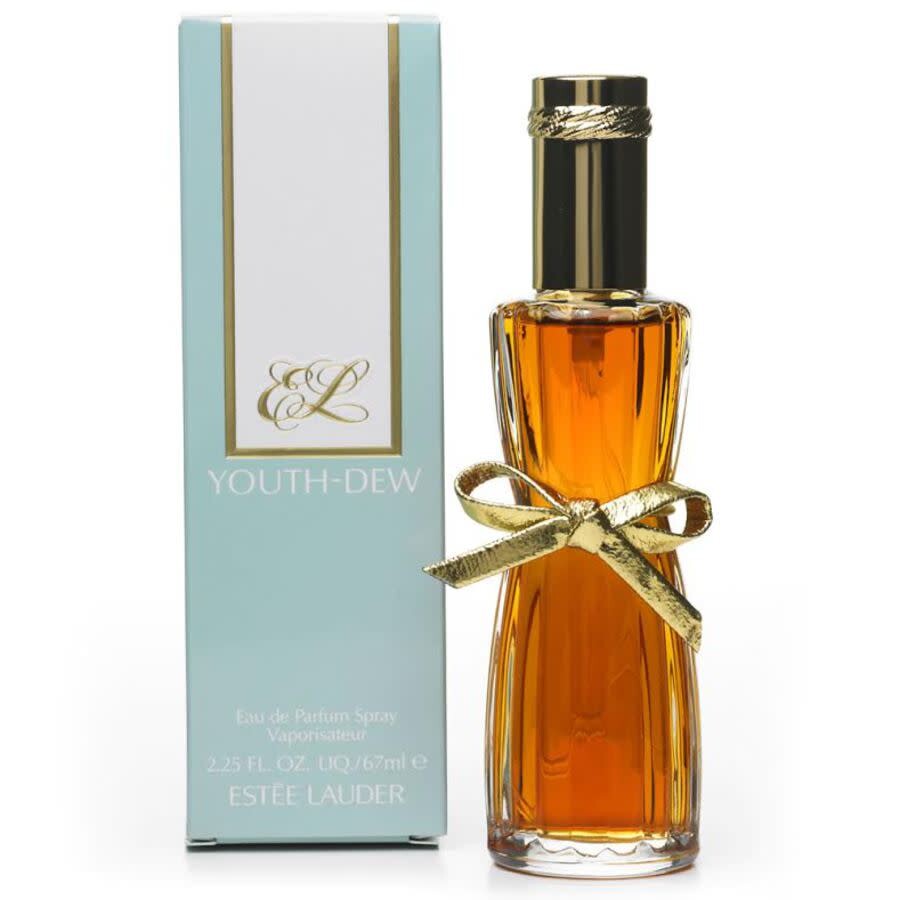
Launched in 1953, Estée Lauder Youth Dew was more than a fragrance; it was a revolution. At a time when women typically waited for a man to gift them a precious French perfume for special occasions, Estée Lauder had a different vision. She cleverly introduced Youth Dew as a bath oil that doubled as a skin perfume. This masterstroke of marketing made luxury accessible. Women felt empowered to purchase it for themselves, integrating it into their daily lives rather than reserving it for rare events. The strategy worked. In its first year, Youth Dew sold 50,000 bottles, a number that grew to 150 million by 1984, cementing the Estée Lauder brand as a powerhouse in the beauty industry.
Youth Dew sits as a matriarch within the Estée Lauder lineup. It is an unapologetic, bold, and complex spicy oriental that stands in stark contrast to the light, fruity-floral scents that dominate the modern market. It doesn’t whisper; it makes a statement. Its position is that of a timeless classic, a benchmark against which other opulent orientals like YSL's Opium and Chanel's Coco are often measured. It is for the woman who is confident, self-assured, and unafraid to be noticed.
The inspiration for Youth Dew was Estée Lauder's desire to create a scent that was captivating, rich, and exceptionally long-lasting. She wanted American women to have a fragrance that embodied glamour and vitality. The concept was to create an 'essence of beauty' that women could indulge in every day. By packaging this potent perfume as a bath oil, she made this daily luxury an attainable reality. The name itself, "Youth Dew," was evocative, promising a feeling of timeless allure and vitality.
In the fragrance community, Youth Dew is revered as a masterpiece but is also highly polarizing. It is a scent that commands respect for its historical significance, complexity, and sheer power. For many, it is a source of nostalgia, the signature scent of a mother or grandmother. However, its dense, spicy, and aldehydic character is often perceived as dated or overpowering by modern standards. It is a fragrance people tend to either love or hate, with very little room for indifference. Its devotees are fiercely loyal, appreciating a level of grandeur and quality that is rare in contemporary perfumery.
The Nose Behind the Scent
Josephine Catapano of IFF, working under the direction of Estée Lauder. Catapano was a pioneering female perfumer also known for creating Cinnabar and Fidji by Guy Laroche.
Accords
Notes Pyramid
Scent Journey
An explosive, powerful blast of sharp aldehydes, dark spices, and a fizzy, cola-like accord. It is unapologetically vintage and can be challenging for the first 15-30 minutes.
The fragrance begins to warm up, revealing a rich heart of cinnamon, clove, and opulent florals like ylang-ylang and rose. The scent becomes more rounded and powdery, losing its initial harshness.
A deep, dark, and sensual base of smoky incense, rich amber, earthy patchouli, and warm balsams. This final stage is a smooth, velvety, and long-lasting skin scent that embodies classic oriental perfumery.
Performance Dashboard
Extraordinary. Lasts 12-14+ hours on skin and will linger on fabrics for days.
Enormous. Projects heavily for the first 4-6 hours, creating a large and noticeable scent bubble.
Immense. Leaves a powerful, room-filling trail that is impossible to ignore. Apply with extreme caution.
When to Wear
Community Verdict
Pros & Cons
- ✅ Iconic, historically significant fragrance
- ✅ Exceptional longevity and sillage
- ✅ Incredible value for money
- ✅ Rich, complex, and deep scent profile
- ✅ A bold statement piece
- ❌ Can be perceived as dated or 'old-fashioned'
- ❌ Extremely overpowering if over-applied
- ❌ Highly polarizing scent that many will dislike
- ❌ Not suitable for warm weather or professional settings
Price & Value
“An absolute steal. The quality and performance you get for the price are unmatched in the current market, rivaling niche fragrances that cost ten times as much.”
📜 Reformulation History
Youth Dew has been reformulated multiple times since its launch in 1953 to comply with regulations on ingredients like oakmoss and to replace animal-derived components. Vintage versions are considered richer and more animalic, while modern formulations are slightly brighter but still exceptionally potent and true to the original's character.
Accords
Notes Pyramid
Scent Journey
The bath oil immediately presents a rich, dense, and warm spicy oriental profile, with a prominent balsamic and amber character. It is less bright and powdery than the Eau de Parfum, leaning into its darker, more opulent facets.
The scent remains consistently potent and enveloping, with the spices, resins, and deep woods maintaining their intensity. The floral heart is subdued, serving to round out the rich base rather than stand out as a distinct phase.
A long-lasting, luxurious drydown of warm amber, deep balsams, and earthy moss and patchouli. The scent lingers on the skin for many hours, maintaining a consistent, opulent character without significant evolution.
Performance Dashboard
Exceptional longevity, often lasting 10-14 hours on skin, frequently surpassing the Eau de Parfum.
Strong, commanding projection for the first 4-6 hours, capable of filling a room with its rich aroma.
Creates a heavy, noticeable scent trail that lingers for an extended period.
When to Wear
Community Verdict
Pros & Cons
- ✅ Richer, more concentrated scent profile compared to the current Eau de Parfum.
- ✅ Offers superior longevity and sillage.
- ✅ Often considered comparable to vintage Youth Dew Eau de Parfum.
- ✅ Can be worn effectively as a stand-alone perfume extrait.
- ✅ Excellent value for its concentration and performance.
- ❌ Less versatile due to its intense and opulent nature.
- ❌ May be perceived as heavy or 'old-fashioned' by some users.
- ❌ Not as widely available in brick-and-mortar stores as the Eau de Parfum.
Price & Value
“Highly concentrated, offering superior performance and perceived quality for its price point, making it a strong value.”
📜 Reformulation History
While the Eau de Parfum has undergone several notable reformulations, the Bath Oil is widely regarded as having maintained its original character and potency more effectively. Although subtle variations may exist between production batches, it generally remains a faithful and potent representation of the classic Youth Dew.
Accords
Notes Pyramid
Scent Journey
The initial spray delivers a lighter, brighter burst of aldehydes and fresh spices, with orange and bergamot more pronounced and less dense compared to the EDP. The characteristic 'cola' accord is present but softened.
The spicy floral heart emerges more quickly, showcasing cinnamon and clove in a subdued manner. Rose, jasmine, and ylang-ylang are more discernible as individual floral notes, less overwhelmed by heavy spices.
A gentle, warm drydown settles on the skin, featuring soft amber, vanilla, and a hint of incense. The deeper resins and oakmoss are significantly toned down, offering a cleaner, less intense finish than the EDP.
Performance Dashboard
Lasts 3-5 hours, requiring reapplication for extended wear.
Moderate projection for the first hour, then quickly becomes a close skin scent.
Leaves a soft, intimate trail.
When to Wear
Community Verdict
Pros & Cons
- ✅ Significantly lighter and more versatile for daily or warmer weather wear.
- ✅ Less polarizing opening, making it more approachable for modern tastes.
- ✅ More affordable than many luxury fragrances.
- ✅ Retains the core, recognizable character of Youth Dew in a softer form.
- ❌ Significantly reduced longevity compared to the EDP.
- ❌ Requires frequent reapplication for continuous presence.
- ❌ Softer projection and sillage may disappoint those seeking a powerhouse scent.
Price & Value
“An accessible price point makes this classic scent more approachable for daily use.”
📜 Reformulation History
Estée Lauder Youth Dew was originally launched in 1953, with some early versions referred to as 'Cologne' or a bath oil that doubled as perfume. While the Eau de Parfum is the most prominent modern concentration, a distinct 'Cologne' variant with significantly reduced intensity compared to the EDP is less commonly found in current production or widely reviewed as a separate entity. Reformulations over the decades have primarily affected the EDP concentration, aiming to maintain its iconic profile.
Accords
Notes Pyramid
Scent Journey
A soft, spiced aldehyde opening with hints of peach and orange, gently unfolding on the skin.
The initial brightness mellows into a warm, powdery floral heart with subtle rose and jasmine, retaining a delicate spice.
A lingering, comforting base of soft incense, amber, and musk, with a touch of vanilla and patchouli, creating a silky, close-to-skin aroma.
Performance Dashboard
Lasts 2-4 hours as a subtle skin scent
Very intimate, stays close to the skin
Minimal trail, a soft personal aura
When to Wear
Community Verdict
Pros & Cons
- ✅ Soft, comforting scent
- ✅ Leaves skin silky smooth
- ✅ Excellent for layering with Youth Dew EDP
- ✅ Subtle and non-overpowering
- ❌ Limited longevity and projection
- ❌ Not a standalone fragrance for strong scent
- ❌ Can be messy if not applied carefully
Price & Value
“Offers a luxurious tactile experience and subtle scent for its price point”
Who It's For
✅ Ideal For
- Admirers of classic, bold oriental fragrances
- Confident individuals with a strong sense of style
- Ages 35+ or anyone with a mature taste in perfume
⚠️ Not Recommended For
- Those who prefer light, fresh, or sweet gourmand scents
- Use in professional office settings or confined spaces
- Anyone sensitive to overpowering fragrances
The Family
A discontinued, more modern interpretation focusing on amber, created under Tom Ford's direction.
A rare, discontinued flanker from the 1970s that was a precursor to the fragrance Cinnabar.
Explore More
🔍 Similar Fragrances
Shares a very similar dense, spicy, and balsamic oriental structure.
Another classic spicy-amber with a prominent clove note and opulent feel.
A classic, affordable oriental with a similar dark, incense-heavy, and spicy profile.
💡 Clone Alternatives
A direct inspiration aiming to capture the warm spicy and balsamic accords of the original.
An oil-based interpretation focusing on the jasmine, rose, clove, and cinnamon notes.
❤️ You May Also Enjoy
For lovers of powerful, complex, and vintage-style herbal chypres.
The quintessential oriental fragrance with a different profile but a similar classic, bold character.
A modern take on a dark, spicy, and earthy fragrance that shares a similar bold spirit.
More from Estée Lauder
🧪 Layering Ideas
- A simple vanilla fragrance to sweeten and soften the harsh edges.
- A single-note amber oil to amplify the warmth of the base.
- A light musk to add a layer of clean softness to the drydown.
🏆 Final Verdict
Estée Lauder Youth Dew is not just a perfume; it is a landmark in the history of fragrance. It is a testament to a time of unapologetic glamour and bold femininity. To wear it today is to make a deliberate choice to stand apart from the crowd. Its power and complexity can be challenging to a modern nose, and it is certainly not for everyone.
However, for those willing to look past current trends, Youth Dew offers an olfactory experience of unparalleled depth, richness, and longevity at an incredible value. It is a fragrance that demands confidence from its wearer. If you are a lover of bold, spicy, and resinous scents, and you want to own a true piece of perfume history that still performs magnificently, then Youth Dew is an essential addition to your collection. Apply with caution, wear with confidence, and embrace the timeless allure of this iconic creation.
Ready to experience Estée Lauder Youth-Dew?
Buy on AmazonAs an Amazon Associate, Vivir earns from qualifying purchases.