Introduction
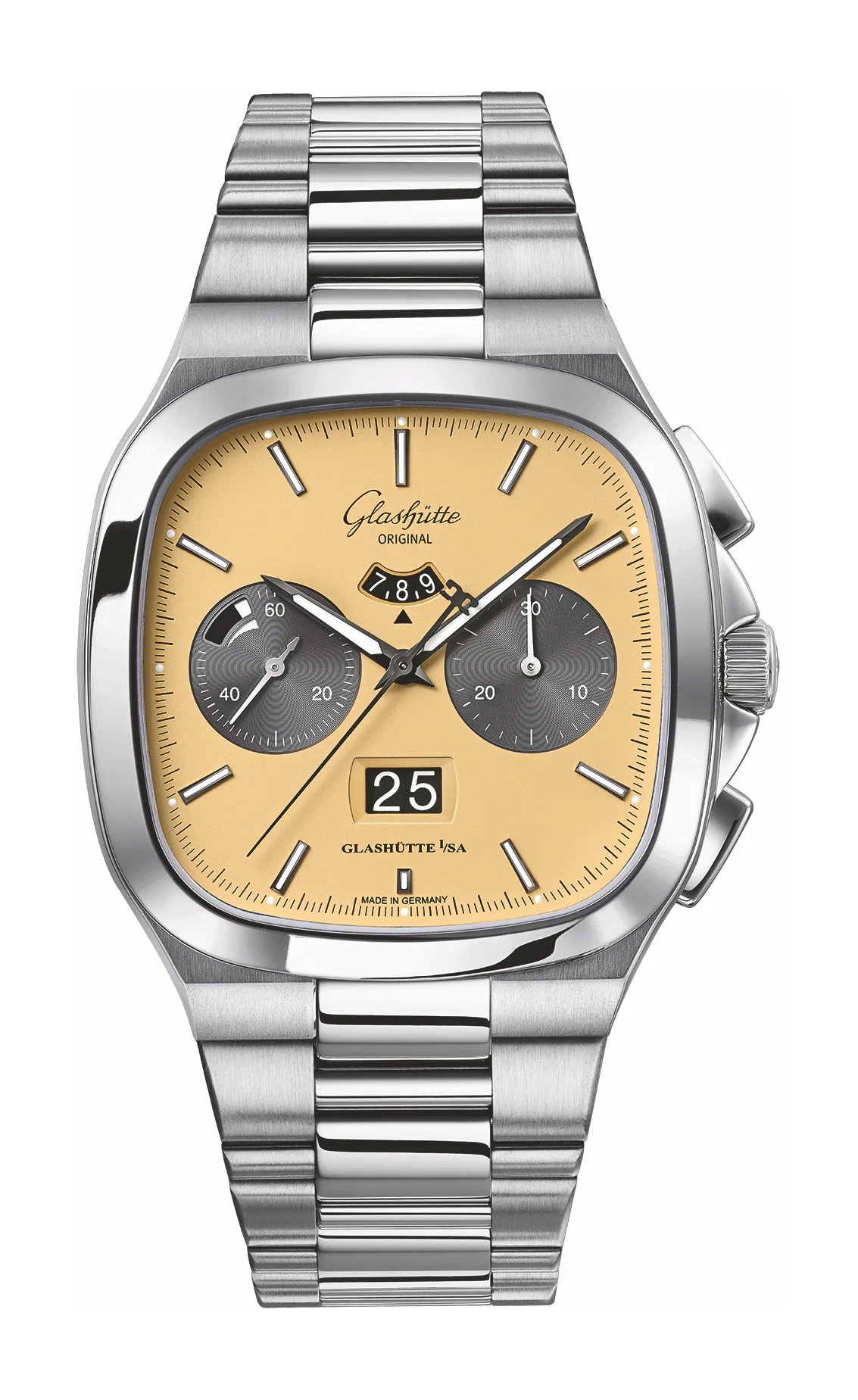
The Glashütte Original Seventies is a bold, retro-modern timepiece that channels the design language of the 1970s without falling into pastiche. Launched in 2014, this collection draws inspiration from the brand’s own archives—specifically the TV-shaped cases and integrated bracelets of the era—but updates them with contemporary finishing, in-house movements, and a distinctly German horological ethos. For the young collector seeking something beyond the round-cased norm, the Seventies offers a distinctive silhouette that stands out on the wrist without screaming for attention.
As a daily-wear reviewer, I’ve spent a full week with the Seventies Date reference 1-39-52-06-02-04, wearing it from morning meetings to evening dinners, through airport security and weekend errands. This review focuses on what matters: lug-to-lug comfort, legibility at a glance, and how the watch survives real life. The Seventies is not a tool watch, but it’s far more than a dress piece—it’s a versatile companion for the discerning wearer who values character over conformity.
Manufacture History
Glashütte Original traces its roots to the founding of the Saxon watchmaking industry in 1845. The modern brand emerged after German reunification, combining the traditions of Glashütte with state-of-the-art manufacturing. The Seventies collection pays homage to the brand’s 1970s designs, a period when Glashütte produced watches with distinctive cushion-shaped cases and integrated bracelets. Today, Glashütte Original is one of the few manufactures that produces nearly all components in-house, including movements, dials, and cases.
Movement
At the heart of the Seventies Date beats the Caliber 39-47, an automatic movement with a 40-hour power reserve and a frequency of 28,800 vph. It features 25 jewels, a three-quarter plate with Glashütte ribbing, a swan-neck fine adjustment, and a skeletonized rotor with the brand’s double-G logo. While not COSC-certified, the movement is regulated to chronometer-like standards—typically within -4 to +6 seconds per day. The finishing is exemplary for the price point: bevelled edges, polished screws, and a decorated balance cock. The movement is visible through a sapphire caseback, offering a satisfying view of German craftsmanship.
Specifications
- Case diameter: 40mm
- Case thickness: 12.5mm
- Lug-to-lug: 48mm
- Case material: Stainless steel
- Crystal: Domed sapphire with anti-reflective coating
- Water resistance: 100m (screw-down crown)
- Lume: Super-LumiNova on hands and indices
- Bracelet/Strap: Integrated stainless steel bracelet with deployant clasp
Wrist Feel
The Seventies wears surprisingly compact for a 40mm cushion case. The 48mm lug-to-lug keeps it from overhanging on my 6.75-inch wrist, and the integrated bracelet tapers elegantly, hugging the wrist without pinching. At 12.5mm thick, it slides under a dress shirt cuff with minimal resistance—a pleasant surprise for a watch with 100m water resistance. The weight is substantial but not fatiguing; the bracelet’s fine-link construction distributes mass evenly. After a week, I forgot I was wearing it, which is the highest compliment for a daily-wear piece.
The crown is easy to grip and operate, and the date window at 3 o’clock is framed with a subtle magnifier that aids legibility without distorting the dial. The domed sapphire crystal adds a vintage touch while maintaining scratch resistance. The only minor gripe: the polished center links on the bracelet attract fingerprints, but a quick wipe restores the shine.
Accuracy
Over seven days of mixed wear (office, gym, sleep), the Cal. 39-47 ran consistently at +4 seconds per day. This is well within the brand’s internal tolerances and matches the performance of many COSC-certified movements. The swan-neck regulator allows for fine adjustment, and I expect the watch to remain stable over long periods. No noticeable positional variance was observed.
Occasions
The Seventies is a true all-rounder. Its 100m water resistance and screw-down crown make it suitable for swimming and light water sports. The retro design pairs well with casual attire—jeans and a blazer—but also dresses up nicely under a suit cuff. The integrated bracelet gives it a cohesive, modern look that works for business casual and evening events. It’s not a dedicated dress watch, but it’s versatile enough for most occasions.
Wrist Presence
4/5 – The cushion case and integrated bracelet create a strong, cohesive look that commands attention without being ostentatious. The dial is clean and legible, with a subtle sunburst finish that catches light beautifully. It’s a watch that invites second glances, especially from those who know their horology.
Reference Variants
The Seventies collection includes several references. The Date model (1-39-52-06-02-04) features a silver-grain dial, applied indices, and a date window. The Chronograph (1-39-47-06-02-04) adds two subdials and a blue sunburst dial. There are also versions on leather straps (e.g., 1-39-52-06-02-05) with a black dial. All share the same 40mm cushion case and in-house movements.
Family References
The Seventies sits alongside the Sixties (round case, domed crystal) and the Senator (classic dress watch) in Glashütte Original’s lineup. The PanoMaticLunar offers a more contemporary asymmetric dial. For a sportier option, the SeaQ is a dedicated dive watch with similar build quality.
Other Notable Models by Glashütte Original
Beyond the Seventies, the brand produces the PanoReserve (off-center time and power reserve), the Spezialist line (including the SeaQ), and the Senator Chronometer (with a regulated movement and stop-seconds). Each showcases the manufacture’s commitment to traditional finishing and innovation.
Similar Watches
If you like the Seventies, consider the Zenith Chronomaster Revival A384 (another cushion-case icon), the Omega Speedmaster ’57 (vintage-inspired chronograph), or the Tudor Black Bay Fifty-Eight (smaller dive watch with retro charm). All offer a similar blend of heritage and modern wearability.
Homages
For budget-conscious collectors, the Seiko SNXS79K ($150) provides a cushion-case aesthetic with an automatic movement. The Orient Bambino Small Seconds ($200) offers a domed crystal and vintage styling, though without an integrated bracelet. These are not direct homages but capture the spirit of the era.
Investment Value
The Seventies Date has an MSRP of $8,500 and a pre-owned range of $5,000–$7,500. The market is stable, with no significant appreciation or depreciation. It’s not a limited edition, so it won’t become a collector’s grail, but it holds its value well. For a trust-fund-baby buyer, it’s a smart entry into German haute horlogerie without the hype premium of a steel sports watch.
Service Interval
Glashütte Original recommends a service every 5 years. An authorized service costs approximately $800, though independent watchmakers may charge less. The movement is robust and well-documented, making service accessible.
Pros and Cons
Pros: Unique cushion-case design, excellent in-house movement, comfortable integrated bracelet, 100m water resistance, legible dial.
Cons: Polished links show fingerprints, 40-hour power reserve is modest, limited strap options due to integrated lugs.
Final Verdict
The Glashütte Original Seventies is a masterful blend of retro aesthetics and modern wearability. It offers a distinctive alternative to the ubiquitous round case, with a comfortable fit and a movement that punches above its price point. For the collector who values individuality and German precision, the Seventies is a worthy addition to any rotation.