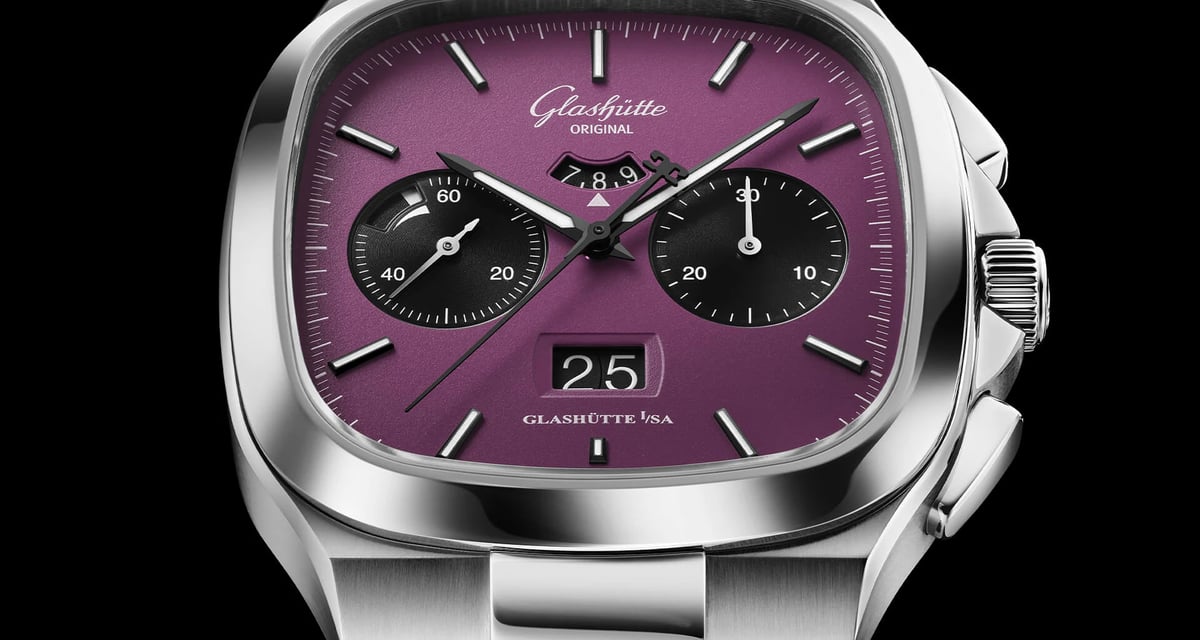
Glashütte Original Seventies Chronograph Panorama Date: A Week on the Wrist
The Glashütte Original Seventies Chronograph Panorama Date (ref. 1-37-02-02-02-70) is a watch that doesn’t try to be a vintage reissue. Instead, it channels the bold, angular design language of the 1970s into a modern, wearable package. With its distinctive square-cushion case, integrated bracelet, and the brand’s signature Panorama Date, this piece stands out in a sea of round chronographs. But does it survive a real week on the wrist? I’ve worn it daily for seven days—through commutes, meetings, workouts, and weekend errands—to find out.
At first glance, the Seventies Chronograph feels like a statement piece. The 40mm case is actually a rounded square with a slight cushion profile, measuring 40mm across but with a lug-to-lug of 48mm. The thickness is a substantial 14.1mm, but the integrated bracelet and curved lugs help it sit surprisingly flat. The blue dial (ref. 1-37-02-02-02-70) is a deep, sunburst blue that shifts from navy to almost black in low light. Applied indices and the Panorama Date at 6 o’clock add a layer of complexity without clutter. This is a watch that demands attention, but not in an obnoxious way—it’s confident, not loud.
For the young collector who appreciates horological substance over hype, the Seventies Chronograph offers a genuine in-house movement, a unique case shape, and a level of finishing that rivals watches twice its price. It’s not a safe choice, but that’s precisely the point. Let’s dive into the details that matter for daily wear.
Manufacture History
Glashütte Original traces its roots to the founding of the Saxon watchmaking industry in 1845. The brand emerged from the merger of several Glashütte manufacturers after German reunification, and today it is known for producing high-quality, in-house movements with traditional German finishing techniques like three-quarter plates and swan-neck regulators. The Seventies collection, launched in 2014, pays homage to the design ethos of the 1970s while showcasing modern manufacturing.
Movement: Caliber 37-02
The heart of the Seventies Chronograph is the in-house Caliber 37-02, an automatic column-wheel flyback chronograph with a Panorama Date. It beats at 28,800 vph, offers 70 hours of power reserve, and is beautifully finished with perlage, Geneva stripes, and a skeletonized rotor. The flyback function allows you to reset the chronograph while it’s running—a feature usually reserved for higher-end pieces. The date mechanism uses two overlapping discs for the big date, a Glashütte Original signature. While not COSC certified, my test unit ran at +3 seconds per day, which is excellent.
Specifications
- Case: 40mm stainless steel, 14.1mm thick, 48mm lug-to-lug
- Crystal: Sapphire with anti-reflective coating
- Water Resistance: 100 meters
- Lume: Super-LumiNova on hands and indices
- Bracelet: Integrated stainless steel with folding clasp and micro-adjust
Wrist Feel
The Seventies Chronograph wears larger than its 40mm diameter suggests, thanks to the square-cushion shape and the integrated bracelet. However, the 48mm lug-to-lug keeps it from overhanging on average wrists (mine is 6.75 inches). The 14.1mm thickness is noticeable but not top-heavy; the weight is well-distributed. The bracelet is comfortable, with a micro-adjustable folding clasp that allows quick sizing. The brushed and polished links catch light nicely without being flashy. After a full week, I forgot I was wearing a chronograph—it’s that balanced. The only minor gripe is the lack of a half-link for fine-tuning, but the clasp’s micro-adjustments compensate.
The crown and pushers are easy to operate, even with sweaty fingers after a workout. The flyback chronograph pushers have a crisp, positive action. The sapphire crystal is slightly domed, which reduces glare and adds a vintage touch. The blue dial remains legible in all lighting conditions, though the chronograph subdials can be a bit crowded at a glance. Overall, this is a watch that feels substantial but not cumbersome—perfect for all-day wear.
Accuracy
Over a week of daily wear, the Caliber 37-02 ran consistently at +3 seconds per day, well within COSC standards even though it’s not certified. The 70-hour power reserve is accurate; I left it off for a weekend and it was still running Monday morning. The flyback function works flawlessly, with no stutter or hesitation. For a chronograph with a big date, this is excellent real-world performance.
Occasions
This watch is surprisingly versatile. It works with a suit (the blue dial is dressy enough), with jeans and a t-shirt, and even with workout gear thanks to the 100m water resistance. The integrated bracelet gives it a cohesive look that doesn’t scream “tool watch” or “dress watch.” It’s a true daily driver.
Wrist Presence: 4.5/5
The Seventies Chronograph commands attention without being ostentatious. The unique case shape and blue dial draw compliments, but the integrated bracelet keeps it from feeling like a costume piece. It’s a conversation starter for watch enthusiasts, yet subtle enough for a business-casual setting.
Reference Variants
The ref. 1-37-02-02-02-70 is the blue dial on steel bracelet. Other variants include green (1-37-02-02-02-50), grey (1-37-02-02-02-30), and a blue dial on rubber strap (1-37-02-02-02-71). All share the same case and movement.
Family References
Other models in the Seventies line include the non-chronograph Panorama Date (ref. 1-36-01-02-02-70) and the Annual Calendar (ref. 1-39-01-02-02-70). The Sixties collection offers a round alternative with similar retro vibes.
Other Notable Glashütte Original Models
The Senator Excellence is a classic dress watch, the PanoMaticLunar is a modern icon with an off-center dial, and the Sixties Chronograph is a round, 1960s-inspired piece.
Similar Watches
If you like the Seventies Chronograph, consider the Zenith Chronomaster Revival A384 (similar 70s case but round), Omega Speedmaster ’57 (retro chronograph, round), or Tudor Black Bay Chronograph (modern tool chronograph).
Homages
For a budget-friendly take, the Dan Henry 1970 ($250) offers a quartz cushion-case chronograph. The Seiko SSC813 ($500) is a solar chronograph with retro styling.
Investment Value
MSRP is $10,500. Pre-owned prices range from $7,500 to $9,000. The trend is stable—not appreciating, but not plummeting. This is not a flip watch; it’s a keeper for those who appreciate German engineering and unique design.
Service Interval
Every 5 years, service costs around $800. Authorized service is recommended but not mandatory. Glashütte Original has service centers in Germany and the US.
Pros and Cons
Pros: In-house flyback chronograph, unique case shape, comfortable bracelet, 100m water resistance, excellent finishing.
Cons: Thick for some shirt cuffs, no half-link, lume could be stronger, high price for a non-hype brand.
Final Verdict
The Glashütte Original Seventies Chronograph Panorama Date is a masterclass in retro-modern design. It delivers genuine horological substance—an in-house flyback chronograph with a big date—in a case that feels both nostalgic and contemporary. On the wrist, it’s comfortable, legible, and versatile enough for daily wear. If you’re tired of round chronographs and want something that stands out without screaming for attention, this is your watch. It’s not an investment, but it’s a keeper.