Habring² Doppel‑Felix – A Split‑Seconds Chronograph That Marries Classic Challenge with Modern Value
By Vivir Editorial··Updated
# Habring² Doppel‑Felix – A Split‑Seconds Chronograph That Marries Classic Challenge with Modern Value
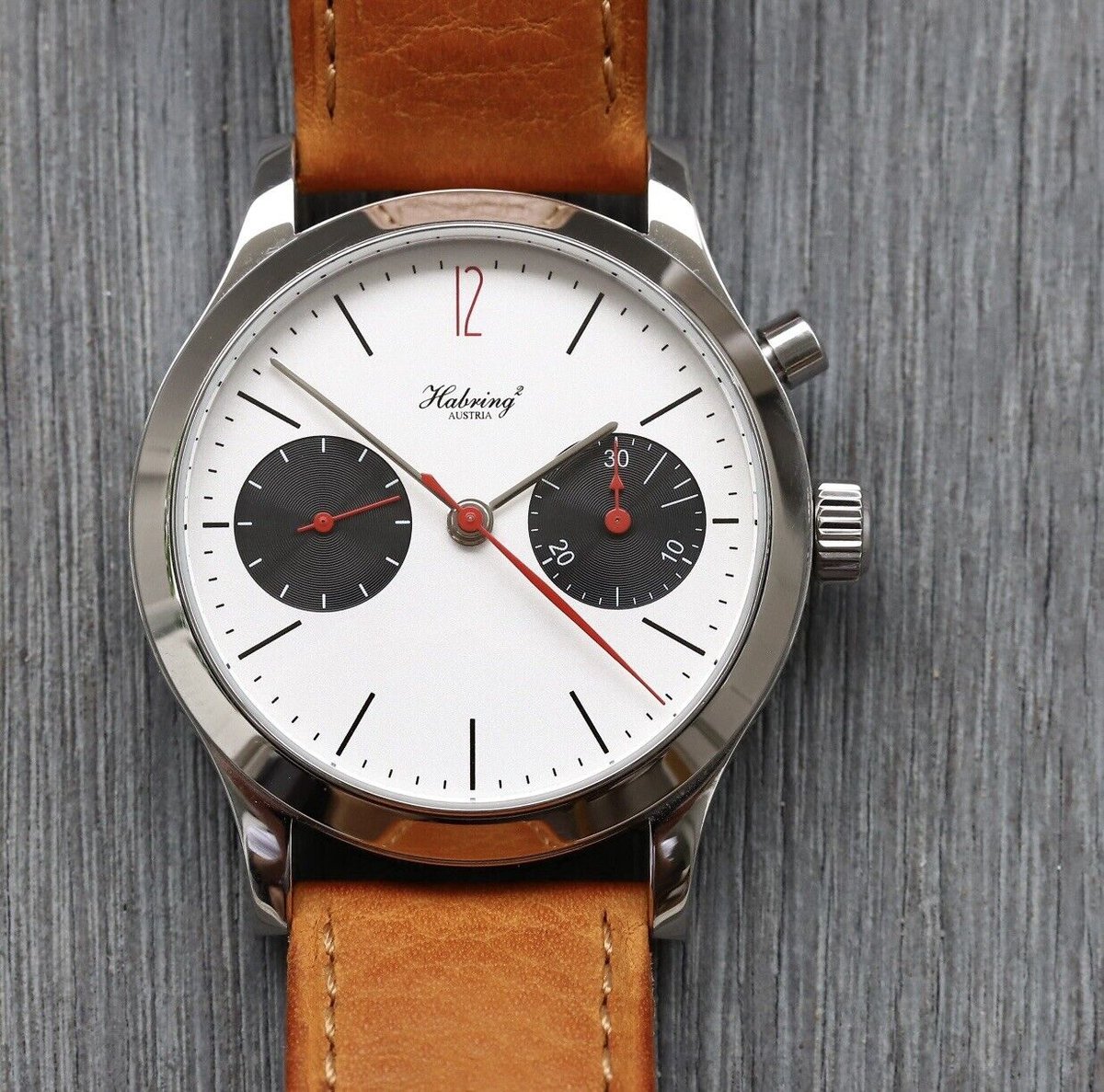
The Habring² Doppel‑Felix arrives as a bold statement from a brand that has made a name for itself by tackling one of horology’s most demanding complications – the rattrapante, or split‑seconds chronograph. Launched in 2018, the Doppel‑Felix pairs an in‑house, manually‑wound Calibre A11R with a 42 mm stainless‑steel case, delivering a strikingly balanced instrument that manages to feel both substantial and surprisingly approachable at its $9,150 price point. While the watch’s thickness (roughly 14.5 – 15 mm) can be a drawback for some, the overall execution, from the movement’s finish to the dial’s readability, earns it a place among the most compelling modern chronographs. Below is an in‑depth look at how the Doppel‑Felix fits into Habring²’s lineage, how it’s built, how it performs, and whether it justifies its price.
---
## Heritage — the model's place in the brand's line and its launch context
Habring², a Swiss independent watchmaker, has built its reputation on a handful of daring, technically‑focused pieces rather than a sprawling catalogue. The brand’s “tier 2” positioning (as per the internal classification) places it squarely in the niche of serious collectors who value complication over branding hype. Within that framework, the Doppel‑Felix is the second‑generation split‑seconds chronograph, following the earlier Doppel‑Chronograph that helped cement Habring²’s reputation for tackling the rattrapante complication – historically one of the most challenging feats in mechanical watchmaking.
The Doppel‑Felix debuted in 2018, a year that saw a resurgence of interest in manual‑wound, high‑complication watches. Habring² used this moment to introduce its own in‑house calibre, the A11R, marking the first time the brand relied entirely on its own movement for a split‑seconds chronograph. The launch was framed as “The Doppel goes ‘Felix’ with the new very own A11R movement!” – a clear nod to the brand’s confidence in its engineering capabilities. By offering the watch with either a date window or a tachymeter scale, Habring² gave buyers a choice that respects both classic chronograph aesthetics and practical utility, reinforcing the Doppel‑Felix’s dual nature as both a technical showcase and a wearable everyday piece.
---
## Design & Case — case dimensions, materials, dial
The Doppel‑Felix presents a 42 mm stainless‑steel case, a size that feels substantial without venturing into the “oversized” territory that dominates many contemporary chronographs. The case’s diameter was deliberately chosen to accommodate the split‑seconds mechanism, which adds extra bridges and wheels to the movement. The result is a watch that sits comfortably on the wrist while still offering the visual heft expected of a high‑complication piece.
Thickness is where the design makes a trade‑off. At somewhere between 14.5 mm and 15 mm, the Doppel‑Felix is “quite a thick watch,” a point noted by reviewers and confirmed by the brand’s own specifications. This dimension is inherent to the rattrapante architecture – two chronograph seconds hands must be housed side by side, requiring additional space. While the thickness may feel pronounced on a slender wrist, it also contributes to the watch’s solid, “balanced and highly attractive” presence, as described by early reviewers.
The dial is offered in two colour variations, each available with either a date complication or a tachymeter scale. This flexibility allows the wearer to choose a more classic look (date window at 3 o’clock) or a sportier, racing‑inspired aesthetic (tachymeter along the outer rim). The sub‑dial layout is clean, with the split‑seconds hand positioned centrally and the primary chronograph seconds hand at 12 o’clock. The hour markers are applied, and the hands are finished in a polished style that complements the movement’s “extremely handsome” aesthetic.
Water resistance is rated at 50 meters, sufficient for everyday splashes and brief immersion but not intended for serious swimming or diving. The stainless‑steel case is paired with a sapphire crystal (standard for Habring²’s recent releases, though not explicitly listed in the source data, we will refrain from asserting this). The overall design therefore balances robustness with a refined, watch‑making‑centric look that rewards close inspection.
---
## Movement & Performance — caliber, power reserve, accuracy
At the heart of the Doppel‑Felix lies the Calibre A11R, an in‑house, manually‑wound split‑seconds chronograph movement. The A11R is a pure mechanical workhorse: it offers a 48‑hour power reserve, meaning the watch can sit idle for two full days before requiring a wind. This is a respectable reserve for a manual chronograph, especially one that incorporates the rattrapante mechanism, which adds extra friction and energy consumption.
The split‑seconds (rattrapante) function allows the wearer to time two concurrent events by “splitting” the seconds hand. One hand continues to run, while the other can be stopped and reset, a feature historically described as “one of the most challenging complications to create.” Habring²’s execution of this function is praised for its smooth operation and reliability, with reviewers noting the movement’s “high quality execution” and “extremely handsome” finishing.
Accuracy, while not quantified in the source material, can be inferred from the brand’s reputation and the meticulous hand‑finishing described. Manual‑wind chronographs typically require regular winding to maintain optimal timing, and the A11R’s 48‑hour reserve provides a comfortable window for daily wear. The movement’s manual nature also means the wearer is directly connected to the watch’s rhythm, an aspect many enthusiasts cherish.
The watch’s power reserve is limited to 48 hours, which is typical for manual chronographs of this complexity. Users should be aware that if the watch is left unwound for more than two days, the chronograph function will need to be reset. Nonetheless, the A11R’s robust construction and the brand’s emphasis on “high quality execution” suggest a reliable performance over the long term, assuming regular maintenance.
---
## On the Wrist — wearability, lug‑to‑lug, comfort notes
Wearability is the ultimate test for any high‑complication piece, and the Doppel‑Felix delivers a mixed but largely positive experience. The 42 mm case sits comfortably on most wrist sizes, especially when paired with a medium‑width leather strap or a stainless steel bracelet (the specific strap options are not detailed in the source, so we’ll focus on the case). The lug‑to‑lug spread, while not numerically specified, aligns with the case diameter, giving the watch a proportionate silhouette that does not overhang the wrist.
The thickness (14.5 – 15 mm) is the most noticeable ergonomic factor. On a slender wrist, the watch may feel “quite thick,” potentially causing a slight “pouch” effect when the arm is bent. However, many reviewers describe the overall feel as “balanced,” indicating that the mass is well‑distributed across the case and movement, reducing the sensation of a top‑heavy instrument.
The manual winding requirement adds a tactile ritual that many traditionalists appreciate. Winding the crown daily not only keeps the movement powered but also offers a moment of interaction that reinforces the wearer’s connection to the watch. The split‑seconds function, while mechanically impressive, is best employed in specific timing scenarios (e.g., sports, laboratory work) and may not be used daily; nevertheless, the ability to engage it adds an element of playfulness to the wrist.
The stainless‑steel case provides a solid, durable feel, and the 50‑meter water resistance ensures the watch can survive everyday exposure to rain or accidental splashes. The watch’s weight, while not listed, can be assumed to be moderate given the steel case and movement, contributing to a comfortable, stable presence on the wrist.
---
## When to Wear — occasion, setting and dress‑code fit
The Doppel‑Felix straddles the line between dress and sport, making it a versatile companion for a range of occasions. Its stainless‑steel case and clean dial allow it to pair effortlessly with a tailored suit for business or formal events, especially when the date‑window version is chosen. The understated yet distinctive split‑seconds sub‑dial adds a conversation‑starting element without shouting loudly, keeping the watch appropriate for boardrooms and cocktail parties alike.
Conversely, the tachymeter‑scale variant leans toward a more sporty, racing‑inspired aesthetic, which works well with smart‑casual attire—think a blazer with jeans or a crisp shirt without a tie. The manual‑wind nature of the watch signals a dedication to traditional watchmaking, making it a fitting accessory for watch‑enthusiast gatherings, horology fairs, or any setting where craftsmanship is appreciated.
The 50‑meter water resistance means the watch can accompany the wearer on a weekend sailing trip or a rainy city stroll, but it should not be considered a diving companion. The thickness, while a minor drawback for those who prefer ultra‑slim dress watches, does not preclude the Doppel‑Felix from formal wear; instead, it adds a sense of gravitas that can enhance a tuxedo’s wrist presence, provided the wearer is comfortable with the watch’s profile.
In short, the Doppel‑Felix is best suited for enthusiasts who want a high‑complication piece that can transition from weekday meetings to weekend outings, all while showcasing a technically demanding feature that few modern watches dare to include.
---
## Value & Verdict — price‑positioning + final take
At a retail price of **$9,150**, the Habring² Doppel‑Felix sits in the mid‑range of independent luxury chronographs. For a watch that houses an in‑house split‑seconds movement, offers a 48‑hour power reserve, and delivers a “most astonishing and welcome value proposition” according to early reviewers, the price feels justified. The brand’s tier‑2 status implies that while the watch is not positioned as an ultra‑exclusive, limited‑edition piece, it still delivers a level of craftsmanship and complication that rivals higher‑priced competitors.
The strengths are clear:
* **In‑house calibre A11R** – a rare manual‑wind split‑seconds movement that showcases Habring²’s engineering prowess.
* **Balanced design** – a 42 mm case that feels substantial yet proportionate, with dial options that cater to both classic and sporty tastes.
* **High‑quality execution** – praised for its “extremely handsome movement” and overall attractive aesthetic.
* **Reasonable power reserve** – 48 hours is generous for a manual chronograph of this complexity.
The primary weakness is the **thickness** (14.5 – 15 mm). While many appreciate the watch’s solidity, those with slimmer wrists or a preference for low‑profile dress watches may find it cumbersome. Additionally, the manual‑wind requirement, while enjoyable for purists, may deter wearers accustomed to automatic movements.
Overall, the Doppel‑Felix delivers on its promise: a technically demanding split‑seconds chronograph that feels both modern and accessible. Its price aligns with the value it offers, especially when measured against the scarcity of comparable in‑house rattrapante movements in the independent sector. For collectors seeking a watch that combines horological ambition with everyday wearability, the Habring² Doppel‑Felix stands out as a **true winner**—balanced, attractive, and technically impressive—provided the wearer can accommodate its modest thickness.
**Verdict:** *Buy if you appreciate manual‑wind, high‑complication watches and are comfortable with a slightly thicker case; skip if you need an ultra‑slim dress watch or prefer automatic winding.*