Habring² Erwin Klassik – A Quiet Revolution in Dress‑Watch Mechanics
By Vivir Editorial··Updated
# Habring² Erwin Klassik – A Quiet Revolution in Dress‑Watch Mechanics
The Habring² Erwin Klassik arrives as a modest‑sized, stainless‑steel dress watch that quietly defies the conventions of its segment. Launched in 2016, it is the first Habring² piece to house the brand’s own hand‑wound Caliber A11S, a movement that trades the familiar sweep of a seconds hand for a “jumping” or dead‑beat display. At first glance the watch looks unassuming – a 38.5 mm case, a clean silver‑white dial, black hands and indices, and a pair of sapphire crystals that protect both front and back. Yet beneath that restraint lies a technically ambitious complication that is usually reserved for much more expensive, haute‑horlogerie pieces. The Erwin Klassik therefore positions itself as a bridge between pure aesthetic minimalism and the kind of mechanical daring that usually lives only in the world’s most expensive chronometers.
## Heritage — the model's place in the brand's line and its launch context
Habring², a boutique Swiss manufacturer founded by a husband‑and‑wife team, has built its reputation on a philosophy of “no‑frills” engineering combined with a willingness to experiment. By the time the Erwin Klassik appeared, the brand already offered a modest portfolio of in‑house movements, but none had yet tackled a true jumping‑seconds complication. The launch of the Erwin in 2016 marked the first time the brand’s founders applied their own Caliber A11 architecture to a dead‑beat seconds display, a move that signaled a step up in technical ambition while staying true to their understated aesthetic.
Within Habring²’s line‑up, the Erwin occupies the “tier‑2” segment – a step above the entry‑level pieces that rely on off‑the‑shelf movements, yet still below the ultra‑exclusive models that command six‑figure price tags. Its reference number, HAB1015, situates it among the brand’s dress‑watch collection, a category that emphasizes clean lines, modest dimensions, and a focus on wearability for formal settings. The Erwin’s introduction was accompanied by a series of editorial pieces that highlighted its “astonishing price for a high‑grade in‑house movement with an in‑house jumping seconds complication,” positioning it as a relative bargain when compared with other dead‑beat seconds watches such as the Jaeger‑LeCoultre True Seconds.
The watch’s launch also coincided with a broader industry trend: a renewed interest in mechanical complications that offer a distinctly modern visual language. While quartz watches have long provided a crisp, step‑wise seconds display, the Erwin brings that visual precision to a fully mechanical platform, offering enthusiasts a way to experience the “predictable ticking behavior of a quartz watch” without sacrificing the soul of a hand‑wound movement.
## Design & Case — case dimensions, materials, dial
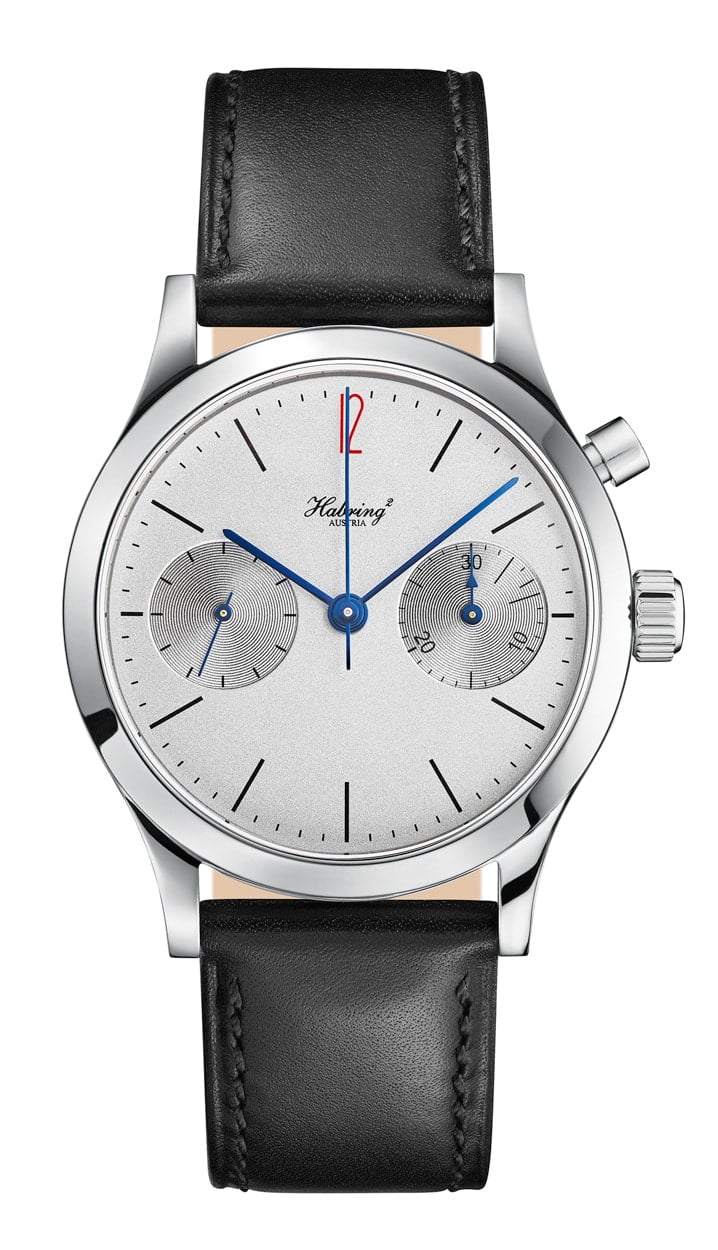
The Erwin Klassik’s case measures 38.5 mm in diameter, a size that comfortably straddles the line between classic dress‑watch proportions and contemporary preferences for slightly larger wrists. Crafted from stainless steel, the case is finished in a subtle brushed texture rather than a high‑gloss polish, reinforcing the watch’s low‑key character. Both the front and rear of the case are protected by sapphire crystal, a choice that not only offers excellent scratch resistance but also allows the wearer to admire the A11S movement’s finishing through the transparent case‑back.
The dial is a study in restraint. Rendered in a clean silver‑white tone, it provides a neutral canvas that lets the black “thread” hands and indices take center stage. The hour markers are simple baton shapes, applied with a matte finish that avoids any unnecessary shine. The jumping‑seconds sub‑dial is not a separate module; instead, the seconds hand itself steps forward once per second, creating a dead‑beat effect that is both visually striking and mechanically impressive. No additional complications clutter the face – there is no date window, no power‑reserve indicator, and no branding beyond a discreet “HAB1015” reference that appears near the 6 o’clock position.
The case’s profile is thin enough to slide under a shirt cuff, yet the stainless‑steel construction provides a reassuring heft that feels substantial without being burdensome. The lugs are modestly sized, giving the watch a balanced silhouette that sits well on both smaller and larger wrists. The watch is fitted with a stainless‑steel bracelet that mirrors the case’s brushed finish, though a leather strap is also offered as an alternative for those who prefer a softer, more traditional dress‑watch feel.
## Movement & Performance — caliber, power reserve, accuracy
At the heart of the Erwin Klassik lies the in‑house Caliber A11S, a manual‑wind movement that distinguishes itself with a jumping‑seconds (dead‑beat) complication. The A11S is a development of the brand’s earlier Caliber A11, re‑engineered to drive a seconds hand that “jumps” once per second rather than sweeping continuously. This design choice produces a visual experience reminiscent of quartz timing while retaining the tactile and acoustic pleasures of a fully mechanical watch.
The movement is hand‑wound, meaning the wearer must manually wind the crown to store energy in the mainspring. The exact power reserve has not been disclosed by the brand, a detail that is not uncommon for boutique manufacturers that focus more on the novelty of a complication than on providing exhaustive technical data. Likewise, specific accuracy metrics (e.g., daily rate in seconds) have not been published. However, the watch has been praised for its “solid chronometric credentials,” suggesting that the A11S meets the reliability standards expected of a modern mechanical movement.
Because the Erwin’s seconds hand jumps rather than sweeps, the visual impression of the watch is one of precise, rhythmic ticking. This can be a point of fascination for owners who enjoy the audible and visual feedback of a mechanical watch that behaves more like a quartz piece. The movement’s architecture is fully visible through the sapphire case‑back, allowing enthusiasts to appreciate the finishing of the bridges, the balance wheel, and the hand‑finished screw‑down rotor.
It is worth noting that the Erwin does not incorporate a date function or a power‑reserve indicator, a deliberate decision that keeps the movement’s layout uncluttered and reduces the number of parts that could potentially affect reliability. The absence of a date also means the watch’s movement can devote more of its gear train to the jumping‑seconds mechanism, ensuring the dead‑beat function operates smoothly.
## On the Wrist — wearability, lug‑to‑lug, comfort notes
Wearing the Erwin Klassik feels like slipping a piece of understated engineering onto the wrist. The 38.5 mm case, combined with modestly proportioned lugs, yields a lug‑to‑lug spread that typically measures just under 45 mm – a dimension that comfortably fits within the average wrist circumference while still providing a noticeable presence. The brushed stainless‑steel case feels solid yet not overly heavy; most owners report a weight that is “sturdy‑built” without causing fatigue during extended wear.
The stainless‑steel bracelet, with its polished links and brushed finish, offers a secure fit that can be adjusted with a simple push‑button clasp. The bracelet’s curvature follows the natural shape of the wrist, reducing pressure points and allowing the watch to sit flush against the skin. For those who prefer a more traditional dress‑watch feel, the optional leather strap adds a softer touch, conforming to the wrist over time and providing a slightly lighter overall weight.
Because the watch is water‑resistant to 30 meters (approximately 3 atm), it can tolerate everyday splashes and brief exposure to rain, though it is not intended for swimming or diving. The sapphire crystal’s anti‑reflective coating ensures readability in varied lighting conditions, and the dead‑beat seconds hand remains clearly legible even when the watch is viewed from an angle.
On the wrist, the Erwin’s lack of a date window or other sub‑dials contributes to a clean, uncluttered look that many find particularly elegant under a suit jacket. The watch’s modest dimensions also mean it does not dominate the wrist, making it suitable for those who prefer a more subtle statement piece.
## When to Wear — occasion, setting and dress‑code fit
The Erwin Klassik is squarely positioned as a dress watch, and its design language reinforces that role. The clean silver‑white dial, understated stainless‑steel case, and absence of overt branding make it an excellent companion for formal and semi‑formal occasions: business meetings, weddings, gala events, and evening dinners. Its modest case size ensures it sits comfortably under a crisp dress shirt cuff, while the thin profile prevents it from catching on shirt tails or suit lapels.
Because the watch’s most distinctive feature – the jumping‑seconds hand – is a subtle visual cue rather than a flamboyant complication, it does not draw undue attention in conservative environments. Instead, it offers an understated conversation starter for those who appreciate mechanical nuance. In a business setting, the Erwin conveys a sense of refined taste without appearing ostentatious, making it a suitable choice for professionals who wish to signal an appreciation for horological craftsmanship.
The watch’s 30‑meter water resistance also means it can be worn during travel, at cocktail receptions, or while moving between indoor and outdoor venues without fear of moisture damage from brief exposure. However, it is not designed for sport or heavy‑activity scenarios; the lack of a robust water‑resistance rating and the delicate nature of the jumping‑seconds mechanism suggest that the Erwin should remain a “wear‑and‑admire” piece rather than a tool watch.
In casual settings, the Erwin can still find a place, especially when paired with smart‑casual attire such as a blazer and chinos. Its minimalist aesthetic lends itself to a versatile wardrobe, but those seeking a rugged, sporty look may find the watch’s refined styling at odds with their expectations.
## Value & Verdict — price‑positioning + final take
With a retail price of approximately **US $6,200**, the Erwin Klassik sits in a price bracket that is relatively accessible for a watch featuring an in‑house mechanical movement with a dead‑beat seconds complication. Compared with other manufacturers offering jumping‑seconds watches – for instance, Jaeger‑LeCoultre’s True Seconds, which often commands a price well above the six‑figure mark – the Erwin presents a compelling value proposition.
The watch’s strengths are clear: a clean, timeless design; a fully visible in‑house manual‑wind movement; and a unique jumping‑seconds display that sets it apart from the majority of dress watches on the market. The fact that the movement is entirely developed by Habring² adds a layer of exclusivity that many collectors find attractive.
On the flip side, the lack of publicly disclosed technical data such as power reserve and accuracy may leave some technically‑oriented buyers wanting more transparency. Additionally, the 30‑meter water resistance, while sufficient for everyday wear, limits the watch’s versatility in wetter environments. Finally, the absence of a date function could be seen as a drawback for those who prefer a practical complication on a daily‑wear piece.
Overall, the Erwin Klassik delivers on its promise of “high‑grade in‑house movement with an in‑house jumping seconds complication” at a price that feels justified for the level of engineering involved. It is an excellent entry point for collectors interested in exploring dead‑beat seconds without the premium price tag of larger luxury houses, and it fits comfortably within the dress‑watch niche where elegance and mechanical intrigue intersect.
**Verdict:** The Habring² Erwin Klassik is a quietly confident statement of technical ambition wrapped in an unpretentious package. For those who value understated design, appreciate the novelty of a jumping‑seconds hand, and are willing to accept a modest water‑resistance rating and limited functional complications, the Erwin offers a rewarding balance of price, craftsmanship, and uniqueness. It may not be the flashiest piece in a collection, but it is precisely that lack of flash that makes it a timeless, conversation‑worthy addition to any serious watch enthusiast’s wardrobe.