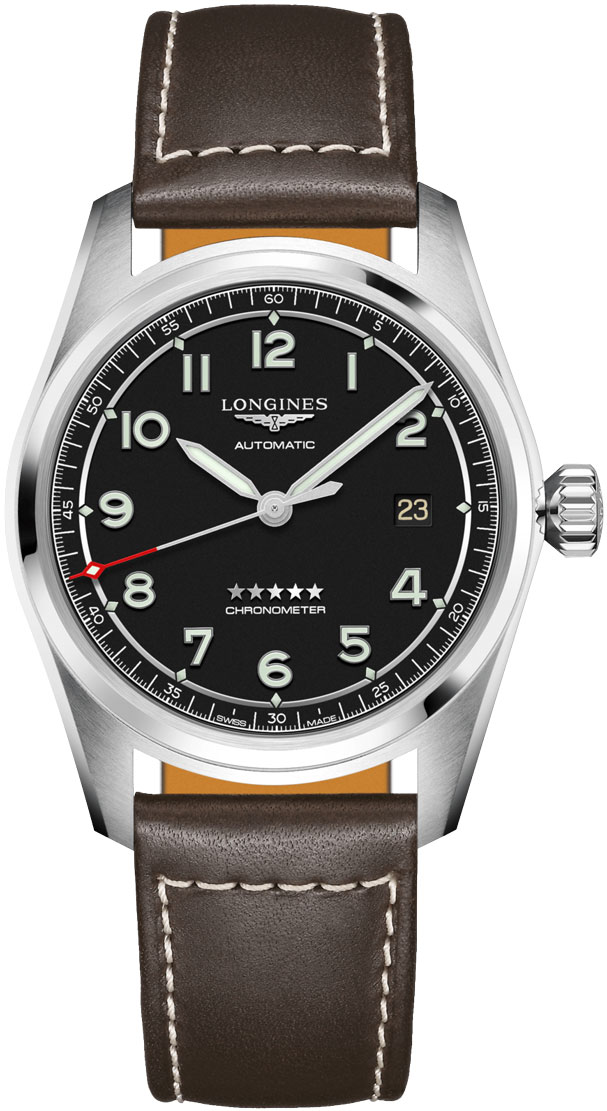
Habring² Erwin Pilot (HAB1037) – A Hands‑Wound Tribute to 1940s Aviation
By Vivir Editorial··Updated
# Habring² Erwin Pilot (HAB1037) – A Hands‑Wound Tribute to 1940s Aviation
When a boutique watchmaker decides to reinterpret a classic era, the result can be either a nostalgic pastiche or a fresh, functional evolution. Habring²’s Erwin Pilot, launched in 2016, lands firmly in the latter camp. Built around the in‑house A11S hand‑wound caliber, the 38.5 mm stainless‑steel case houses a textured black dial that immediately recalls the “cockpit” aesthetics of the 1940s, while the dead‑beat seconds (or “jumping second”) complication gives the watch a kinetic presence that few modern pilots’ pieces can match. Priced at US $7,150, the Erwin Pilot sits at the upper‑mid tier of independent watch offerings—expensive enough to demand scrutiny, yet still approachable for collectors who value mechanical ingenuity over brand cachet. Below we break down the watch’s heritage, design, movement, wearability, appropriate occasions, and overall value.
---
## Heritage — the model's place in the brand's line and its launch context
Habring², an Austrian micro‑brand, has built its reputation on small‑batch, hand‑finished timepieces that prioritize mechanical purity and distinctive complications. The Erwin line debuted in 2016 as an evolution of the brand’s earlier flagship, the Felix model. While the Felix was a more straightforward dress watch, the Erwin Pilot pushes the narrative toward aviation heritage, echoing the utilitarian aesthetic of 1940s cockpit instruments. The “Erwin” name itself is a nod to the brand’s internal lineage rather than an external homage, and the Pilot sub‑variant (reference HAB1037) distinguishes itself with a dedicated dead‑beat seconds mechanism—a rarity even among pilot‑style watches.
The launch year is significant. By 2016, the independent watch scene was already saturated with pilot‑themed pieces, many of which leaned heavily on digital displays or oversized cases. Habring²’s decision to pair a modest 38.5 mm case with a hand‑wound movement and a mechanical jumping‑second display positioned the Erwin Pilot as a counter‑statement: a watch that respects the past without resorting to gimmickry. The model quickly gathered praise for its “sporty” yet refined look, and it remains a reference point for anyone exploring the brand’s evolution from dress‑oriented pieces toward more technically adventurous designs.
---
## Design & Case — case dimensions, materials, dial
### Case
The Erwin Pilot’s case is crafted from brushed stainless steel, a material choice that balances durability with a timeless aesthetic. At 38.5 mm in diameter and a modest thickness (the exact figure isn’t disclosed in the source data), the watch sits comfortably between the classic pilot‑watch size of the 1940s (typically 38–40 mm) and the modern trend toward larger, statement‑making cases. This dimension makes the Erwin Pilot suitable for a wide range of wrist sizes, especially for those who find today’s oversized pilots cumbersome.
Water resistance is rated at 30 meters (3 ATM). While this protects the watch from accidental splashes and brief exposure to rain—a necessity for any pilot‑style piece—it is not sufficient for swimming or diving. The limitation aligns with the watch’s intended use as a dress‑to‑casual timepiece rather than a tool for water‑intensive activities.
### Dial
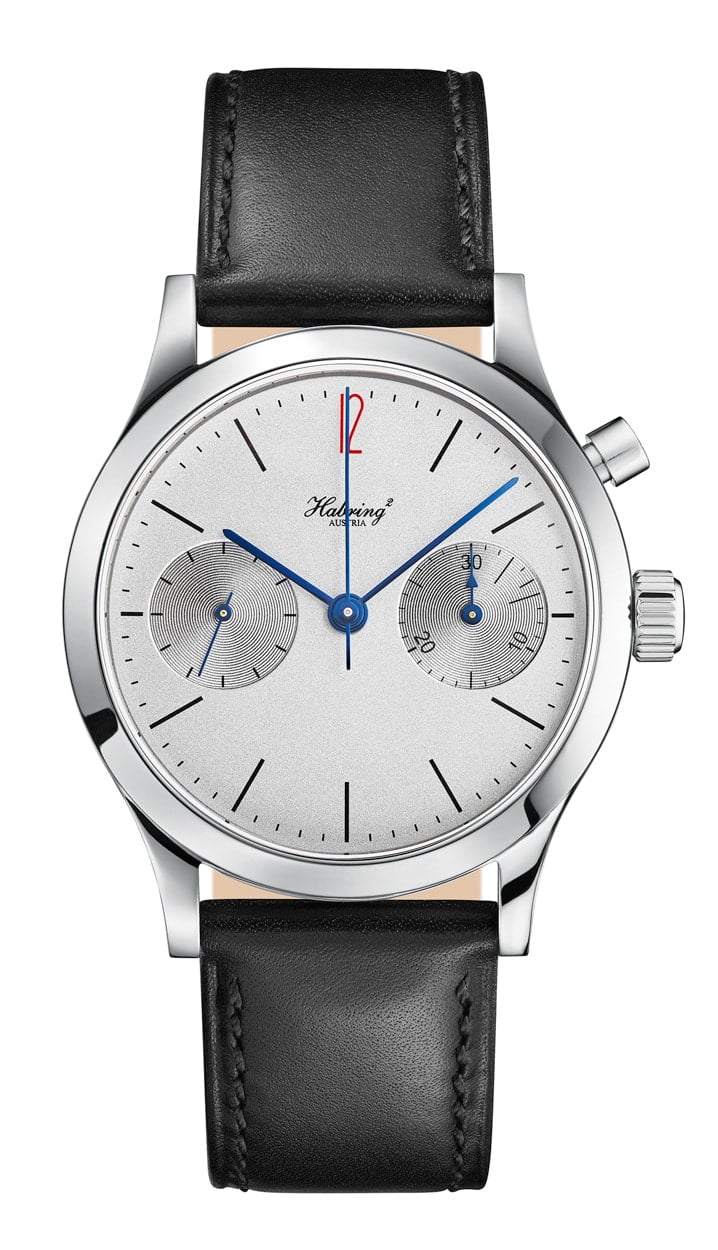
The dial is where the Erwin Pilot truly shines. A textured black “military‑inspired” surface provides a subtle depth that catches light without being overly glossy. Arabic numerals are rendered in a clean, legible style, and the luminous “cathedral” hands—so named for their pointed, architectural shape—offer a clear visual cue in low‑light conditions. The dead‑beat seconds complication is situated at the 6 o’clock position, delivering a ticking motion that jumps once per second rather than sweeping continuously. Reviewers have described watching this hand as “very satisfying,” a testament to the kinetic charm the complication adds.
The overall dial layout feels purposeful rather than crowded. There are no extraneous sub‑dials or date windows; the focus remains on time‑telling and the unique seconds display. The combination of a textured dial, brushed case, and polished hands creates a visual balance that feels both vintage and contemporary.
### Bracelet/Strap
While the source data does not specify the exact strap material, Habring² typically pairs its pilot models with either a stainless‑steel bracelet or a high‑quality leather strap. The choice is left to the wearer, and both options complement the watch’s aesthetic—metal for a more utilitarian look, leather for a dressier vibe.
---
## Movement & Performance — caliber, power reserve, accuracy
At the heart of the Erwin Pilot lies the in‑house A11S caliber, a hand‑wound mechanical movement designed and assembled by Habring². The A11S is a single‑handed module (hour, minute, and seconds) that incorporates the dead‑beat seconds complication. Here’s what we know:
| Specification | Detail |
|---------------|--------|
| **Movement** | A11S (hand‑wound) |
| **Power Reserve** | 48 hours |
| **Complication** | Dead‑beat seconds (jumping second) |
| **Frequency** | Not disclosed (typical hand‑wound movements range 18‑21 kHz) |
| **Finishing** | Manual finishing; visible attention to detail typical of boutique calibers |
The 48‑hour power reserve is respectable for a hand‑wound movement of this size. It means a wearer who winds the watch daily can expect roughly two days of uninterrupted operation, a useful buffer for occasional travel or weekend trips. The dead‑beat seconds mechanism adds a layer of mechanical complexity; unlike a traditional sweep hand, the jumping second hand moves in discrete one‑second steps, creating a visual “tick” that many enthusiasts find more engaging.
Accuracy data is not provided in the source material, and Habring² does not claim chronometer certification for this model. Nevertheless, hand‑wound movements of this calibre, when properly regulated, typically achieve daily deviations of ±5–10 seconds, which is acceptable for a watch of this price point and mechanical ambition.
The A11S’s manual winding system is straightforward: a crown that turns clockwise to wind the mainspring. The watch does not feature an automatic rotor, a deliberate design choice that aligns with the brand’s emphasis on “pure” mechanical interaction. For collectors who enjoy the ritual of winding, this is a welcome attribute.
---
## On the Wrist — wearability, lug‑to‑lug, comfort notes
The Erwin Pilot’s modest case diameter translates into a comfortable wrist presence for most users. With a brushed steel case, the edges are gently rounded rather than aggressively beveled, reducing the likelihood of the watch catching on clothing or feeling overly sharp against the skin. Although the exact lug‑to‑lug measurement isn’t disclosed, a 38.5 mm case typically yields a lug width of around 18–20 mm, which fits comfortably under most shirt cuffs while still providing a distinct silhouette.
The weight of the watch is also worth noting. Stainless steel adds a solid, reassuring heft without becoming burdensome. Combined with a well‑balanced movement and a properly engineered strap or bracelet, the Erwin Pilot sits snugly on the wrist without digging in. The luminous cathedral hands, while functional, are also lightweight, ensuring the seconds hand’s jumping action does not feel “heavy” or sluggish.
Potential drawbacks: the 30 m water resistance means the wearer must be mindful of exposure to moisture. Additionally, the hand‑wound nature requires a daily winding ritual; forgetting to wind for more than a couple of days could result in a stopped watch, which may be inconvenient for those accustomed to automatic or quartz models.
Overall, the watch feels like a purposeful, well‑engineered piece that rewards attentive wearers with a satisfying tactile experience.
---
## When to Wear — occasion, setting and dress‑code fit
The Erwin Pilot occupies a sweet spot between dress and sport, making it a versatile companion for a range of settings:
1. **Business Casual / Smart‑Casual**
Pair the watch with a crisp button‑down shirt, a blazer, and chinos. The brushed steel case and textured black dial complement the understated elegance of a smart‑casual outfit without appearing overly formal.
2. **Aviation‑Themed Events**
For aviation enthusiasts, air‑show gatherings, or pilot‑school reunions, the Erwin Pilot’s dead‑beat seconds and vintage cockpit aesthetic make it a conversation starter that aligns perfectly with the theme.
3. **Weekend Getaways**
The watch’s modest size and comfortable strap options allow it to transition smoothly from city strolls to countryside drives. Its 48‑hour power reserve means a single winding can cover a short trip, and the 30 m water resistance protects it against unexpected rain.
4. **Formal Occasions (with discretion)**
While the black dial is more casual than a polished silver or gold dress watch, the understated design can still work under a tuxedo or dark suit if the wearer prefers a subtle, mechanical accent rather than a classic dress watch.
5. **Everyday Wear**
The watch’s durability (stainless steel case, luminous hands) and easy‑to‑read Arabic numerals make it suitable for daily use. The only caveat is the need for regular winding and avoidance of heavy water exposure.
In short, the Erwin Pilot is a “go‑anywhere” piece that leans slightly toward the casual side of smart attire, making it ideal for those who want a mechanical watch that can be worn at work, on the weekend, and at special events without feeling out of place.
---
## Value & Verdict — price‑positioning + final take
At US $7,150, the Erwin Pilot sits in a competitive segment populated by independent brands offering hand‑wound or automatic movements with unique complications. Its price reflects several factors:
* **In‑House Movement** – The A11S is a proprietary caliber, and the inclusion of a dead‑beat seconds complication adds engineering cost.
* **Limited Production** – Habring²’s boutique nature means each piece is produced in relatively small batches, which drives up per‑unit expense.
* **Design Execution** – The textured dial, cathedral hands, and brushed steel case are all hand‑finished, contributing to labor costs.
* **Brand Positioning** – As a tier‑2 offering within Habring²’s lineup (the broader Erwin line is priced around $6,200), the Pilot variant commands a premium for its added complication.
When compared to similarly priced pilot watches from larger manufacturers, the Erwin Pilot offers a level of mechanical uniqueness (the jumping second) that is rarely found at this price point. However, buyers should be aware of its limitations: modest water resistance, a hand‑wound movement that requires daily attention, and a case size that may feel small to those accustomed to modern oversized pilots.
**Final Verdict:**
The Habring² Erwin Pilot is a thoughtfully designed homage to 1940s aviation watches, executed with modern mechanical finesse. Its dead‑beat seconds complication provides a visual delight that few contemporary pilot watches can match, and the textured black dial delivers a striking yet understated aesthetic. While the 30 m water resistance and hand‑wound nature impose practical constraints, these are acceptable trade‑offs for a watch that prioritizes mechanical purity and design clarity. For collectors seeking a distinctive, hands‑wound pilot watch that balances heritage with a touch of novelty, the Erwin Pilot offers strong value at its US $7,150 price tag. It may not replace a rugged field instrument, but as a daily‑wear mechanical piece that sparks conversation, it earns a solid recommendation.