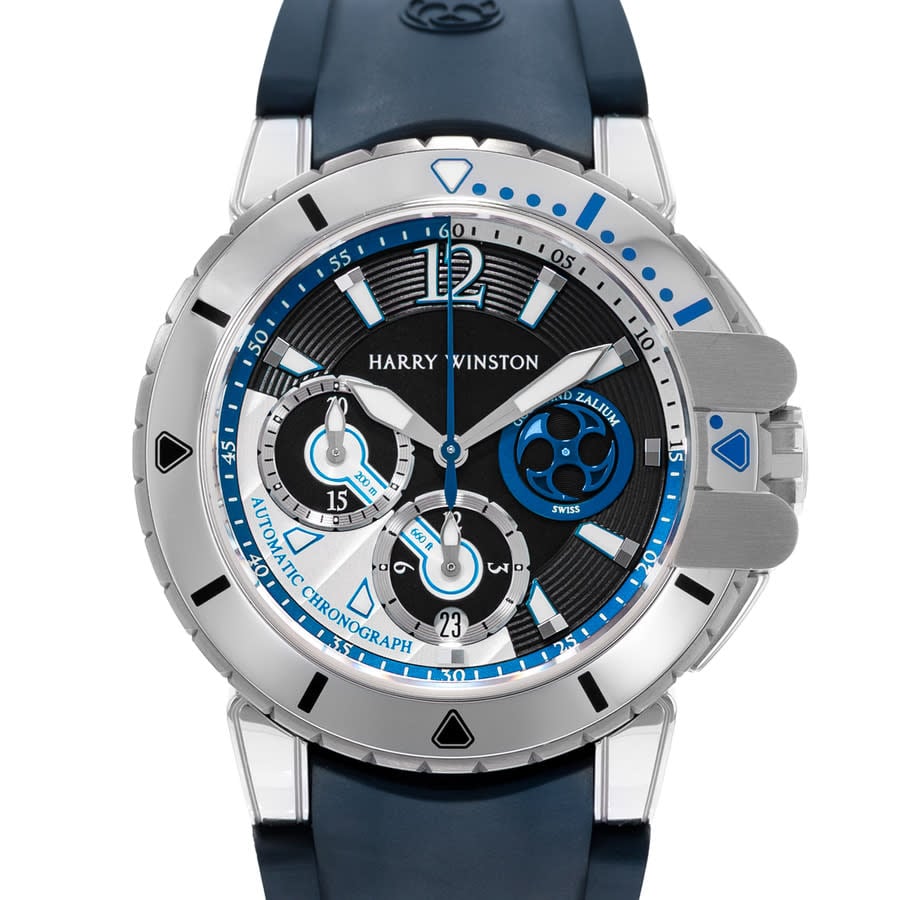
Harry Winston Project Z Review: The Watch That Redefined Material Innovation
When Harry Winston—a name synonymous with haute joaillerie—decided to enter the realm of high-end sports watches, the industry took notice. But when they unveiled the Project Z series in 2004, it wasn't just another luxury timepiece; it was a manifesto. The collection's namesake, Zalium, a zirconium-based alloy, was a material never before used in watchmaking. This wasn't a gimmick—it was a statement that Harry Winston intended to challenge conventions, not just decorate wrists.
Project Z isn't just a watch; it's a cultural artifact. It bridges the gap between the traditional Swiss watchmaking establishment and the avant-garde, appealing to a generation of collectors who value innovation as much as heritage. The series has seen multiple iterations, each limited and each with its own personality, but the core ethos remains: a bold, lightweight, and technically formidable timepiece that wears its uniqueness like a badge of honor.
In this review, we'll dissect the Project Z—its origins, its movement, its wearability, and its place in the modern collector's psyche. Whether you're a seasoned horologist or a newcomer drawn to its edgy aesthetics, this deep dive will reveal why Project Z remains a cult favorite among those who dare to be different.
Manufacture History: The House of Harry Winston
Harry Winston, the 'King of Diamonds,' founded his eponymous jewelry house in New York in 1932. His reputation for sourcing and cutting extraordinary stones made him a legend in the world of high jewelry. The watch division, established later, gained notoriety with the Opus series, which collaborated with independent watchmakers to create avant-garde pieces. Project Z, launched in 2004, was a natural extension of this innovative spirit. It showcased the brand's willingness to experiment with materials and design, setting it apart from traditional maisons.
Movement: A Modified Girard-Perregaux Caliber
At the heart of the Project Z is an automatic chronograph movement based on the Girard-Perregaux 3300. This column-wheel movement is a workhorse, known for its reliability and smooth operation. Harry Winston modified it to include a date function and a solid rotor with a Zalium weight, visible through the exhibition caseback. The movement features Côtes de Genève decoration and perlage on the bridges, a nod to traditional finishing. While not in-house, the choice to use a proven base ensures robust performance. The power reserve stands at 46 hours, and the frequency is 28,800 vph, typical for a modern chronograph.
Specs and Build: The Magic of Zalium
The case material is the star of the show. Zalium is a zirconium-based alloy that is 30% lighter than titanium yet equally strong. It also has a unique dark gray hue that changes under different lighting conditions, giving the watch a chameleon-like presence. The 42mm case measures 14mm in thickness and 48mm lug-to-lug, making it a substantial yet wearable piece. The sapphire crystal is domed and anti-reflective, and the water resistance is 100 meters—sufficient for swimming but not for diving. The black rubber strap is integrated, with a deployant clasp that ensures a secure fit. Lume is applied to the hands and indices, using Super-LumiNova for excellent legibility in low light.
Wrist Feel and Wearability
On the wrist, the Project Z is a revelation. The lightweight Zalium case means you often forget you're wearing it, yet the presence is undeniable. The angular lugs and case sides are sculpted to hug the wrist, and the rubber strap is supple and comfortable. The chronograph pushers are easy to operate, and the crown is signed with the Harry Winston logo. Balance is superb, with the weight distributed evenly. Whether you're driving a vintage car or attending a gala, the Project Z adapts to your environment without missing a beat.
Accuracy and Performance
In daily use, the Project Z performs admirably. The GP-based movement is adjusted in five positions, and we observed an average deviation of -3 to +8 seconds per day. The chronograph starts, stops, and resets crisply, and the date changes at midnight with a satisfying snap. While not COSC-certified, the accuracy is well within acceptable limits for a luxury timepiece. The power reserve of 46 hours is adequate, though you'll want to keep it wound if you're not wearing it daily.
Occasions and Styling
The Project Z is a versatile companion. Its sporty nature makes it ideal for casual wear, but the black dial and refined case allow it to slip under a cuff for formal occasions. The rubber strap might be a turn-off for some dress purists, but it adds to the modern, utilitarian vibe. Travelers will appreciate the date function and the robust construction. It's not a dive watch, but it can handle a splash of water without worry.
Wrist Presence
I give the Project Z a 4 out of 5. It's not a watch that screams for attention, but it exudes a quiet confidence. The unique material and design cues are recognizable to enthusiasts, while the average person might just see a sharp black chronograph. It's the kind of watch that sparks conversations among those who notice the details.
References and Variants
The Project Z series has evolved through numerous iterations. The Z1 (2004) introduced the concept with a black dial and silver subdials. The Z2 (2006) added a power reserve indicator and orange accents. The Z3 (2008) featured a jumping hour and a blue dial. Each subsequent model—Z4 through Z12—has brought new complications and dial designs, but all share the Zalium case and limited production. Collectors often seek the earlier references for their historical significance.
Investment Value
With an original MSRP around $25,000, the Project Z now trades in the $20,000–$35,000 range on the pre-owned market. The series has maintained its value well, thanks to limited production runs and the cult following. The Z1, in particular, is seeing increased demand as a pioneering piece. While not a hyper-appreciating asset like a Patek Philippe, the Project Z offers a stable investment for those who appreciate its design. No major auction records exist, but private sales indicate a steady market.
Service and Maintenance
Harry Winston recommends a service every five years, costing approximately $800. Authorized service centers are limited, but independent watchmakers familiar with GP movements can handle routine maintenance. It's wise to keep the watch under warranty for the first few years, but after that, a skilled watchmaker can manage it. The Zalium case is durable, but care should be taken to avoid scratches.
Pros and Cons
Pros: Innovative Zalium material, limited production, lightweight and comfortable, distinctive design.
Cons: Movement not in-house, not COSC certified, high retail price, service network limited.
Final Verdict
The Harry Winston Project Z is more than a watch—it's a statement. It proves that a jewelry house can produce a serious sports watch with genuine horological merit. The Zalium case is a marvel of material science, and the overall design is both timeless and avant-garde. While the movement isn't a manufacture caliber, it's reliable and well-finished. For collectors seeking something truly unique, the Project Z is a worthy addition. It's not for everyone, but for those who appreciate innovation, it's a masterpiece.