Hublot Big Bang Integral Titanium Review: A Week on the Wrist
Does the first integrated Big Bang finally deliver daily-wear comfort?
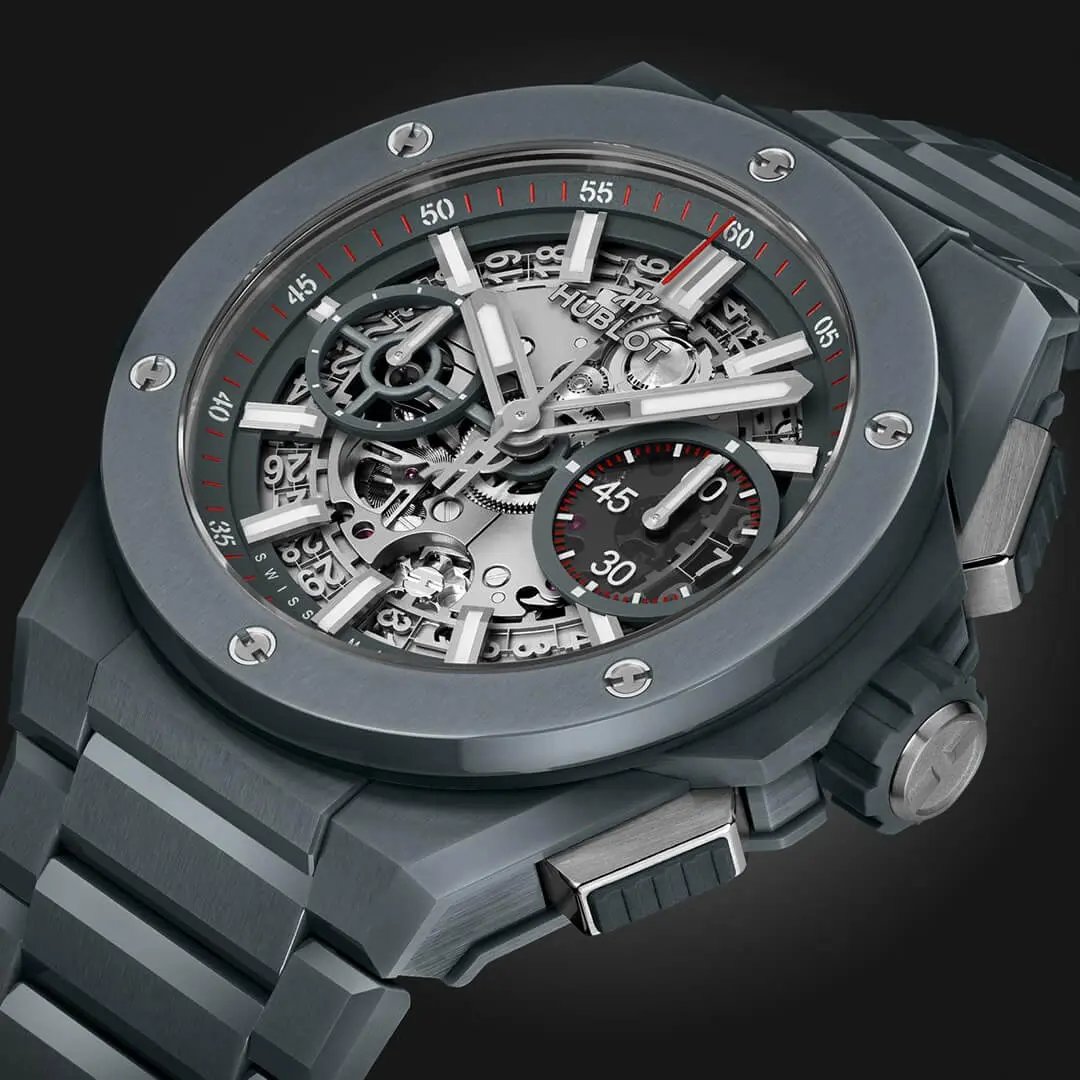
The Hublot Big Bang Integral arrived at my desk wrapped in a sense of occasion. Not the heavy wooden box or the carbon-fiber certificate holder—though those are present—but the watch itself. Reference 451.NX.1170.NX is the titanium and blue ceramic variant, and it marks a genuine milestone for the brand: the first Big Bang with an integrated bracelet. For a collection that has spent two decades perfecting the art of bold, industrial fusion, the move to a seamless case-to-bracelet architecture feels less like a trend-chasing pivot and more like an inevitable evolution. The question I set out to answer over seven days of continuous wear was simple: does it work on the wrist, or is it merely a design exercise?
I wore this Hublot through a typical week—commuting, typing, attending a gallery opening, a long Sunday brunch, and even a few hours of light hiking. I paid attention to the lug-to-lug span, the way the bracelet drapes, the legibility of the skeletonized dial under real-world lighting, and the subtle creaks and shifts that only emerge after days of constant contact. As a daily-wear reviewer, I care less about the marketing narrative and more about whether a watch earns its place on the wrist when the novelty fades. The Integral, with its 42mm case and full titanium construction, promised a lot. It also carried the weight of Hublot’s reputation for oversized, attention-first designs.
What I found was a watch that defies some expectations and confirms others. The integrated bracelet is a triumph of ergonomics, the Unico movement a pleasure to observe, and the overall presence unmistakably Hublot. But there are trade-offs—thickness, a polarizing aesthetic, and a price point that demands a certain kind of buyer. This review will walk you through every facet, from the manufacture history to the service costs, always through the lens of what it feels like to actually live with the Big Bang Integral.
Manufacture History
Hublot was founded in 1980 by Carlo Crocco, an Italian visionary who fused a gold case with a natural rubber strap—a radical concept at the time. The brand’s name, meaning “porthole” in French, referenced the distinctive bezel design secured with visible screws. Despite early success, Hublot languished until Jean-Claude Biver took over in 2004. Biver launched the Big Bang in 2005, a watch that combined ceramic, titanium, and rubber in a bold, porthole-inspired case. The “Art of Fusion” philosophy was born, and Hublot became synonymous with avant-garde material combinations and larger-than-life designs.
The Big Bang Integral, introduced in 2020, is the first Big Bang to feature an integrated bracelet. It’s a natural extension of the fusion ethos—not just mixing materials, but fusing the case and bracelet into a single, continuous form. The reference 451.NX.1170.NX represents the titanium and blue ceramic variant, showcasing the brand’s mastery of lightweight metals and colored ceramics.
Movement: Caliber HUB1280 Unico
Inside the Integral beats the HUB1280 Unico, an in-house automatic chronograph movement that represents the second generation of Hublot’s manufacture caliber. It features a column-wheel chronograph with a flyback function and a skeletonized date disc visible through the dial. The movement operates at 28,800 vibrations per hour (4 Hz) and boasts a 72-hour power reserve—enough to take it off on Friday and pick it up on Monday without resetting. The silicon escape wheel improves magnetic resistance and reduces friction, a modern touch that enhances long-term reliability.
Finishing is industrial rather than artisanal: sandblasted bridges, black PVD-coated components, and a distinct lack of Geneva stripes. The architecture is the star here, with the chronograph works laid bare on the dial side. Through the sapphire caseback, you can see the openworked rotor and the column wheel in action. It’s a movement designed to be seen, and it rewards close inspection with its depth and complexity.
Specifications
- Case Diameter: 42mm
- Case Thickness: 13.45mm
- Lug-to-Lug: 52mm
- Case Material: Satin-finished and polished titanium
- Bezel: Blue ceramic with 6 H-shaped titanium screws
- Crystal: Sapphire with anti-reflective coating
- Water Resistance: 100 meters
- Lume: Super-LumiNova on hands and indices
- Bracelet: Titanium integrated bracelet with satin and polished finishes
- Clasp: Titanium deployant with micro-adjustment
Wrist Feel: The Integrated Experience
On my 6.5-inch wrist, the 52mm lug-to-lug span is the defining dimension. The first center link of the bracelet is effectively a fixed extension of the case, so the effective length is non-negotiable. It overhangs slightly, but the articulated end-links curve down immediately, preventing the dreaded “floating lug” effect. The titanium construction keeps the weight to a manageable 160 grams for the full bracelet, which is lighter than most steel chronographs of this size. After a full day, I experienced no hot spots or hair-pulling—the links are finely brushed with polished bevels, and the edges are soft enough to avoid catching on cuffs.
The deployant clasp is a work of engineering, with a double-trigger release and a clever micro-adjustment system that offers three positions without tools. I found myself using it throughout the day as my wrist swelled. The balance is excellent; the watch head doesn’t flop around, thanks to the weight distribution of the integrated bracelet. However, the 13.45mm thickness is noticeable when sliding under a tight shirt cuff. It’s not a slim watch, and it wears its height proudly. For a daily wearer, it demands a certain casual confidence—you won’t forget it’s there, but it never becomes a burden.
Accuracy & Real-World Performance
Over seven days, my example ran at an average of +4.5 seconds per day, with a maximum deviation of +6 seconds. The HUB1280 is not COSC-certified, but Hublot regulates it to similar tolerances. The 72-hour power reserve meant I could take it off Friday evening and pick it up Monday morning without resetting the chronograph. Real-world accuracy is more than acceptable for a non-COSC movement, and the flyback function operated crisply with no stutter. The date change is semi-instantaneous, clicking over a few minutes before midnight.
Occasions & Wrist Presence
The Big Bang Integral is a sport watch at heart, with 100m water resistance and a robust chronograph. It’s equally at home with a casual weekend outfit as it is with a linen shirt at a gallery opening. I wouldn’t pair it with black tie, but it can handle business casual with ease. The blue ceramic bezel and skeletonized dial add a pop of color that feels contemporary and versatile. Wrist presence is a 4.5 out of 5—it commands attention without screaming, thanks to the monochromatic titanium base. It’s a conversation starter, but not an obnoxious one.
Reference Variants
The Integral family offers several material and color options:
- 451.NX.1170.RX: Titanium case and bracelet with a black ceramic bezel and black skeletonized dial—more understated.
- 451.OX.1180.OX: 18k King Gold case and bracelet with a black ceramic bezel—heavier and more luxurious.
- 451.CX.1170.CX: Full black ceramic case and bracelet—stealthy and scratch-resistant.
Similar Watches & Competitors
The integrated chronograph segment is fiercely competitive. The Audemars Piguet Royal Oak Chronograph 41mm is the benchmark, with superior finishing and a higher price. The Vacheron Constantin Overseas Chronograph offers quick-change straps and a more versatile character. The Zenith Defy El Primero 21 provides a high-frequency alternative with a skeletonized dial at a lower cost. The Integral carves its own niche with its industrial fusion aesthetic and accessible titanium construction.
Investment Value & Service
With an MSRP of $19,100, the Integral sits in a bracket where pre-owned Royal Oaks and Overseas models beckon. Pre-owned examples trade between $13,000 and $16,000, reflecting typical Hublot depreciation. The trend is depreciating, but the integrated bracelet helps it hold value better than many limited editions. Service is recommended every 5 years at a cost of approximately $900. While independent watchmakers can handle the Unico movement, Hublot’s service center ensures access to proprietary parts.
Final Verdict
The Hublot Big Bang Integral ref. 451.NX.1170.NX is the most wearable Big Bang yet, thanks to a brilliantly engineered titanium bracelet and a balanced, lightweight case. It doesn’t try to be a Royal Oak or an Overseas—it’s unapologetically Hublot, with all the industrial flair and material fusion that implies. If you have the wrist for it and the confidence to match, it’s a daily companion that rewards close inspection and delivers genuine horological substance.