Hugo Boss Hugo: A Definitive Review of the Quintessential 90s Fresh Aromatic
Deconstructing the legacy of a designer fragrance that defined an era of clean, confident masculinity.

In the annals of modern perfumery, certain releases serve not merely as commercial products but as cultural signifiers, capturing the zeitgeist of their moment with uncanny precision. Hugo Boss Hugo, launched in 1995, stands as one such olfactory artifact. Its arrival coincided with a pivotal shift in masculine ideals, moving away from the opulent, animalic powerhouses of the 1980s towards a new paradigm of freshness, transparency, and athletic vitality. The fragrance was the inaugural scent for the Hugo Boss sub-brand, a line conceived to target a younger, more dynamic, and fashion-forward demographic than the classic Boss Bottled clientele. It was a bold statement of intent, signaling the brand''s ambition to capture the spirit of a generation defined by techno music, minimalist design, and a globalized, urban sensibility.
The conceptual inspiration for Hugo was rooted in this very notion of dynamic, metropolitan energy. The advertising campaigns of the era depicted young men in motion—on skateboards, in sleek urban environments—embodying a sense of freedom and rebellious sophistication. The scent was designed to be the olfactory equivalent of a crisp, white shirt and a perfectly tailored blazer: impeccably clean, modern, and effortlessly confident. It eschewed the dense, sweet, or overly spicy compositions that were prevalent, opting instead for a bright, herbaceous, and subtly green aromatic structure that felt revolutionary in its clarity.
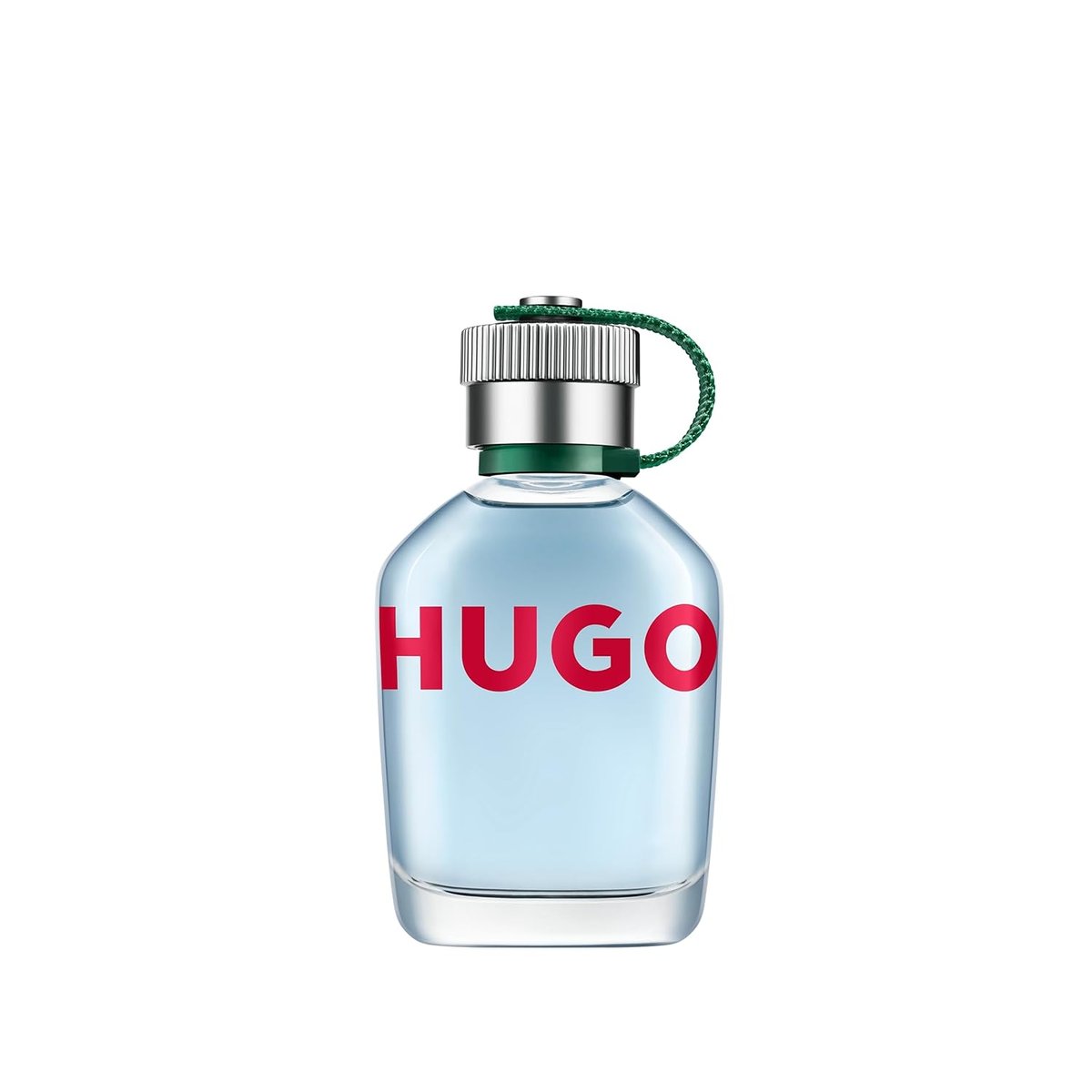
Within the Hugo Boss portfolio, Hugo occupies a foundational and distinct position. While Boss Bottled (1998) would later become the brand''s undisputed flagship with its warm, apple-tinged sophistication, Hugo established the DNA for the namesake line: cooler, sharper, and more avant-garde. Its success paved the way for numerous flankers and solidified Hugo Boss''s reputation as a major player in the designer fragrance arena. The fragrance''s iconic ribbed, metallic blue bottle, reminiscent of a sleek engine component or a futuristic flask, became an instantly recognizable symbol on dressers worldwide.
Its cultural impact and reputation within the fragrance community are multifaceted. For many, Hugo is a beloved nostalgic touchstone, a ''first proper fragrance'' that introduced a generation to the world of perfumery beyond drugstore colognes. It is frequently cited as a benchmark of the ''fresh aromatic'' genre—a category it helped to popularize. While some contemporary critics may dismiss it as a product of its time, its enduring sales and presence for nearly three decades testify to a fundamentally well-executed and appealing scent profile. It remains a staple recommendation for those seeking a clean, versatile, and unmistakably masculine fragrance that performs reliably without demanding attention through overt sweetness or density.
The Nose Behind the Scent
The fragrance was created by the perfumer Annick Ménardo, a prolific nose at Firmenich renowned for her ability to craft iconic, mass-appealing yet distinctive compositions. Ménardo''s illustrious portfolio includes masterpieces such as Lolita Lempicka (1997), Bulgari Black (1998), Thierry Mugler B*Men (2004), and Yves Saint Laurent Body Kouros (2000). Her signature often involves a clever interplay of fresh, sweet, and woody or ambery elements, creating scents with immediate appeal and intriguing depth. Her work on Hugo Boss Hugo demonstrates her skill in balancing bright, herbaceous top notes with a substantial, clean woody-musky base, resulting in a fragrance that is both invigorating and enduring.
Accords
Notes Pyramid
Scent Journey
The fragrance announces itself with a brisk, effervescent burst of cool mint and sharp grapefruit, immediately establishing its fresh character. This is swiftly underpinned by a clean, camphoraceous lavender and a touch of dewy greenness, creating an opening that is reminiscent of a frosty morning or a bracing aftershave lotion. It is crisp, direct, and unapologetically masculine from the first spray.
As the citrus chill recedes, the heart of the fragrance reveals its aromatic core. Lavender remains prominent, now softened and complemented by the peppery, rosy facets of geranium and the subtle, hay-like sweetness of clary sage. A whisper of cinnamon adds a faint, warm spice that prevents the composition from feeling too cold or clinical. A transparent jasmine note provides a hint of floral sophistication, though it remains firmly in the background, supporting the dominant herbal theme.
The final phase is where Hugo reveals its enduring, wearable quality. The aromatic herbs fade into a clean, dry, and slightly powdery woody base. Sandalwood provides a soft creaminess, vetiver adds an earthy, grassy anchor, and a modern interpretation of oakmoss (likely using alternatives like Evernyl) contributes a classic, fougère-like mossiness. The foundation is a pervasive, laundry-clean white musk intertwined with a hint of sweet, vanillic tonka bean. This drydown is intimate, skin-scent-like, and exceptionally clean, lasting for many hours as a gentle reminder of the fragrance''s initial vigor.
Performance Dashboard
Consistently delivers 7-9 hours of wear on skin, with the clean musky drydown persisting even longer on clothing.
Projects moderately for the first 2-3 hours, creating a personal scent bubble of about an arm''s length, before settling closer to the skin.
Leaves a light to moderate trail, particularly in the opening and heart phases. It is noticeable without being intrusive or overwhelming in enclosed spaces.
When to Wear
Community Verdict
Receives consistent, polite compliments rather than overwhelming praise. It is often described as ''nice,'' ''clean,'' and ''fresh''—a fragrance that people enjoy being near rather than one that demands attention from across the room.
Pros & Cons
- ✅ Exceptional versatility for daily wear across multiple occasions
- ✅ Timeless, clean scent profile that has aged gracefully
- ✅ Strong performance for a fresh aromatic, with very good longevity
- ✅ Excellent value for money within the designer fragrance market
- ✅ Iconic, durable, and travel-friendly bottle design
- ❌ Scent profile may be perceived as somewhat generic or ''safe'' by fragrance enthusiasts
- ❌ The prominent lavender note can be polarizing for some
- ❌ Limited complexity and evolution compared to niche or more modern designer offerings
- ❌ Can smell dated to those familiar with more recent aromatic releases
Price & Value
“Represents outstanding value for money. It offers reliable performance, a well-composed scent, and brand prestige at a very accessible price point, making it a smart entry into designer fragrances.”
📜 Reformulation History
Like many mainstream fragrances with a long production history, Hugo Boss Hugo has undergone subtle reformulations to comply with IFRA regulations regarding allergens like oakmoss. The vintage versions (mid-90s to early 2000s) are often described as having a slightly richer, mossier, and more pronounced herbal character. Modern batches retain the core DNA but are generally brighter, cleaner, and more musky in the drydown, with a slightly softened lavender edge. Batch-to-batch consistency in the modern era is considered good, with no dramatic variations reported by the community.
Who It's For
✅ Ideal For
- Men aged 20-40 seeking a classic, clean signature scent
- Professionals in creative or business-casual environments
- Individuals with an active lifestyle who appreciate a ''just-showered'' freshness
- Those new to fragrance looking for a safe, versatile, and masculine introduction
⚠️ Not Recommended For
- Lovers of sweet, gourmand, or overly woody oriental fragrances
- Those seeking extreme projection or beast-mode performance
- Individuals who dislike pronounced lavender or aromatic fougère structures
The Family
A more citrus-forward and aquatic interpretation launched in 2014, focusing on an energetic, sporty vibe.
A limited edition flanker emphasizing cool, minty, and icy accords for a more intense fresh sensation.
A contrasting flanker from 2002 that explored a warmer, spicier, and more oriental direction compared to the original''s cool freshness.
Explore More
🔍 Similar Fragrances
Shares a classic barbershop fougère structure with prominent lavender and herbs, though Paco Rabanne is more powdery and soapy.
A fellow 90s icon in the fresh category. Cool Water is more marine and minty, while Hugo is more aromatic and herbal, but they target a similar desire for clean, aquatic-adjacent freshness.
Another metallic, clean fragrance from the late 90s. Chrome is more metallic, citrusy, and transparent, whereas Hugo has a stronger herbal and woody backbone.
A more modern, fruity-fougère take on the clean masculine theme. Legend uses apple and pineapple for sweetness, while Hugo remains drier and more herbaceous.
💡 Clone Alternatives
Often cited as a very close, budget-friendly dupe with excellent performance, capturing the lavender and fresh aromatic essence of Hugo.
A Middle Eastern fragrance oil house offering that provides a potent, long-lasting interpretation of the clean, aromatic DNA at a fraction of the cost.
❤️ You May Also Enjoy
For those who appreciate Hugo''s versatility and clean masculinity but seek a more polished, citrus-woody-ambery structure with greater sophistication.
Shares a similar ethos of sporty, clean freshness but executes it with Prada''s signature powdery iris and refined citrus, offering a more modern evolution.
For the wearer intrigued by Hugo''s herbal and violet leaf facets but desiring a much darker, gasoline-infused, leathery and iconic twist.
A contemporary aromatic fougère with apple and ginger, appealing to a similar audience seeking a fresh, daily driver with modern appeal.
More from Hugo Boss
🧪 Layering Ideas
- A light, clean vanilla solinote or fragrance (e.g., Molinard Vanille) to add a touch of sweetness and warmth to the drydown.
- A simple, crisp citrus cologne (like Atelier Cologne Orange Sanguine) to boost the freshness and vibrancy of the opening.
- A transparent woody-amber accord (found in molecules like Iso E Super or Escentric Molecules Escentric 01) to enhance the base''s depth and longevity without altering the core character.
🏆 Final Verdict
Hugo Boss Hugo is far more than a mere relic of the 1990s; it is a testament to the enduring power of a well-conceived, expertly balanced fragrance. In a market now saturated with sweet ambroxan bombs and oud-infused orientals, Hugo''s commitment to clean, aromatic freshness feels almost rebellious in its simplicity. It does not seek to tell a complex story but to perform a specific function impeccably: to make the wearer feel refreshed, put-together, and confidently masculine.
One should purchase Hugo not for groundbreaking innovation, but for reliable excellence. It is the olfactory equivalent of a perfectly tailored navy blazer or a crisp white Oxford shirt—a foundational piece in a fragrance wardrobe. Its value proposition is nearly unmatched, offering the quality and performance of scents twice its price. For the young man beginning his olfactory journey, it remains a stellar first choice. For the seasoned collector, it serves as a refreshing palate cleanser and a reminder of a cleaner, more straightforward era in perfumery.
Ultimately, Hugo Boss Hugo earns its place through sheer competence and timeless appeal. It is a fragrance that understands its role and executes it without pretension. In a world of fleeting trends, such steadfast reliability is a luxury in itself.