Introduction
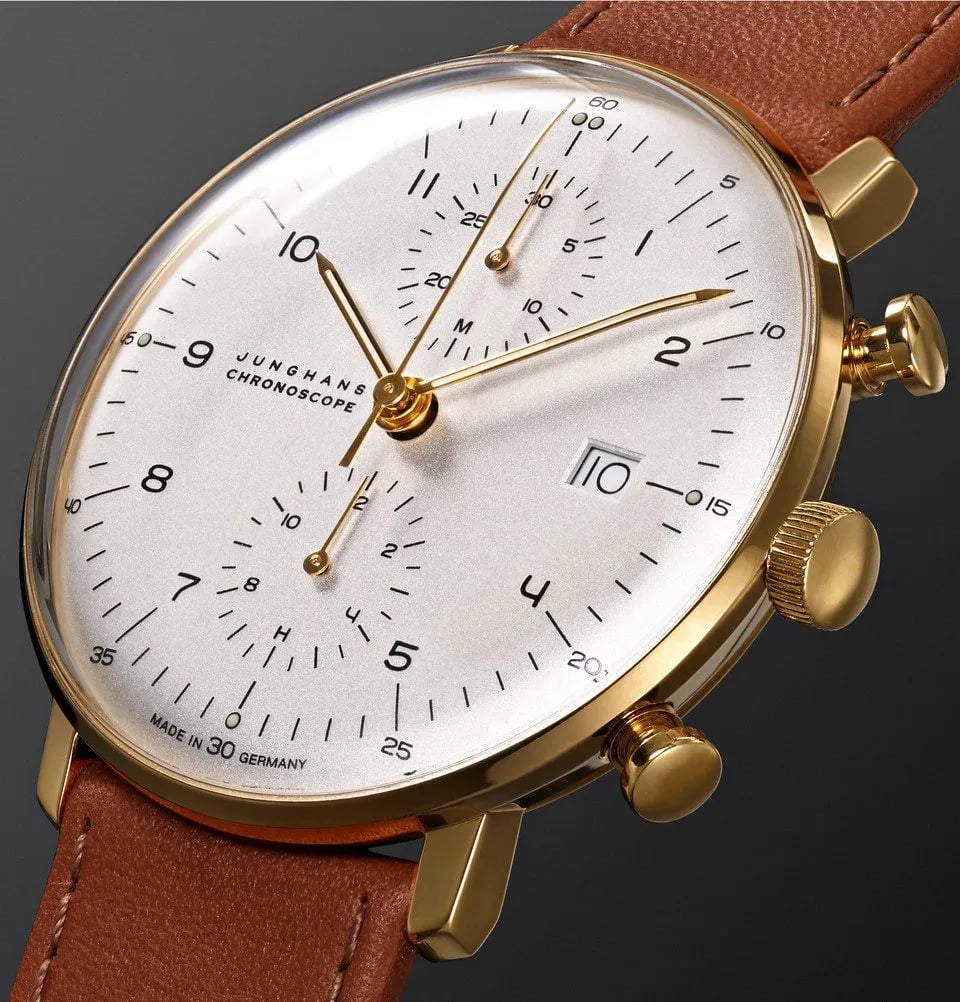
The Junghans Max Bill Chronoscope is a watch that needs no introduction to design aficionados. Conceived by the legendary Bauhaus artist and architect Max Bill, its dial is a masterclass in reduction: every line, every numeral serves a purpose, and nothing is superfluous. But for the daily-wear collector, a watch must be more than a museum piece. It has to tell time at a glance, sit comfortably under a cuff, and endure the bumps of a real week on the wrist. I’ve spent seven days with the Chronoscope to see if this icon lives up to its promise.
At first glance, the 40mm stainless steel case and domed acrylic crystal evoke a mid-century charm that feels both nostalgic and refreshingly modern. The chronograph pushers are integrated into the case design, and the dial’s matte finish reduces glare. But how does it actually wear? Let’s dive into the details that matter to a young collector who wants a watch that works as hard as it looks.
Manufacture History
Junghans was founded in 1861 in Schramberg, Germany, and quickly became one of the country’s largest watch manufacturers. The brand is known for precision and clean design, and the Max Bill collection—launched in 1961 in collaboration with the artist—remains its most iconic line. The Chronoscope, introduced later, adds a chronograph complication to the classic Max Bill formula while preserving the Bauhaus ethos.
Movement
Inside the Chronoscope beats the Junghans caliber J880.1, a modified ETA 7750. This automatic chronograph movement runs at 28,800 vph, has 25 jewels, and offers a 48-hour power reserve. It’s not COSC-certified, but in practice it’s reliable and easy to service. The movement is visible through a display caseback, with a decorated rotor that adds a touch of personality. The chronograph is cam-actuated, which is standard at this price point, and the date changes smoothly.
Specifications
- Case diameter: 40mm
- Case thickness: 14.5mm
- Lug-to-lug: 48mm
- Case material: Stainless steel
- Crystal: Domed acrylic
- Water resistance: 50m
- Lume: None
- Strap: Leather with pin buckle
Wrist Feel
The 40mm case and 48mm lug-to-lug make the Chronoscope wear surprisingly compact for a chronograph. On my 6.75-inch wrist, it sits flat and doesn’t overhang. The 14.5mm thickness is noticeable but not obtrusive—it slides under a dress shirt cuff with a slight tug. The leather strap is supple out of the box, though a bit stiff at first; after a few days it conforms nicely. The pin buckle is simple and secure. Weight is moderate at around 80g on strap, giving a reassuring presence without feeling heavy. The domed acrylic crystal adds a vintage warmth and distorts the dial edges slightly, which I find charming. However, the lack of lume means you’re reliant on ambient light or a phone flashlight in the dark—a trade-off for the clean dial.
Accuracy
Over a week of daily wear, the J880.1 movement ran consistently within +6 to +10 seconds per day. This is acceptable for a non-COSC automatic chronograph. The chronograph function starts, stops, and resets crisply. The date changes at midnight with a quick snap. For a watch that prioritizes design over precision, this is more than adequate for everyday use.
Occasions
The Max Bill Chronoscope is versatile enough for formal events, daily office wear, and travel. Its clean dial works with suits and casual attire alike. I wouldn’t take it swimming (50m is splash-proof at best), but it’s fine for hand-washing and rain.
Wrist Presence
4/5 – The clean Bauhaus dial draws attention without shouting. It’s a conversation starter for design lovers, but understated enough for boardrooms.
Reference Variants
The most common references are the 027/4700.00 (white dial, blue hands), 027/4701.00 (black dial, silver hands), and 027/4702.00 (white dial with gold hands). All come on leather straps. There are also limited editions with different dial colors, but these are the core lineup.
Family References
If you like the design but don’t need a chronograph, consider the Junghans Max Bill Automatic (027/3600.00) or the hand-winding version (027/3500.00). Both share the same dial philosophy in a slimmer case.
Other Notable Junghans Models
The Meister Chronoscope offers a more traditional look, while the Form A is a minimalist dress watch. The Max Bill Quartz is an affordable entry point.
Similar Watches
Nomos Tangente 38 Date offers similar Bauhaus minimalism with an in-house movement. Hamilton Intra-Matic Auto Chrono is a vintage-inspired alternative at a lower price. Longines Heritage Classic Chronograph provides a similar mid-century vibe with better water resistance.
Homages
Laco’s Bauhaus Chronograph (around $450) is a quartz homage with a similar dial. Stowa’s Antea 390 is another German Bauhaus option, though without a chronograph.
Investment Value
MSRP is $2,250, but pre-owned prices range from $1,200 to $1,800. The trend is stable; this watch won’t appreciate significantly, but it holds its value well due to strong design appeal. No major auction history.
Service Interval
Every 5 years, expect to pay around $500 for a full service. Independent watchmakers can handle the ETA-based movement, so you’re not locked into authorized service centers.
Pros and Cons
Pros: Timeless design, comfortable 40mm case, reliable movement, display caseback.
Cons: Acrylic crystal scratches easily, no lume, 50m water resistance, stiff strap initially.
Final Verdict
The Junghans Max Bill Chronoscope is a design masterpiece that wears beautifully on the wrist. It sacrifices some practicality (no lume, acrylic crystal) for aesthetic purity, but for the style-conscious collector, it’s a worthy daily companion. If you value form as much as function, this is one of the best-looking chronographs under $3,000.