Introduction
The Junghans Meister Chronoscope is the kind of watch that makes you look twice—not because it screams for attention, but because it whispers with quiet confidence. The Meister offers something different: a slice of German design history that doesn't require a second mortgage. It’s the watch you wear when you want to signal taste, not wealth.
In the current market, where hype-driven pieces dominate headlines, the Meister Chronoscope remains a sleeper. It’s not a flip candidate, but it’s a hold that will age gracefully—both in style and in value. With a reliable automatic chronograph movement, a dial that channels the Bauhaus ethos, and a price point that undercuts most Swiss competitors, this is a watch that deserves a spot in any curated collection.
Manufacture History
Junghans was founded in 1861 in Schramberg, Germany, and quickly became one of the country’s largest watch manufacturers. The brand is synonymous with the Bauhaus movement, thanks to its collaboration with designer Max Bill in the 1960s. The Meister line, first introduced in the 1930s, represents Junghans’ commitment to precision and clean aesthetics. Today, the Meister Chronoscope continues that tradition, blending mid-century design with modern reliability.
Movement
Inside the Meister Chronoscope beats the J880.4 caliber, a modified ETA 7750. This is a workhorse movement with a 48-hour power reserve, 28,800 vph frequency, and 25 jewels. It features date, day, and chronograph complications. While not COSC-certified, it’s known for its robustness and ease of service. The rotor is custom-decorated with Junghans’ branding, but the finishing is functional rather than decorative. For the price, it’s a solid choice.
Specs
- Case diameter: 40mm
- Thickness: 14.5mm
- Lug-to-lug: 48mm
- Material: Stainless steel
- Crystal: Sapphire
- Water resistance: 50m
- Lume: None
- Strap: Leather with pin buckle
Wrist Feel
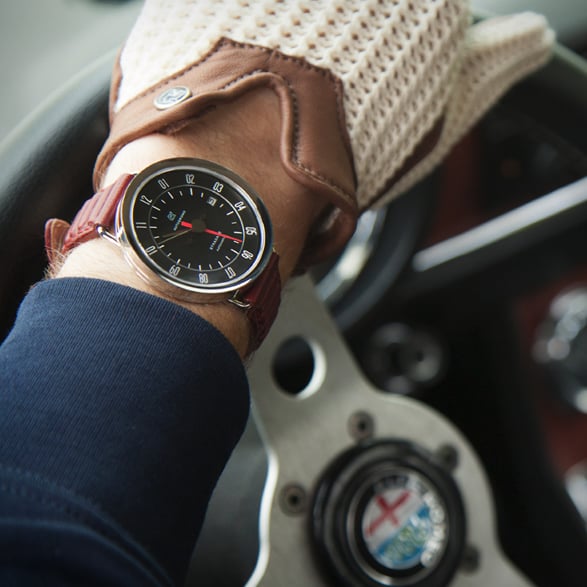
On the wrist, the Meister Chronoscope wears larger than its 40mm diameter suggests, thanks to the thin bezel and expansive dial. The 14.5mm thickness is noticeable, but the curved lugs and leather strap help it sit comfortably. It’s not a watch you forget you’re wearing, but it’s balanced enough for all-day wear. The strap is supple out of the box, though some may prefer a quick-release option for swapping.
The weight is moderate—not too heavy, not too light. It feels substantial without being a brick. The pushers have a satisfying click, and the crown is easy to grip. Overall, it’s a comfortable daily wearer for those who appreciate a bit of heft.
Accuracy
Expect +10 to +20 seconds per day in real-world use. The ETA 7750 is a workhorse, but it’s not COSC-certified. With regular wear, it’s consistent enough for daily timing needs. If you’re a stickler for precision, you might want to regulate it, but for most buyers, it’s perfectly acceptable.
Occasions
The Meister Chronoscope is versatile enough for dress and daily wear. Its clean dial works with a suit, and the chronograph adds a sporty touch for casual outfits. It’s not a dive watch, so avoid swimming, but it’s fine for desk diving and dinner parties.
Wrist Presence
3/5 - It’s understated but noticeable. The silver dial and blue hands catch light nicely, but it won’t dominate a room. Perfect for the collector who values subtlety.
Reference Variants
The most common reference is 027/4700.44 with a silver dial and blue hands. There’s also a black dial (027/4700.00) and a limited blue dial (027/4700.45). All come on leather straps. The blue dial is harder to find and may command a slight premium pre-owned.
Family References
The Meister line includes the Meister Classic (hand-wound, no chronograph) and the Meister Driver (automatic, date only). These are smaller and thinner, appealing to purists.
Other Notable Junghans Models
Junghans’ Max Bill line is the most famous, with its minimalist design by the Bauhaus artist. The Form series offers a more modern take, while the 1972 Chronoscope is a retro reissue.
Similar Watches
Nomos Tangente is the obvious competitor, but it’s hand-wound and smaller. Stowa Marine Chronograph offers a similar German aesthetic. Hamilton Intra-Matic Auto Chrono is a Swiss alternative with a vintage vibe.
Homages
Laco’s Flieger Chronograph is a more tool-oriented German option. Steinhart’s Ocean Chronograph is a budget-friendly alternative with similar case proportions.
Investment Value
MSRP is $2,190, but pre-owned prices range from $1,200 to $1,800. The trend is stable—no wild appreciation, but no steep depreciation either. This is a hold watch. Buy it to wear, not to flip. Auction history is minimal; it’s not a collector’s grail.
Service Interval
Every 5 years, service costs around $400. Any watchmaker familiar with ETA 7750 can handle it. Authorized service is recommended but not required.
Pros and Cons
Pros: Iconic design, reliable movement, good value, comfortable.
Cons: Thick case, no lume, low water resistance, not a flip.
Final Verdict
The Junghans Meister Chronoscope is a smart buy for the collector who values design heritage over hype. It’s a watch that will never go out of style, and its stable resale means you can enjoy it without worrying about depreciation. If you want a chronograph that whispers rather than shouts, this is it.