Kudoke Mysticum – A Skeleton‑Dress Watch That Marries Artistry With Mechanical Purity
By Vivir··Updated
# Kudoke Mysticum – A Skeleton‑Dress Watch That Marries Artistry With Mechanical Purity
The Kudoke Mysticum arrives as a statement piece for anyone who wants a dress watch that does more than simply tell the time. Its skeletonized, hand‑engraved dial is built around a striking triangular hour display, while a wave‑shaped minutes hand sweeps over a sea of exposed bridges. Under the decorative façade lies a manual‑winding Unitas 6498 calibre that promises a respectable 46‑hour power reserve. Launched in 2012, the Mysticum sits in Kudōke’s second tier of offerings, positioned as a high‑end dress watch with a price tag of roughly €4,900 (≈ US $5,800). In the following pages we will unpack how this watch fits into Kudoke’s lineage, dissect its design and mechanics, and consider how it behaves on the wrist and in real‑world wardrobes.
---
## Heritage — the model's place in the brand's line and its launch context
Kudoke is a relatively young independent watchmaker that entered the market in 2012. The brand quickly adopted a “tier‑based” approach, categorising its models into three levels of complexity and price. The Mysticum occupies the second tier, signalling a step up from the brand’s entry‑level pieces without reaching the ultra‑complicated realm of its top‑tier creations.
When the Mysticum debuted, the independent watch scene was already buzzing with skeleton watches, but few combined such an overt artistic narrative with a dress‑watch silhouette. Kudoke’s decision to release a 41 mm (some references note 42 mm) case in stainless steel, yellow gold, or white gold placed the Mysticum squarely in the luxury‑dress segment, targeting collectors who value both visual intrigue and wearable elegance.
The 2012 launch also coincided with a broader resurgence of manual‑winding watches among independents, as enthusiasts began to appreciate the tactile connection of winding a movement by hand. By pairing the classic Unitas 6498 calibre—a workhorse that has powered many independent pieces for decades—with a uniquely engineered dial, Kudoke positioned the Mysticum as a bridge between traditional watchmaking and contemporary artistic expression.
## Design & Case — case dimensions, materials, dial
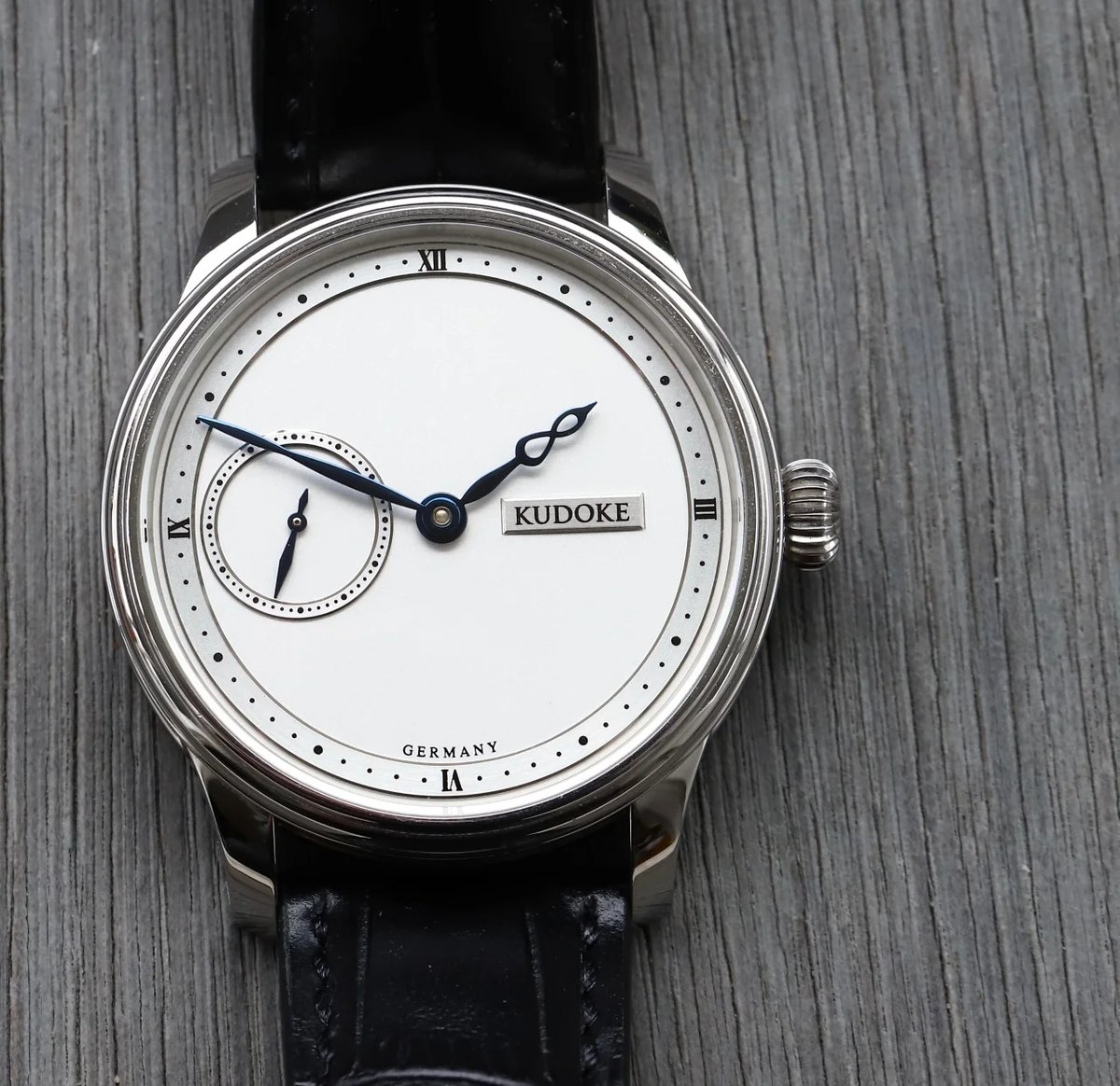
At first glance the Mysticum commands attention through its daring dial architecture. The 41 mm (or 42 mm, depending on the source) stainless‑steel case is modestly sized for a modern dress watch, allowing it to sit comfortably under a shirt cuff while still providing enough surface area for the intricate dial work. The case is available in three finishes: polished 316 L stainless steel, yellow gold, and white gold. Each variant retains the same overall geometry, ensuring that the watch’s aesthetic language remains consistent across material choices.
The dial is where the Mysticum truly differentiates itself. It is hand‑engraved in rhodium, a process that yields a bright, mirror‑like surface while protecting the underlying metal from oxidation. The skeletonization is not merely functional; it is meticulously executed to expose bridges, plates, and the escapement without compromising structural integrity.
Central to the dial’s identity is the triangular hour display. Rather than traditional hour markers, a subtly raised triangle sits beneath the hour‑hand, pointing to the current hour through the position of the hand’s tip. This visual cue is both avant‑garde and legible once the wearer becomes accustomed to the geometry. The minutes are indicated by a hand shaped like a waveform, adding a kinetic, almost musical quality to the watch’s rhythm.
The hour‑hand itself retains a classic, slender silhouette, allowing the triangle to remain the focal point. The combination of skeletonized bridges, the triangular hour indicator, and the waveform minutes hand creates a layered tableau that rewards repeated glances.
Finishing touches include a polished bezel that mirrors the case’s material, a sapphire crystal with anti‑reflective coating (the source does not specify the coating, but anti‑reflective treatment is standard for high‑end dress watches), and a polished, brushed‑on‑the‑bottom case back that showcases the Unitas 6498 movement when the watch is flipped.
## Movement & Performance — caliber, power reserve, accuracy
The heart of the Mysticum is the Unitas 6498, a manual‑winding calibre that has become a staple among independent watchmakers seeking a reliable, serviceable engine. Kudoke equips the movement with a 46‑hour power reserve, which is respectable for a hand‑wound watch of this size. The 6498 is known for its robustness; its architecture allows for straightforward maintenance and parts availability, a practical advantage for owners who intend to keep the watch for many years.
Because the source material does not provide detailed specifications such as jewel count, beat rate, or certified accuracy, we limit our assessment to what is confirmed: the movement is manual, it winds via the crown, and it delivers a power reserve of approximately two days. The lack of an automatic rotor means the wearer must wind the watch daily or every other day, a ritual that many traditionalists find rewarding but that can be a drawback for those accustomed to the convenience of automatics.
While the Unitas 6498 has a reputation for stable timekeeping in the independent sector, we cannot quote specific accuracy figures for the Mysticum. Potential buyers should therefore expect performance in line with other manual, entry‑level mechanical movements—generally within a few seconds per day under normal conditions.
## On the Wrist — wearability, lug‑to‑lug, comfort notes
The Mysticum’s 41 mm (or 42 mm) diameter places it in a sweet spot for dress watches: large enough to make a presence, yet restrained enough to avoid overwhelming a formal shirt cuff. The case thickness is not explicitly listed, but the skeletonized dial and the Unitas 6498’s relatively compact architecture suggest a moderate profile that sits comfortably against the wrist without protruding excessively.
The watch’s lug design is traditional, extending straight from the case to the strap. While we lack precise lug‑to‑lug measurements, the overall case size and the presence of a standard 20‑mm strap width (implied by the dress‑watch category) indicate a balanced proportion that should fit most wrist sizes comfortably.
The hand‑engraved rhodium dial feels smooth to the touch, and the skeletonized bridges add a slight textural contrast that is noticeable when the watch is turned over. The waveform minute hand glides with a gentle sweep, offering a subtle visual cue that the watch is moving even when the wearer cannot see the seconds.
The strap options are not detailed in the source material, but given the watch’s dress orientation, it is commonly paired with a high‑quality leather strap or a stainless‑steel bracelet that matches the case material. In either configuration, the watch’s weight feels solid yet not burdensome, contributing to a pleasant wearing experience throughout the day.
## When to Wear — occasion, setting and dress‑code fit
As a dress watch, the Mysticum is engineered for formal and semi‑formal environments. Its polished case finishes, refined materials, and artistic dial make it an excellent companion for business meetings, weddings, galas, and other events where a touch of individuality is welcome.
Because the dial is highly decorative, the watch can double as a conversation starter at cocktail parties or art‑focused gatherings. The triangular hour display is distinctive enough to attract curious glances without appearing overly ostentatious, striking a balance between avant‑garde and classic elegance.
In more casual settings—weekend brunches, relaxed office days, or outdoor activities—the Mysticum may feel out of place, especially if paired with denim or sporty attire. Its lack of stated water resistance also suggests it is best kept away from heavy rain, swimming, or vigorous physical activity.
Overall, the Mysticum shines when the dress code leans toward business‑formal or black‑tie, and when the wearer wishes to convey a blend of traditional craftsmanship and modern artistic sensibility.
## Value & Verdict — price‑positioning + final take
At roughly €4,900 (≈ US $5,800), the Mysticum occupies a niche price band that sits above many entry‑level Swiss automatics but below the high‑end independent complications market. For a manual‑winding watch, the price is justified by several factors:
* **Unique Dial Artistry** – Hand‑engraved rhodium, skeletonization, and the triangular hour display are labor‑intensive processes that add tangible artistic value.
* **Quality Materials** – Options in stainless steel, yellow gold, and white gold provide material choices that align with luxury expectations.
* **Reliable Movement** – The Unitas 6498, while not a high‑complication calibre, is a proven workhorse that offers a solid 46‑hour reserve.
However, the price also raises questions. Comparable manual‑winding dress watches from other independents can be found at slightly lower price points, especially when they lack the same level of dial decoration. Potential buyers should weigh the aesthetic uniqueness against the practical considerations of a manual winding routine and the absence of explicit water‑resistance data.
**Verdict:** The Kudoke Mysticum is a compelling choice for collectors who appreciate dial artistry and are comfortable with a manual‑winding routine. Its skeletonized, hand‑engraved face and triangular hour display set it apart from more conventional dress watches, while the Unitas 6498 provides dependable, if modest, performance. At its current price, the Mysticum delivers a strong value proposition for those seeking a watch that is as much a piece of wearable art as it is a time‑telling instrument. If you can live with the need to wind daily and the limited functional specifications, the Mysticum offers a distinctive, high‑quality addition to any dress‑watch lineup.