The Philosophy of the Void: Understanding the Real Skeleton
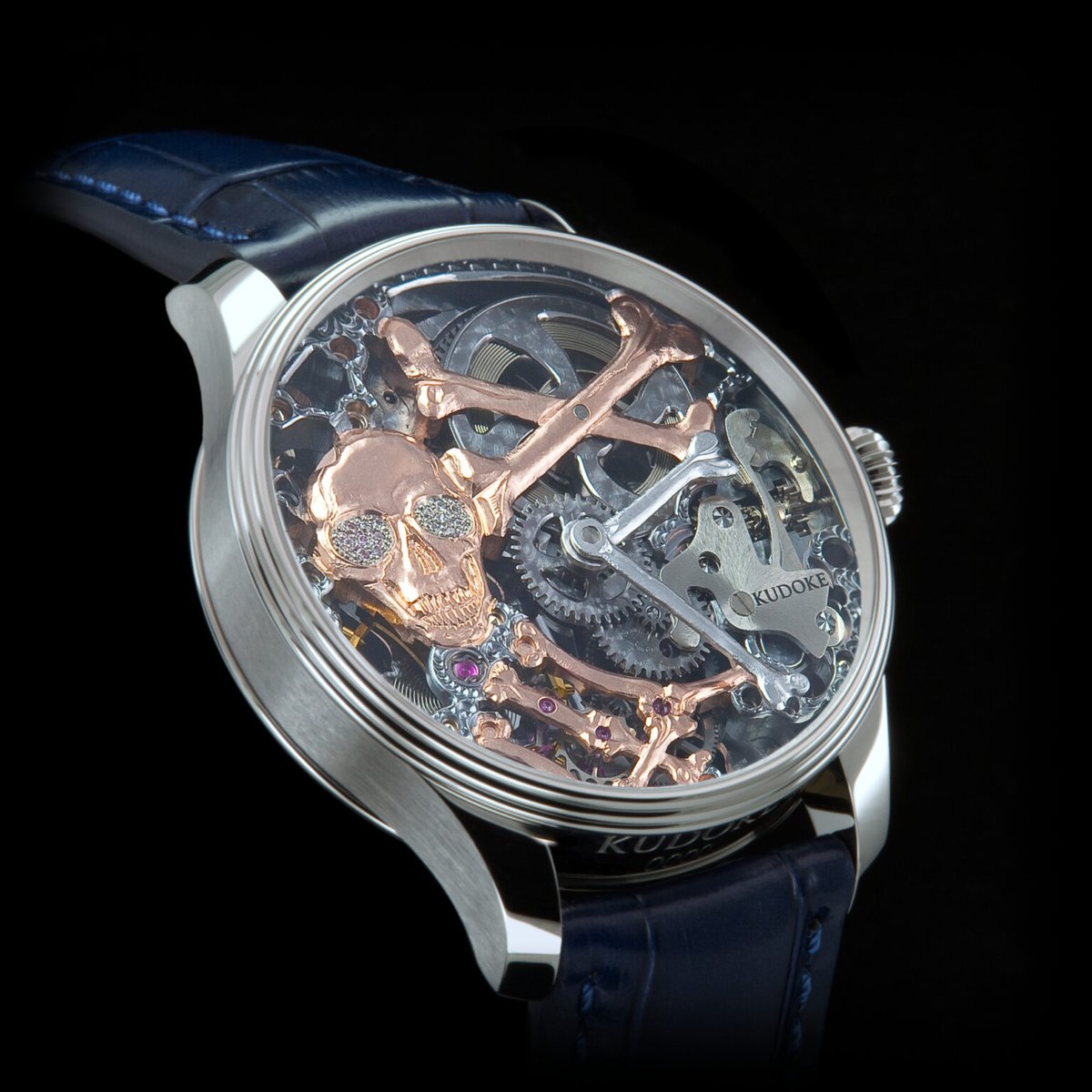
In the hierarchy of horological complications, the art of skeletonization often sits in a misunderstood corner. To the uninitiated, it is simply the removal of material to show the gears. To the connoisseur, and specifically to Vivir, it is an exercise in structural integrity and aesthetic balance. The Kudoke Real Skeleton is not merely 'open-worked'; it is a study in the philosophy of the void. Stefan Kudoke does not use lasers or CNC machines to cut his bridges. He uses a manual piercing saw, a tool that requires a steady hand and an intimate understanding of the metal's grain and tension.
When we discuss the Real Skeleton, we are discussing a timepiece that bridges the gap between the Saxon watchmaking traditions of Glashütte and the artistic flair of Dresden. Stefan Kudoke, a member of the AHCI, has spent years perfecting the 'Kudoke style'—a blend of Baroque-inspired engraving and rigorous mechanical discipline. The Real Skeleton is perhaps the purest expression of this style, stripping away everything non-essential to reveal the beating heart of the machine.
Technical Architecture: The Modified Unitas 6498
The foundation of the Real Skeleton is the venerable Unitas 6498. In its stock form, the 6498 is a workhorse—reliable, large, and somewhat utilitarian. However, under Kudoke’s touch, it undergoes a total metamorphosis. The movement is completely disassembled, and every component—from the barrel bridge to the balance cock—is marked for surgery. The architecture of the movement is redefined, with Kudoke removing approximately 70% of the original metal mass.
The technical challenge here cannot be overstated. When a bridge is skeletonized by hand, the watchmaker must ensure that the remaining 'ribs' of metal are strong enough to support the pivots and maintain the gear train's alignment. One millimeter too much removed, and the movement loses its stability. Kudoke manages this with a level of precision that ensures the 18,000 vph frequency remains consistent, providing a steady, rhythmic heartbeat that is visible from both the front and the back of the case.
The finishing is where the 'Real' in Real Skeleton truly shines. Once the shapes are sawn out, the edges are beveled (anglage) and polished by hand. The surfaces are then treated to hand-engraving, typically featuring organic, floral motifs that contrast beautifully with the rigid geometry of the gears. This is not the repetitive pattern of a machine; every leaf and scroll is unique, bearing the slight variations that prove its artisanal origin.
The Aesthetic Experience: Form and Legibility
One of the primary criticisms of skeleton watches is their lack of legibility. The Kudoke Real Skeleton addresses this through the use of high-contrast thermally blued steel hands. These hands, often shaped in Kudoke's signature 'infinity' or 'spade' styles, provide a sharp pop of color against the rhodium or gold-plated movement. While the background is a riot of mechanical detail, the hands remain prominent enough for a quick read of the time in most lighting conditions.
The case, at 42mm, provides the necessary real estate for this artistic display. Made of high-grade stainless steel with a polished finish, it acts as a frame for the movement rather than a distraction. The lugs are short and steeply angled, which is a crucial design choice. It allows the watch to sit centered on the wrist, preventing the 'overhang' that often plagues 42mm watches on smaller wrists. The sapphire crystals on both sides are treated with anti-reflective coating, ensuring that nothing stands between the wearer's eye and the movement's depth.
The Artisan’s Touch: Why This Matters to the Collector
The value proposition of the Kudoke Real Skeleton lies in its soul. In an industry where 'luxury' is often synonymous with 'marketing budget,' Kudoke offers something authentic. Every Real Skeleton is, by definition, a unique piece. Even if two watches share the same reference, the hand-engraving will differ. This level of personalization is usually reserved for the six-figure offerings of brands like Vacheron Constantin or Breguet.
At a price point of approximately $11,500, the Real Skeleton is an anomaly. It offers AHCI-level craftsmanship for the price of a mass-produced Rolex GMT-Master II. For the collector who wants to stand out at a RedBar meetup or a private auction preview, the Kudoke is a silent signal of sophisticated taste. It says that the wearer values the process as much as the product.
Ownership and Maintenance
Owning a Kudoke is a relatively low-stress experience. Because the base movement is the Unitas 6498, parts are readily available. However, I would strongly advise against taking this to a local mall watchmaker. The delicate nature of the engraved bridges means that any slip of a screwdriver would be catastrophic to the watch's aesthetic value. Factory service at Kudoke’s workshop in Weesenstein is the only way to ensure the watch's integrity is maintained over decades.
The water resistance is rated at 50 meters, which is more than sufficient for a dress watch, though I cannot imagine a scenario where one would take such a piece near a swimming pool. The strap, usually a high-grade Louisiana alligator, is as well-finished as the watch itself, featuring hand-stitched edges and a signed buckle.
Conclusion: A Legacy on the Wrist
The Kudoke Real Skeleton is a masterclass in subtractive horology. It is a watch that celebrates the space between the gears as much as the gears themselves. Stefan Kudoke has managed to create a timepiece that feels both ancient and modern—a mechanical memento mori that reminds us of the fragility and beauty of time. For those who seek a watch with a heartbeat and a history, there is no better choice in the independent market today.