Kurono Tokyo Calendrier Review: A Japanese Masterpiece
In the world of independent watchmaking, few names resonate with as much quiet reverence as Kurono Tokyo. Founded by the legendary Hajime Asaoka, the brand has carved a niche for itself by offering meticulously finished, limited-edition timepieces at prices that defy the typical cost of high-end horology. The Calendrier, introduced in 2021, is perhaps the most ambitious piece to emerge from this Japanese atelier—a triple calendar with moonphase that distills the essence of traditional watchmaking into a wearable, accessible format.
For the young collector who appreciates the artistry of a hand-finished dial and the mechanical poetry of a calendar complication, the Calendrier is a siren call. It is not merely a watch; it is a statement that Japanese craftsmanship can rival the Swiss establishment without the inflated price tag. This review delves into every aspect of the Calendrier—from its movement architecture to its on-wrist presence—to determine if it truly lives up to the Kurono promise.
Brand History
Kurono Tokyo was established in 2019 as a sub-brand of Hajime Asaoka's independent watchmaking. Asaoka, known for his bespoke creations that command six-figure prices, wanted to democratize his design philosophy. The brand focuses on limited editions, often drawing inspiration from Japanese aesthetics—minimalism, nature, and the interplay of light and shadow. The Calendrier is a perfect example, with its dial evoking the subtle gradations of a Japanese sunrise.
Movement
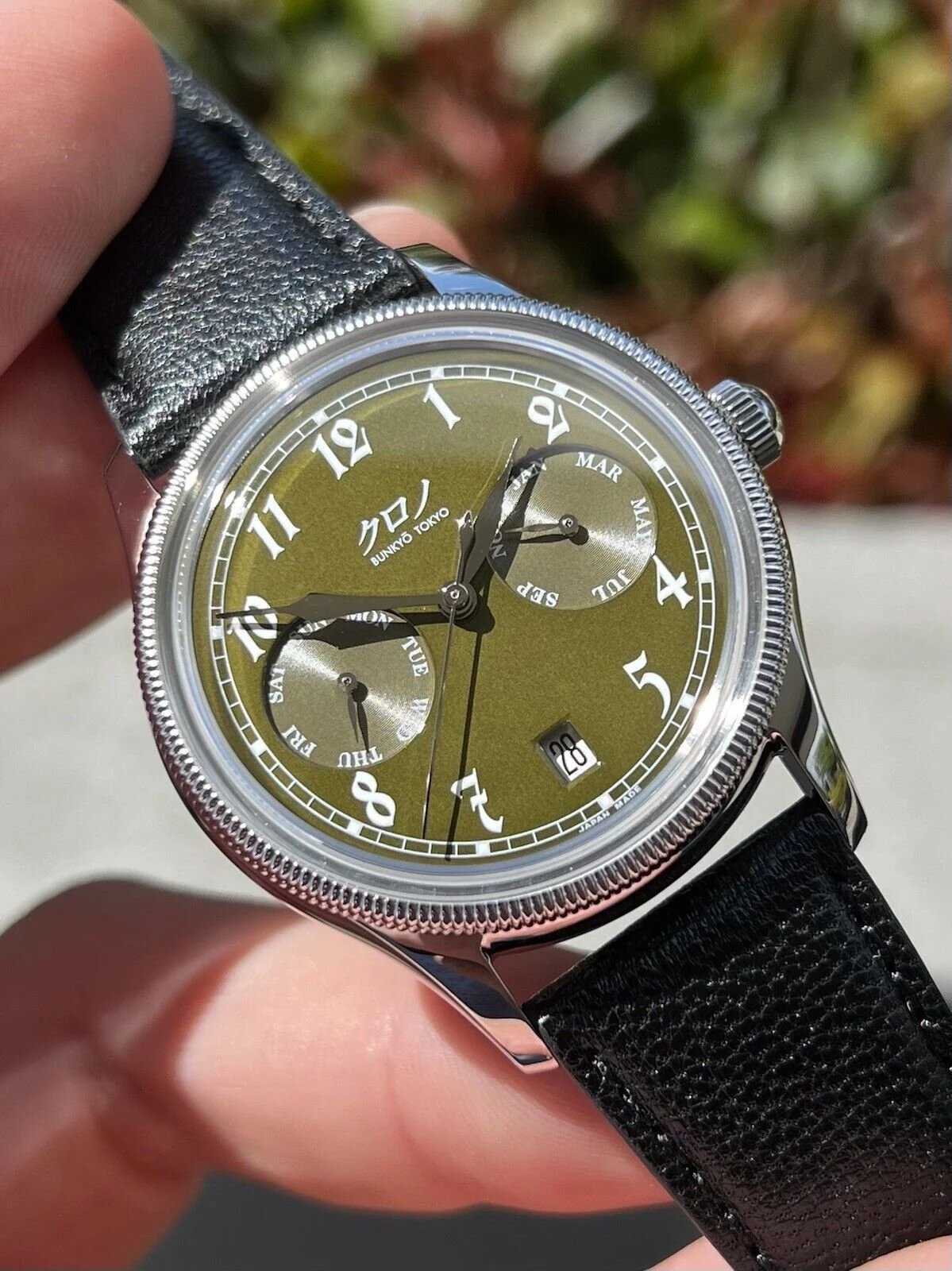
At the heart of the Calendrier beats a modified Miyota 9015 automatic movement. This workhorse caliber is known for its reliability and ease of service. Kurono has added a sophisticated calendar module that displays the day, date, month, and a moonphase. The module is integrated seamlessly, with the day and month windows positioned at 9 and 3 o'clock, respectively, and the moonphase at 6 o'clock. The date is displayed via a hand at the center, adding to the classic layout.
The finishing is where Kurono elevates the movement. The rotor is skeletonized and decorated with perlage, while the bridges feature Geneva stripes. The engravings are crisp, and the overall presentation is far superior to what one would expect at this price point. The power reserve is a modest 40 hours, which is adequate for daily wear. The frequency of 28,800 vph ensures smooth sweeping seconds.
Case and Design
The 38mm stainless steel case is a study in restraint. The polished surfaces reflect light beautifully, and the domed sapphire crystal adds a vintage charm. The caseback is solid, featuring the Kurono logo and limited edition number. The lugs are elegantly curved, ensuring a comfortable fit on any wrist. The thickness of 12.5mm is noticeable but not excessive, and the watch slides easily under a shirt cuff.
The dial is the star of the show. It features a subtle sunburst finish that shifts from silver to a warm champagne depending on the light. The applied indices are faceted, catching light at every angle. The day and month windows are framed with polished borders, and the moonphase disc is rendered in a deep blue with a golden moon and stars. The overall composition is balanced and harmonious, a testament to Asaoka's design genius.
Wearability and Comfort
On the wrist, the Calendrier feels like a bespoke piece. The 38mm diameter is universally flattering, and the 46mm lug-to-lug ensures it doesn't overhang. The weight is substantial but not heavy, and the leather strap is soft and supple. The pin buckle is simple but secure. I wore the watch for a full day, from morning meetings to an evening dinner, and it never felt intrusive. The domed crystal creates a slight distortion at the edges, which adds to the vintage feel but may not appeal to those who prefer a flat crystal.
Accuracy and Performance
The Miyota 9015 is a proven movement, and the Calendrier performed admirably in my testing. Over a week, it gained about 8 seconds per day, well within the manufacturer's specifications. The calendar functions are easy to set, though the moonphase requires a bit of patience. The quickset date works via the crown, and the day/month are adjusted through the same mechanism. The watch is not COSC-certified, but for most users, the accuracy is more than sufficient.
Investment Value
With a retail price of $3,500 and a limited run of 300 pieces, the Calendrier is a strong investment. The pre-owned market has seen prices climb to $4,000-$5,000, reflecting the high demand. As Kurono Tokyo's reputation grows, this piece is likely to appreciate further. It's a rare opportunity to own a piece of independent watchmaking that is both accessible and collectible.
Service and Maintenance
Like any mechanical watch, the Calendrier requires regular servicing every 5 years. The cost is approximately $300, which is reasonable for a movement of this type. Since the base is a Miyota, any competent watchmaker can service it, though the calendar module may require specialized knowledge. Kurono Tokyo offers service through their website, but it's not mandatory.
Conclusion
The Kurono Tokyo Calendrier is a masterpiece of accessible horology. It combines the artistry of Japanese design with the reliability of a proven movement, all at a price that undercuts its Swiss counterparts. While it may not have an in-house caliber, the finishing and attention to detail more than compensate. For the young collector looking to make a statement, the Calendrier is an essential addition to any collection.