The Arbitrage of Style: Why Mido is the Smart Money Choice
In the world of asset management, we talk about arbitrage—the simultaneous purchase and sale of an asset to profit from a difference in the price. In horology, the Mido Multifort Patrimony represents a different kind of arbitrage: the ability to acquire the visual language of high-tier heritage brands at a fraction of the market rate. While the rest of the world is busy fighting over the latest 'hype' releases, the sophisticated collector looks for value where others see 'entry-level' labels. The Mido Multifort Patrimony, specifically the reference M040.407.36.060.00, is the embodiment of this strategy.
A Pedigree That Doesn't Try Too Hard
Mido has always been the quiet achiever of the Swatch Group. Founded in 1918, the brand has avoided the aggressive marketing blitzes of its siblings, Tissot and Omega, instead focusing on what they call 'timelessness.' The Multifort line, launched in 1934, was a pioneer. It was one of the first watches to combine four key traits: self-winding, water-resistant, anti-magnetic, and shock-resistant. This wasn't just a dress watch; it was the G-Shock of the 1930s, albeit in a much more handsome package.
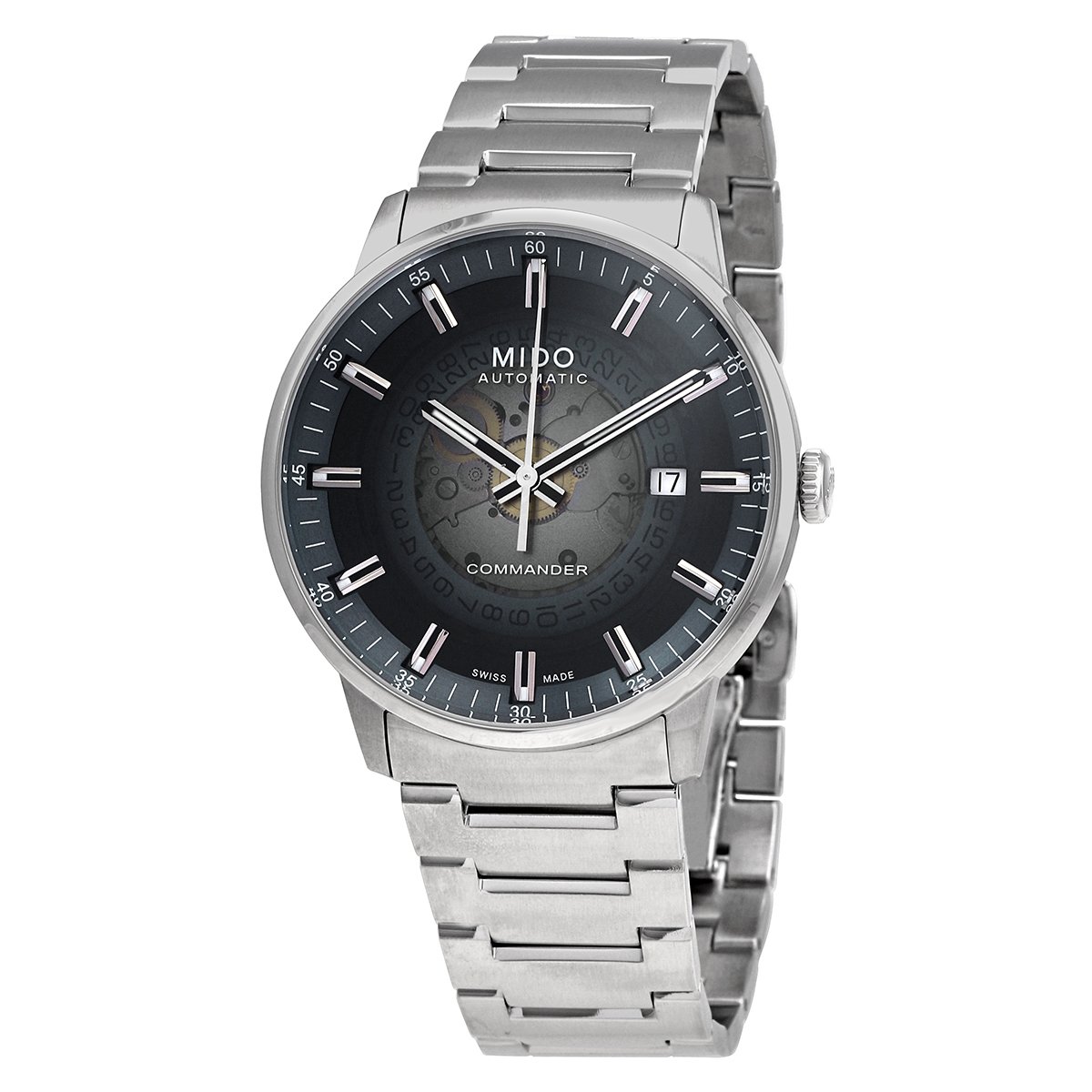
The Patrimony sub-line pays homage to this era. The reference M040.407.36.060.00 features a stunning anthracite dial with a pulsimeter scale—a complication originally designed for doctors to measure heart rates. Today, you’re more likely to use it to check your pulse after seeing the bill at Carbone, but the aesthetic utility remains. The sector dial layout, with its concentric circles and crisp Arabic numerals, evokes the functional elegance of the inter-war period.
Technical Dominance: The Caliber 80
Under the hood, Mido isn't playing around. While many 'vintage-style' watches at this price point use off-the-shelf Miyota or basic Seiko movements, Mido utilizes the Caliber 80. Based on the ETA C07.611, this movement is a beast of burden. The standout feature is, of course, the 80-hour power reserve. For the collector who rotates their pieces—perhaps wearing a GMT-Master II for travel and a Royal Oak for the weekend—the Mido can sit in the safe for three days and still be ticking when you need it for a Monday morning board meeting.
The movement beats at 21,600 vibrations per hour. While purists might miss the high-beat sweep of a 28,800 vph movement, the trade-off for that massive power reserve is a net positive for the modern user. The frequency reduction also reduces wear on the escapement, theoretically extending service intervals. It’s a pragmatic, engineering-first approach that mirrors the brand's architectural inspirations.
The Aesthetic Play: PVD Gold and Anthracite
Let’s talk about the elephant in the room: PVD coating. To the discerning collector, PVD can sometimes feel like a compromise. We want solid 18k gold, right? But here is the market-driven reality: solid gold watches in this style from Vacheron or Patek will set you back $25,000 to $50,000. The Mido Multifort Patrimony gives you the exact same visual profile for less than the cost of a business-class flight to London. The rose gold PVD on this reference is particularly well-executed, with a deep, warm hue that avoids the 'brassy' look of cheaper plating.
The dial is the real star. The anthracite (dark grey) sunray finish catches the light in a way that shifts from charcoal to silver. The pulsimeter scale on the outer edge is printed with extreme precision, and the date window at 6 o'clock is a masterclass in symmetry. Many brands ruin a sector dial by shoving a date at 3 o'clock; Mido understood the assignment and kept the balance.
Wrist Feel and Daily Utility
At 40mm, the watch is sized for the modern wrist. While a true 1930s watch would be 32mm or 34mm, that simply doesn't have the presence required for today’s fashion. The 40mm case, combined with the slim 11.95mm thickness, allows it to slide under a French cuff with ease. The box sapphire crystal is a touch of genius. It provides the high-profile 'dome' look of vintage acrylic but is virtually impossible to scratch. This is a watch you can actually wear without fear—it’s the 'beater' for the man who doesn't do 'cheap.'
Investment Perspective: Hold or Flip?
From an investment standpoint, the Mido Multifort Patrimony is a 'stable utility' asset. You aren't going to see these exploding in value on the secondary market like a limited-edition Snoopy Speedmaster. However, you also won't see the bottom fall out. Mido maintains a very respectable resale value because the intrinsic quality is so high. It is a 'buy and hold' for your personal collection—a watch that fills the 'vintage dress' slot perfectly until you're ready to drop six figures on a piece of horological history.
In a market where 'value' is becoming increasingly hard to find, Mido is a sanctuary. It’s a brand for those who know, for those who don't need a crown on the dial to feel confident. The Multifort Patrimony is a sophisticated, technically superior timepiece that proves you don't need to overpay to have the best-looking watch in the room.
Final Thoughts
If you're looking to start a collection, or if you're a seasoned veteran looking for a stylish daily driver that won't give your insurance agent a heart attack, the Mido Multifort Patrimony is the move. It’s elegant, it’s historic, and it’s a absolute steal. In the game of luxury, the biggest flex isn't spending the most money—it's spending your money the most wisely. Vivir's verdict? Buy it, wear it, and let everyone else wonder how you found such a perfect vintage piece in such pristine condition.