Nomos Glashütte Metro 38 Date Review: A Bauhaus Daily Driver
Can Nomos's urban-inspired icon truly survive a week on your wrist? Vivir finds out.
In the ever-evolving landscape of luxury timepieces, certain brands carve out a niche entirely their own. Nomos Glashütte is one such entity, a beacon of minimalist design and in-house watchmaking excellence from the heart of Germany. Their watches often pose a fascinating question: can such refined, understated aesthetics truly stand up to the rigors and rhythms of daily life for the sophisticated young collector?
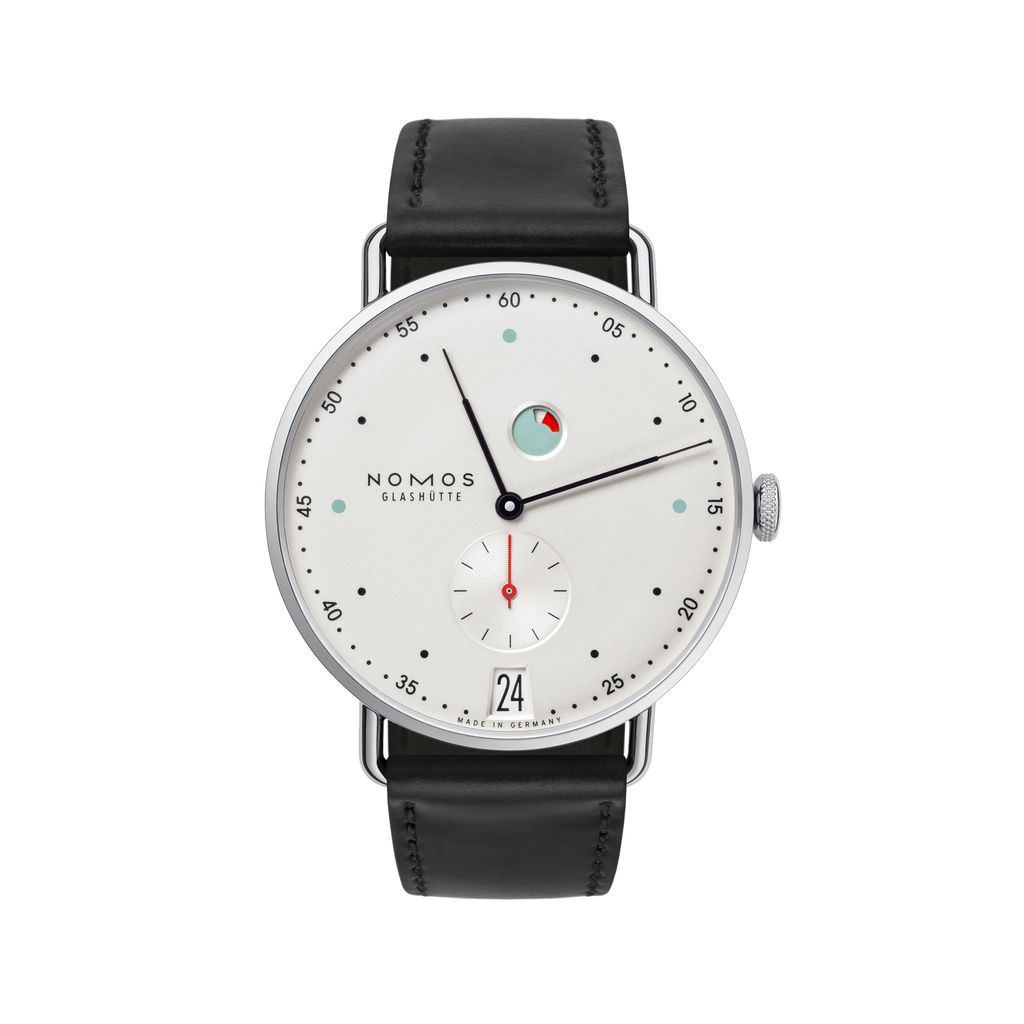
Today, we turn our attention to the Nomos Glashütte Metro 38 Date, reference 1101. This particular model, with its distinctive power reserve indicator and subtly playful design cues, represents a synthesis of Nomos's core philosophy and a more contemporary urban sensibility. It's a watch that, on paper, promises a blend of functional elegance and horological integrity.
But here at Vivir.com, we believe a watch’s true mettle is tested not in a display case, but on the wrist. My mission, as always, is to take this timepiece through a real-world week, to explore its comfort, its legibility in varied lighting, its resilience to the inevitable bumps and scrapes of modern living, and ultimately, whether it earns its place as a true daily companion.
The Genesis of Glashütte Minimalism: Nomos's Story
Founded in 1990, shortly after the fall of the Berlin Wall, Nomos Glashütte quickly established itself by creating watches inspired by the Bauhaus movement. This design philosophy, characterized by functionality, clarity, and minimalist aesthetics, became the brand's cornerstone. Crucially, from its inception, Nomos committed to developing its own calibers, a rare and commendable feat for a company of its size. This dedication to in-house watchmaking, combined with adherence to traditional Glashütte finishing principles, quickly cemented its reputation for independent horology, offering exceptional value and distinctiveness in a market often dominated by larger, more conventional players.
Heart of the Metro: The DUW 4101 Movement
At the core of the Metro 38 Date beats the manual-wind Nomos caliber DUW 4101. This isn't just any movement; it's a testament to Nomos's engineering prowess. DUW stands for 'Deutsche Uhrenwerke,' signifying its German origin and in-house development. This particular caliber boasts 23 jewels, a power reserve of 42 hours, and operates at a frequency of 21,600 vibrations per hour (3 Hz).
What truly sets the DUW 4101 apart, beyond its technical specifications, is its execution. Visible through the sapphire exhibition case back, one can admire the traditional Glashütte ribbing (often referred to as Geneva stripes), blued screws that are thermally treated to achieve their distinctive hue, and a beautifully executed sunburst decoration on the ratchet wheel. The movement’s thin profile is a critical factor in the Metro’s overall svelteness, contributing significantly to its exceptional comfort on the wrist. Winding the DUW 4101 is a tactile pleasure, a smooth and satisfying ritual that connects the wearer to the mechanical heart of the timepiece. The integration of both a date function and a power reserve indicator, a vibrant, playful red segment, elevates its practicality, ensuring you’re always aware of when your next winding is due.
On Paper: The Specifications
- Case Diameter: 38.5 mm
- Case Thickness: 7.75 mm
- Lug-to-Lug: 45.5 mm
- Case Material: Stainless steel
- Crystal: Domed sapphire (front), flat sapphire (case back)
- Water Resistance: 30 meters (3 ATM)
- Lume: Super-LumiNova (minimal dots and hands)
- Bracelet/Strap: Horween Genuine Shell Cordovan (black)
- Clasp Type: Pin buckle
The Real Test: A Week on the Wrist
The Nomos Metro 38 Date, despite its 38.5mm diameter, wears with a deceptive presence that demands a proper understanding of its proportions. The crucial measurement here, as with many Nomos models, is the lug-to-lug distance, which stands at a rather generous 45.5mm. While this isn't excessive, the lugs are noticeably straight and slender, extending the watch's footprint across the wrist. On my 6.75-inch wrist, it sat comfortably, hugging the contour without overhang, but those with significantly smaller wrists might find it pushing the boundaries. The true marvel, however, is the thickness: a mere 7.75mm. This incredible slenderness means the Metro slips effortlessly under any cuff, disappearing when not needed and presenting itself elegantly when desired. It’s a watch that feels substantial enough to be a quality instrument, yet light enough to be forgotten throughout the day.
The Horween Genuine Shell Cordovan strap, a hallmark of Nomos, is simply superb. It’s initially a bit stiff, as all good shell cordovan is, but quickly molds to the wrist, becoming incredibly supple and comfortable. The black strap with its subtle sheen complements the Metro's urban aesthetic perfectly. The pin buckle, while simple, feels robust and secure. The balance on the wrist is impeccable; there’s no top-heaviness, just a perfectly centered and unobtrusive presence. This is a watch designed for long days, for meetings, for casual evenings – it simply melts into your daily rhythm.
Legibility is, as expected from a Bauhaus-inspired design, excellent. The stark white silver-plated dial contrasts beautifully with the black hands and hour markers. The subtle red and blue accents on the power reserve and minute track add a touch of playful modernity without detracting from its functional clarity. In daylight, time-telling is instant and effortless. At night, however, the minimal application of Super-LumiNova on the small dots at the quarter hours and on the hands provides only a fleeting glow. This is certainly not a watch for navigating a dark cinema or finding your way in a blackout, but then again, that’s not its intended purpose. It’s a watch for illuminated environments, for urban life, for moments when clarity is paramount.
Regarding durability, the stainless steel case and sapphire crystals front and back inspire confidence. While the 30-meter water resistance means it's strictly a 'splash-proof' watch – certainly not for swimming or showering – it handled incidental rain and hand-washing without issue. This is a watch that survives a week on the wrist of a sophisticated urbanite, but perhaps not a week on a deep-sea fishing trawler. It requires a certain level of mindful wear, a small concession for its inherent elegance.
Precision in Practice: Real-World Accuracy
The Nomos DUW 4101 movement, while not COSC-certified, is regulated by Nomos to chronometer standards in six positions. In my week of wear, the Metro 38 Date consistently performed within excellent parameters, typically running at +3 to +5 seconds per day. This is more than adequate for daily use, ensuring you're never significantly off schedule. The manual winding experience is a tactile pleasure, with a smooth, satisfying resistance that encourages daily interaction. The power reserve indicator, a vibrant red segment that grows as the spring unwinds, is not just a charming aesthetic detail but a genuinely useful complication, reminding you precisely when to wind your watch to keep it ticking without interruption.
Where It Belongs: Occasions and Wrist Presence
The Nomos Metro 38 Date shines brightest in settings that appreciate understated elegance and thoughtful design. It is, without a doubt, an exceptional daily wearer for the office, creative pursuits, or casual urban exploration. Its slim profile and refined aesthetics make it a perfect dress watch, slipping effortlessly under the cuff of a suit or blazer. It can easily transition into formal evening wear, offering a refreshing alternative to more traditional, often larger, dress pieces. While not a sport watch by any stretch, its robust construction and clear dial make it entirely suitable for any non-aquatic daily activity.
On the wrist, the Metro commands a quiet confidence. I'd rate its wrist presence at 3/5. It's not a watch that shouts for attention, but rather invites a closer look with its unique design and impeccable finishing. Its presence is sophisticated and distinctive, easily recognizable to those in the know, yet understated enough to blend seamlessly into any professional or social setting. It's a watch for those who prefer to make a statement through subtlety and substance, rather than overt flash.
The Market Perspective: Investment Value
For the discerning collector, understanding a watch's market position is key. The Nomos Glashütte Metro 38 Date (ref. 1101) has an MSRP of approximately $3,720 USD, which is also its current retail price. In the pre-owned market, these models typically trade in the $2,200-$3,000 range, indicating a relatively stable market. Nomos watches, while not typically appreciating significantly like some hyped sports models, hold their value remarkably well for their price point. As a well-regarded independent brand with genuinely in-house movements, the Metro 38 Date is a solid long-term hold for personal enjoyment and collecting. There is no major auction history to speak of for this particular reference, as it's more of a contemporary production piece than a vintage rarity.
Keeping Time: Service and Maintenance
Nomos recommends a service interval of approximately 5 years for their movements. The approximate cost for a full service is around $450 USD, which is quite reasonable for an in-house caliber of this quality. While it's always advisable to use authorized service centers for peace of mind and access to genuine parts, Nomos movements are generally well-documented and can be serviced by competent independent watchmakers. This flexibility adds to the long-term practicality of owning a Nomos.
Exploring the Metro Family and Beyond
The Metro line itself offers several compelling variants:
- Reference 1101 (Reviewed): Metro 38 Date, 38.5mm, date, power reserve, DUW 4101 manual wind.
- Reference 1102: Metro Datum Gangreserve, 37mm, date, power reserve, DUW 4101 manual wind (an older, slightly smaller iteration).
- Reference 1108: Metro 38, 38.5mm, no date, no power reserve, powered by the Alpha manual-wind caliber.
- Reference 1110: Metro Neomatik 39, 38.5mm, automatic, no date, no power reserve, featuring the ultra-thin DUW 3001 automatic movement.
Within the broader Nomos Glashütte catalogue, collectors often consider the Nomos Glashütte Tangente, Nomos Glashütte Orion, and Nomos Glashütte Ludwig as core family references, sharing the distinct Bauhaus design language but with different aesthetic nuances.
Other notable models by the brand include the more robust Nomos Glashütte Club, the elegant Nomos Glashütte Zürich, and the sporty-chic Nomos Glashütte Ahoi, showcasing Nomos's versatility within its design philosophy.
Contextualizing the Metro: Similar Watches and Homages
When considering alternatives or complementary pieces, several brands come to mind:
- Junghans Max Bill Automatic: Shares a similar Bauhaus aesthetic and German heritage, offering a minimalist design and often a more accessible price point.
- Stowa Antea Classic: Another esteemed German brand with strong Bauhaus influences, known for clean dials, excellent finishing, and a rich history.
- MeisterSinger No. 03: While featuring a unique single-hand time display, it shares a minimalist, elegant German design philosophy and a focus on clarity.
Finding direct 'homages' to Nomos designs can be challenging due to their distinctive and protected aesthetic, but several microbrands offer watches with a similar minimalist, Bauhaus-inspired spirit, providing an entry point to the style at a lower price:
- Sternglas Naos: A German microbrand offering very affordable watches with a distinct Bauhaus aesthetic, clean dials, and slim profiles. Price around $299 USD.
- Kentex JSDF S649M-01: A Japanese brand with some minimalist designs that echo a similar clean, functional look, though less direct in its Bauhaus interpretation. Price around $350 USD.
The Verdict on Value: A wealthy collector's Take
Priced in the $3,000-$4,000 range, the Nomos Metro 38 Date represents truly exceptional value for the sophisticated young collector. It offers a truly in-house, beautifully finished movement, distinctive design, and a strong brand identity at a price point where many competitors are still offering outsourced calibers or less compelling aesthetics. It's an accessible entry into independent, high-quality German watchmaking that feels far more exclusive and thoughtfully crafted than its price tag suggests.
Pros and Cons: A Balanced Perspective
Pros:
- Distinctive Bauhaus-inspired design with playful, modern accents.
- Exceptional in-house manual-wind movement (DUW 4101) with Glashütte finishing.
- Incredibly slender and comfortable on the wrist, disappearing under cuffs.
- Useful and aesthetically integrated date and power reserve complications.
- Superb legibility in adequate lighting and high-quality overall finishing.
- Excellent value for an independent manufacture offering genuine horological substance.
Cons:
- 30m water resistance limits its versatility for active wearers or aquatic activities.
- Long, straight lugs might challenge very small wrists, requiring careful consideration of fit.
- Minimal lume means poor nighttime legibility.
- Manual winding requires daily interaction, which can be a 'con' for some who prefer automatics.
Final Thoughts from Vivir
The Nomos Glashütte Metro 38 Date (ref. 1101) is far more than just a pretty face; it's a horological statement of intent. Its unique blend of minimalist design, in-house mechanical prowess, and exceptional wearability makes it a standout choice for the discerning collector seeking something beyond the mainstream. While its water resistance and lume are not suited for adventurous pursuits, as a sophisticated daily companion, it excels with an elegance and comfort that few can match at this price point, easily earning its place as a truly cherished daily wearer. It's a watch that demands to be worn, appreciated, and integrated into the fabric of a well-curated life.