Introduction
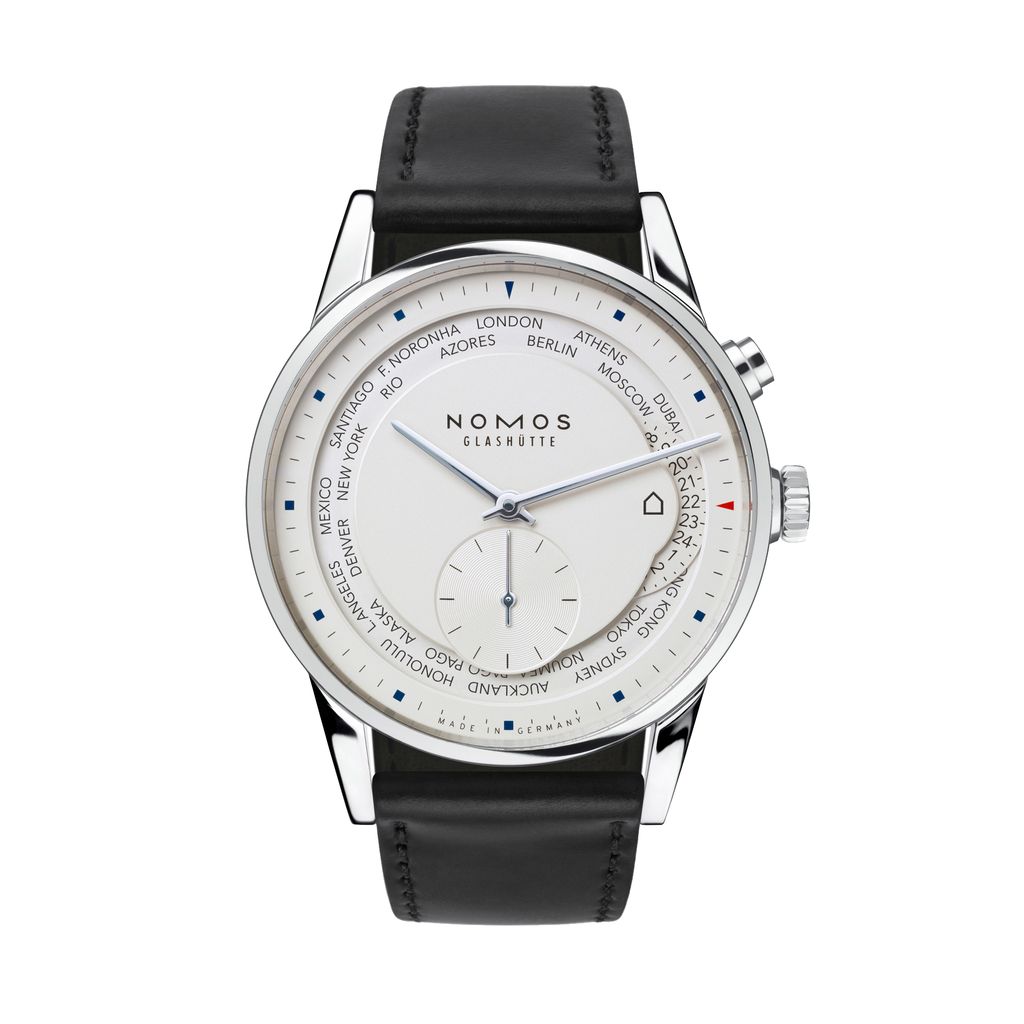
The Nomos Glashütte Zürich is not just a watch—it's a statement. For the young collector who values design over ostentation, this piece from the Saxon watchmaking capital offers a rare combination: Bauhaus purity, in-house movement engineering, and a price point that doesn't require deep pockets. Whether you're catching a flight to Berlin or closing a deal in Brooklyn, the Zürich whispers sophistication without shouting. In this review, we dissect its architecture, its wrist presence, and its place in the modern horology landscape.
Manufacture History
Nomos Glashütte was founded in 1990, just after the fall of the Berlin Wall, by Roland Schwertner. The brand set out to revive the watchmaking tradition of Glashütte, a small town in Saxony with a rich horological heritage dating back to the 19th century. From the start, Nomos embraced the Bauhaus design philosophy—form follows function—and began developing its own movements. The Zürich model, introduced in the 2010s, is a testament to that vision: a clean, legible dial with a world time complication that is both practical and elegant. Today, Nomos is one of the few brands that produces nearly all its movements in-house, from the base caliber to the most complex modules.
Movement
At the heart of the Zürich Weltzeit (reference 801) beats the DUW 6101, an automatic caliber developed entirely in-house. The movement operates at 21,600 vph (3 Hz) and offers a 42-hour power reserve. It features 27 jewels and a date complication, along with a world time module that displays 24 time zones via a rotating city ring. The date is adjusted using a corrector at 10 o'clock, a nod to vintage watchmaking. The movement is beautifully finished with Glashütte ribbing, blued screws, and the Nomos swing system—a proprietary balance and escapement that ensures precision. While not COSC-certified, the DUW 6101 is regulated in five positions and delivers reliable accuracy.
Specifications
- Case diameter: 39.5mm
- Case thickness: 9.6mm
- Lug-to-lug: 48mm
- Case material: Stainless steel
- Crystal: Sapphire (domed)
- Water resistance: 100m
- Lume: Super-LumiNova on hands and hour markers
- Strap: Leather (Horween shell cordovan on some models) with pin buckle
Wrist Feel
The Zürich wears remarkably slim and light, thanks to its 9.6mm thickness and 39.5mm diameter. The lugs curve downward, hugging the wrist even on smaller circumferences. The leather strap is supple out of the box, and the pin buckle is unobtrusive. It slides under a dress shirt cuff effortlessly, yet the 100m water resistance means you don't have to baby it. The balance is near-perfect—neither top-heavy nor too light.
Accuracy
In real-world wear, the DUW 6101 typically runs within +5 to +10 seconds per day. The in-house swing system provides good stability, though it's not COSC-certified. Expect consistent performance across different positions, with minor variation depending on winding state.
Occasions
The Zürich is versatile enough for formal events, daily wear, dress occasions, and travel. Its world time function makes it a natural companion for globetrotters, while the clean dial works equally well with a suit or a casual blazer. It's not a sport watch, but the 100m water resistance allows for swimming and light water activities.
Wrist Presence
3/5 — The Zürich is understated. It won't grab attention from across the room, but up close, the sharp hands, fine typography, and subtle world time ring reveal a quiet confidence. It's a watch for those who know, not for those who need to show.
Reference Variants
The Zürich family includes several references: the 801 (world time, white dial), 805 (date only, white dial), and 807 (date only, blue dial). The 801 is the most complex and collectible, while the 805 and 807 offer a simpler, more affordable entry point.
Family References
The Zürich sits alongside other Nomos classics like the Tangente, Orion, and Ludwig. All share the Bauhaus DNA, but the Zürich is the only one with a world time complication in the standard lineup.
Other Notable Models by Nomos
Beyond the Zürich, Nomos offers the Tangente 38 (hand-wound, iconic), the Metro 38 (designed by Mark Braun), and the Ahoi Neomatik (sporty with 200m water resistance). Each brings a different flavor of German minimalism.
Similar Watches
If you like the Zürich, consider the Junghans Max Bill Automatic (similar Bauhaus look, lower price), the Stowa Antea 390 (hand-wound, German), or the Longines Conquest Heritage (vintage-inspired, Swiss).
Homages
For a budget-friendly take, the Laco Augsburg (automatic, ~$350) and the Sternglas Naos (quartz, ~$250) capture the Bauhaus aesthetic without the in-house movement.
Investment Value
The Zürich has an MSRP of $4,500 and holds its value well on the pre-owned market, typically trading between $3,200 and $4,000. It's not a flipper's watch, but a slow, steady hold. Auction history is minimal—this is a watch bought to be worn, not speculated on.
Service Interval
Nomos recommends service every 5 years. An authorized overhaul costs around $600, though independent watchmakers can service the DUW 6101 for less. The movement is modular, making repairs straightforward.
Pros and Cons
Pros: In-house movement with world time, slim profile, excellent comfort, timeless design, 100m water resistance.
Cons: No quick-set date (uses corrector), modest lume, leather strap may wear quickly, not COSC-certified.
Final Verdict
The Nomos Glashütte Zürich is a masterclass in restrained design and mechanical competence. It offers a genuine in-house world time movement at a price that undercuts Swiss rivals, all while maintaining the Bauhaus ethos that made Nomos a cult favorite. For the collector who values intellect over flash, this is a watch that will never go out of style.