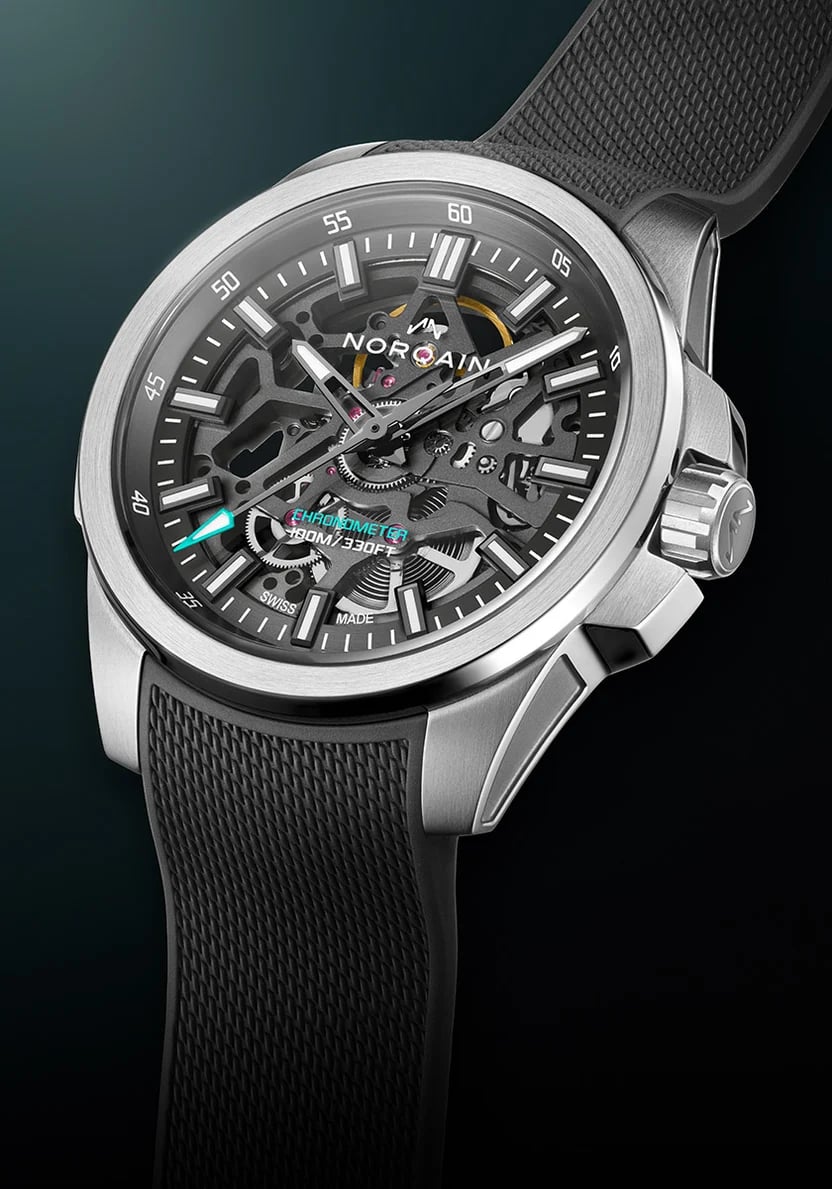
Norqain Independence Skeleton Review: Hype or Hold?
The trust-fund flex that won't bankrupt you—yet.
Introduction
Let's cut the crap: skeleton dials are having a moment. From Zenith's Defy to Oris's ProPilot X, the see-through aesthetic has moved from mall kiosk novelty to legitimate horological flex. Norqain—the Swiss indie brand your finance bro friend hasn't heard of—just dropped the Independence Skeleton, and it's quietly becoming the smart money play for collectors who want visual drama without the Richard Mille price tag.
At $3,490 retail, this isn't a bargain-bin impulse buy. But in a market where a steel Rolex Submariner trades at 40% over list and a Patek Nautilus requires a relationship with an AD that rivals a diplomatic posting, the Norqain Independence Skeleton offers something rare: actual availability, a skeletonized movement you can see, and a price that won't trigger a call from your wealth manager.
The question isn't whether it's a good watch—it is. The question is whether it's a hold or a flip. Spoiler: buy it pre-owned, wear it hard, and don't expect to retire on the appreciation. But if you're parking a slice of your trust fund in something that looks like it costs three times more than it does, this might be your move.
Brand History
Norqain was founded in 2018 by Ben Küffer, whose family has deep ties to Breitling—his father was a long-time Breitling executive. The brand positions itself as an independent, family-owned Swiss manufacture, leveraging partnerships with movement maker Kenissi (co-owned by Tudor and Chanel) for higher-end calibers. The Independence Skeleton uses a modified Sellita base, but the brand's marketing leans hard into 'Swiss independence' and adventure credentials, sponsoring everything from mountaineering expeditions to NHL players.
In the crowded landscape of microbrands and indie Swiss labels, Norqain has carved a niche by offering robust, sporty watches with genuine Swiss pedigree at prices that undercut the big luxury houses. The Independence line is their core collection, and the Skeleton variant is the flashiest expression of that ethos.
Movement
Inside the Independence Skeleton beats the Norqain Calibre NN08, which is a skeletonized Sellita SW200-1 with a custom rotor. It's an automatic movement with 26 jewels, a 28,800 vph beat rate, and a 38-hour power reserve. No COSC certification, no in-house magic—just a reliable workhorse that's been opened up for display.
The skeletonization is done by Norqain's supplier, not in-house, but the execution is clean. The bridges are sandblasted, the gear train is visible, and the custom rotor adds a touch of brand identity. Finishing is industrial rather than haute horology, but at this price point, that's expected. The movement is visible through both the dial side and a sapphire caseback, which is a nice touch.
One thing to note: the 38-hour power reserve is weak by 2025 standards. If you take it off Friday evening, it'll be dead by Sunday morning. For a daily wearer, that's fine, but it's a spec that feels dated compared to the 70-hour movements from Tudor or Oris.
Specifications
- Case diameter: 40mm
- Case thickness: 12.5mm
- Lug-to-lug: 48mm
- Case material: Stainless steel
- Crystal: Sapphire (front and back)
- Water resistance: 100m
- Lume: Super-LumiNova on hands and indices
- Bracelet: Steel bracelet with folding clasp
The 40mm case is the sweet spot for modern sports watches, and the 12.5mm thickness is reasonable for a skeleton. The 100m water resistance is a standout feature—most skeleton watches are 30m or 50m, so you can actually swim with this one. The sapphire crystal is flat with anti-reflective coating, and the case finishing is a mix of brushed and polished surfaces that looks more expensive than the price suggests.
Wrist Feel
On the wrist, the Independence Skeleton wears true to its 40mm diameter but feels slightly larger due to the open dial and thin bezel. The 12.5mm thickness is manageable under a shirt cuff, though the skeletonized dial adds visual height. Weight on the steel bracelet is around 150 grams—substantial but not fatiguing. The bracelet has solid links and a milled clasp with a safety, and the micro-adjustment is adequate. Balance is excellent; the watch doesn't flop around. If you're used to a Submariner, this feels lighter and more refined. If you're coming from a dress watch, it's a tank—but a comfortable one.
The bracelet is a highlight. It's not at the level of a Rolex Oyster or an Omega Seamaster, but it's far better than what you'd get from a microbrand at half the price. The clasp closes with a satisfying click, and the links are screwed rather than pinned, which makes sizing easy.
Accuracy
Expect real-world accuracy of -5 to +10 seconds per day out of the box. Norqain claims regulation to within +/-7 seconds, but the Sellita SW200-1 is not a chronometer. After a few months of wear, you might see drift toward +10. It's perfectly acceptable for a daily beater, but don't expect Grand Seiko spring drive numbers. If you're obsessive, a quick regulation by any competent watchmaker will tighten it up.
Occasions and Wrist Presence
This is a daily wearer and a sport watch. The skeleton dial is too loud for a black-tie gala, but it works with a suit if you're in a creative field. On the steel bracelet, it reads as a sporty luxury piece. On a rubber strap (if you swap), it becomes more casual. Wrist presence is 4/5—it draws eyes without being obnoxious. The openworked movement catches light and starts conversations, but it won't get you mugged like a gold AP.
Reference Variants and Family
The reference under review is N3000.07S01.B01, which features a black skeleton dial on a steel bracelet. Other dial colors—blue, grey, and green—exist under different reference numbers, but exact refs vary by region. Check with an authorized dealer for availability.
Within the Independence family, you have the three-hand Independence 20, the GMT Independence 40, and the integrated-bracelet Independence Wild One. The Skeleton is the flashiest of the bunch, but the Wild One has been getting more hype lately due to its Gerald Genta-esque design.
Other notable Norqain models include the Adventure Sport dive watch, the vintage-inspired Freedom 60 chronograph, and the Neverest adventure line. None of them have the visual drama of the Skeleton, but they're all solid options if you want a Norqain without the see-through dial.
Similar Watches
The obvious competitor is the Zenith Defy Classic Skeleton. It has an in-house Elite movement, 41mm case, and a similar price bracket—but with more brand cachet and a true manufacture caliber. If you can stretch your budget to $6,000, the Zenith is the better watch on paper. However, the Norqain undercuts it by nearly half on the pre-owned market.
The Oris Artelier Skeleton is another option. It uses a Sellita base too, but with a more classical design and a lower price point. The Bell & Ross BR 05 Skeleton is more expensive but has a stronger design identity with its integrated bracelet and square case.
For budget alternatives, the Orient Star Classic Skeleton at $450 is a legitimate Japanese skeleton with an in-house movement. The Invicta Pro Diver Skeleton at $150 is a mall kiosk special that scratches the itch for a night out. And the Stührling Original Skeleton at $100 is pure fashion watch—buy it if you want the look and don't care about horology.
Investment Analysis
Let's talk numbers. MSRP is $3,490. Pre-owned examples are trading between $2,200 and $2,800, depending on condition and completeness. That's a 30-40% depreciation hit the moment you walk out of the AD. The trend is depreciating, and there's no reason to expect appreciation. Norqain is too young, too niche, and too available for the secondary market to care.
There's no auction history to speak of. This is a wear-and-enjoy piece, not a vault queen. If you're a trust-fund baby looking to park money in a watch that will hold value, buy a Rolex. If you want a skeleton dial that looks like it costs $8,000 but actually costs $2,500 pre-owned, this is your move.
My hold recommendation: buy pre-owned at $2,500 or less. The initial depreciation is already absorbed, and the watch will likely stabilize around $2,000-$2,500 for the next few years. Don't buy at retail unless you need the AD relationship for a future Norqain allocation—which isn't a thing.
Service and Maintenance
Service interval is every 5 years, and any competent watchmaker can service a Sellita SW200-1. Norqain's own service center charges around $400 for a full service, but independent shops will do it for $250-$350. Parts are widely available, so you won't be stuck waiting months for a proprietary component. Authorized service is not required, but it's recommended if you want to maintain the warranty.
Final Verdict
The Norqain Independence Skeleton is a well-executed, visually striking watch that punches above its weight on the wrist. It's not an investment, it's not a flex, and it's not going to appreciate. But if you buy it pre-owned for $2,500, wear it daily, and enjoy the skeleton dial without worrying about scratches, you'll get your money's worth. Just don't expect your trust fund manager to be impressed.
In a market obsessed with hype and waitlists, the Norqain Independence Skeleton is a refreshingly honest product: a Swiss-made skeleton watch with 100m water resistance, a solid bracelet, and a price that makes sense. It's the anti-hype hype watch. And for the right buyer, that's exactly the point.