Introduction
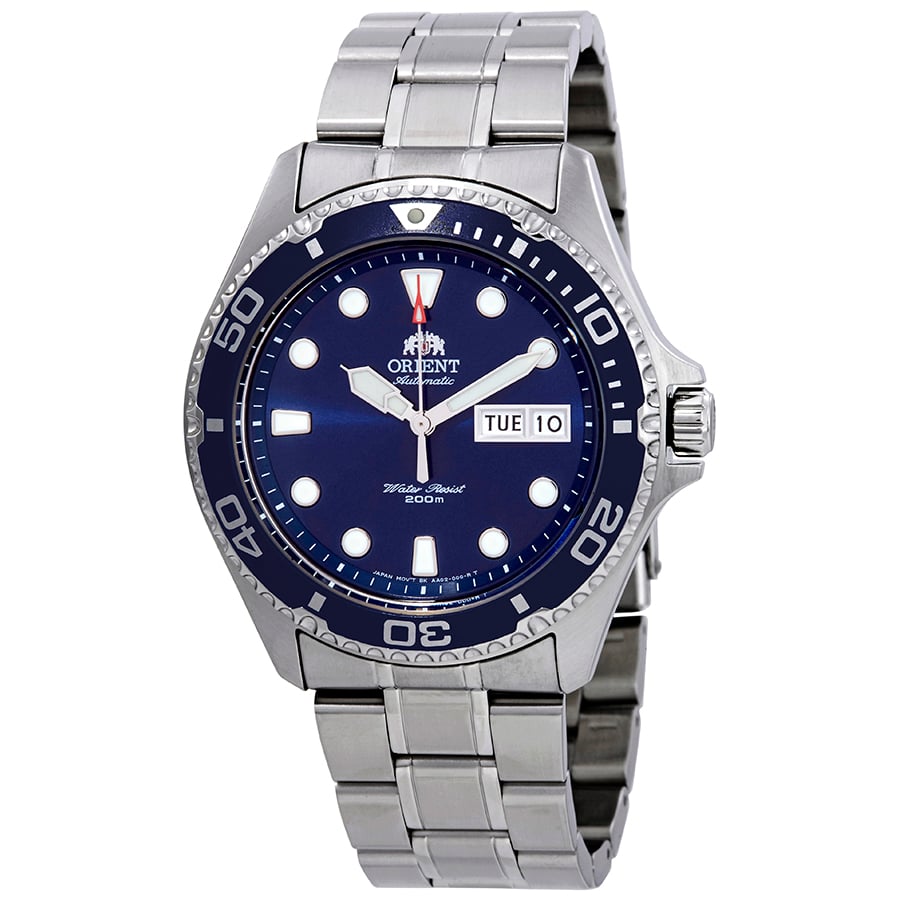
The Orient Ray II (ref. FAA02007B9) is a watch that needs little introduction among budget-conscious enthusiasts. It is the successor to the original Ray, a model that helped democratize mechanical dive watches. With its clean dial, robust in-house caliber, and genuine 200-meter water resistance, the Ray II offers a compelling proposition for anyone seeking a reliable daily beater without the luxury tax.
At first glance, the Ray II appears straightforward—a black dial, stainless steel case, and a utilitarian bracelet. But beneath that unassuming exterior lies a movement that Orient has been refining for decades. The Cal. 46943 is a testament to the brand's commitment to vertical integration, offering hacking and hand-winding at a price point where such features are often omitted. This review will dissect every aspect of the Ray II, from its movement architecture to its real-world wearability, to determine whether it truly deserves its cult status.
Manufacture History
Orient Watch Co., Ltd. was founded in 1950 in Tokyo, Japan. From the beginning, the company focused on producing reliable, affordable mechanical movements, and it remains one of the few watch manufacturers that produces its own calibers in-house. This vertical integration allows Orient to offer exceptional value, particularly in the dive watch segment. The Ray II is a direct descendant of the original Ray, which debuted in the early 2000s as a more affordable alternative to the Seiko SKX. It has since become a staple of the entry-level mechanical watch community.
Movement
The heart of the Ray II is the Cal. 46943, an automatic movement with 22 jewels, a frequency of 21,600 vph (3 Hz), and a power reserve of approximately 40 hours. It features both hacking seconds and hand-winding, two functions that are surprisingly absent in many competing movements at this price. The finishing is basic—perlage on the rotor and minimal decoration on the bridges—but the movement is robust and easy to service. While it is not COSC-certified, it is a proven workhorse that has been used in various Orient models for years. The date complication is quick-set via the crown, and the day-date version (Cal. 46943) is also available in some variants.
Specifications
- Case Diameter: 41.5mm
- Case Thickness: 13.0mm
- Lug-to-Lug: 46.0mm
- Case Material: Stainless steel
- Crystal: Mineral (Hardlex-like)
- Water Resistance: 200 meters (20 ATM)
- Lume: Orient's proprietary lume (green emission)
- Bracelet/Strap: Stainless steel bracelet with folding clasp and diver extension
- Clasp Type: Folding clasp with push-button release and diver extension
Wrist Feel
On the wrist, the Ray II wears larger than its 41.5mm diameter suggests, thanks to the relatively short 46mm lug-to-lug and a thick, cushion-like case profile. The 13mm thickness is noticeable but not excessive for a diver, and the weight—around 150 grams on the bracelet—gives it a reassuring heft without feeling cumbersome. The bracelet is the weakest link: it features hollow end links and a stamped clasp that rattles slightly. However, the diver extension is a welcome touch for those who actually take it underwater.
Comfort is good for extended wear, though the bracelet's sharp edges can dig into the wrist after a full day. Many owners swap the bracelet for a NATO or rubber strap, which transforms the watch into a lighter, more comfortable tool. The crown, at 4 o'clock, is easy to grip and operates smoothly, though it is not screw-down—a minor concession at this price.
Accuracy
In real-world use, the Cal. 46943 typically runs within +15 to +25 seconds per day. This is acceptable for a non-COSC movement and consistent with other Japanese automatics in this class. With careful regulation, some examples can achieve +10 seconds, but expect variance depending on position and winding state. The hacking function makes precise time-setting easy, and the power reserve of 40 hours is sufficient for daily wear, though it will stop overnight if not worn continuously.
Occasions
The Ray II is a versatile tool watch. It excels as a sport watch for swimming, snorkeling, and casual outdoor activities. Its 200m water resistance and unidirectional bezel make it a genuine dive instrument. It also works well as a daily wearer, pairing with jeans and a t-shirt or even a casual button-down. For formal occasions, the thick case and mineral crystal may feel out of place, but it can pass in a business-casual setting. It is also a great travel companion, thanks to its robust construction and easy-to-read dial.
Wrist Presence
3.5/5 — The Ray II has a solid, tool-watch presence that commands attention without being flashy. The black dial and polished bezel insert catch light nicely, but the mineral crystal and simple hands keep it from feeling premium. It looks the part of a serious diver, especially on a rubber strap.
Reference Variants
The Ray II is available in several dial colors. The reviewed model is the black dial (FAA02007B9). Other variants include the blue dial (FAA02001B9) and red dial (FAA02002B9), all with the same stainless steel bracelet. There are also versions with rubber straps, though the reference numbers differ. The dials feature applied indices and a date window at 3 o'clock. The bezel insert is aluminum and comes in matching colors.
Family References
The Ray II is part of Orient's dive watch family, which includes the original Ray, the Mako II, and the Kamasu. The Kamasu is a step up with a sapphire crystal and a more refined case, while the Mako II offers a similar spec sheet with a different case design. The Ray II sits in the middle as a classic, no-frills diver.
Other Notable Models by Orient
Beyond divers, Orient produces the Bambino (a dress watch), the Star Classic (a higher-end automatic), and the Triton (a more premium diver with sapphire). These models showcase Orient's range, from affordable to mid-range, all powered by in-house movements.
Similar Watches
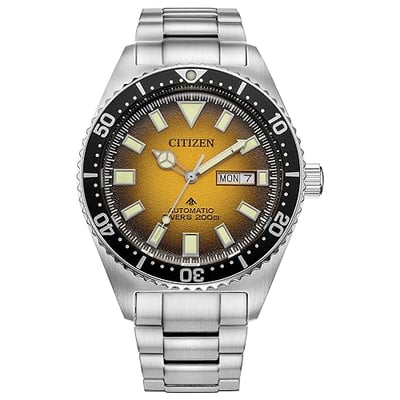
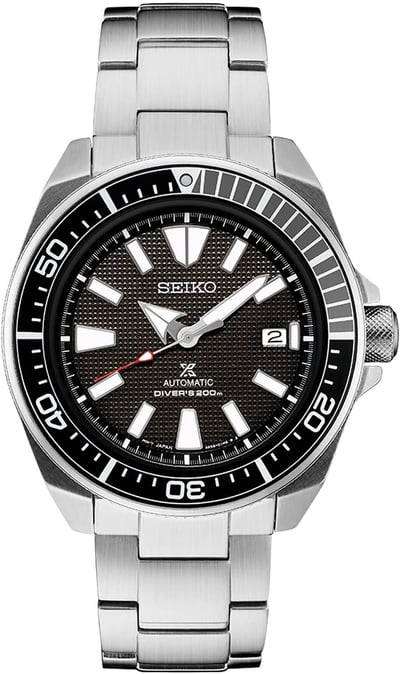
In the same price bracket, the Seiko SKX007 is the most direct competitor, though it lacks hand-winding and hacking. The Citizen Promaster Diver (NY0040) offers a similar spec sheet with a distinctive crown at 8 o'clock. The Seiko Turtle (SRP777) is a step up in quality and price, with a more comfortable case and better finishing.
Homages
While the Ray II is not a homage itself, there are many affordable divers that mimic the Submariner or Seiko Turtle designs. The Invicta Pro Diver 8926OB is a Submariner homage with a Seiko movement, often priced under $100. The Steeldive SD1970 is a homage to the Seiko Turtle, offering sapphire crystal and a ceramic bezel for around $120. These alternatives may offer better specs on paper, but they lack the in-house movement and brand heritage of the Orient.
Investment Value
The Ray II is not an investment piece. Its MSRP of $250 has remained stable, but pre-owned prices typically range from $100 to $200. The watch depreciates slightly after purchase, but it holds its value better than many microbrands. It is best bought to wear and enjoy, not to flip. There is no notable auction history for this model.
Service Interval
Orient recommends servicing the movement every 5 years. The cost is approximately $150 at an independent watchmaker, as the movement is simple and parts are readily available. Authorized service is not required, making maintenance affordable and convenient.
Pros and Cons
Pros
- Reliable in-house movement with hacking and hand-winding
- Genuine 200m water resistance
- Excellent lume for the price
- Classic diver styling that wears well
Cons
- Mineral crystal scratches easily
- Bracelet feels cheap with hollow end links
- Movement accuracy is average
- No sapphire crystal option on standard models
Final Verdict
The Orient Ray II is a superb entry-level diver that punches above its weight. It offers genuine dive capability, a solid in-house movement, and classic styling at a fraction of the cost of Swiss alternatives. While it lacks the finishing of luxury pieces, it delivers where it matters: reliability, legibility, and value. For anyone seeking an affordable mechanical diver that can take a beating, the Ray II is a no-brainer.