First impressions: a watch that refuses to perform
Most watches announce themselves before they reach your wrist. The Otsuka Lotec 9号 does the opposite. It arrives with almost no supporting documentation, no glossy press kit, and a maker who appears genuinely uninterested in telling you what you are supposed to feel about it. That reticence is not an accident. It is the entire proposition of the brand, and it shapes every hour you spend wearing the No.9.
I wore it for seven days. Commutes, desk work, two dinners, a long walk in the rain, and one regrettable decision to take it to a gym. Here is what survived.
Who is Otsuka Lotec?
Otsuka Lotec is a small Tokyo atelier founded by Kiro Otsuka, and it has built its reputation on a numbered series of watches — No.6, No.7, No.8, and now No.9 — released in tiny batches to a collector base that has learned to move fast and ask questions later. The No.7, with its unconventional astronomical display, is the piece that made the brand's name outside Japan. The No.9 continues that line of thinking: a watch whose reason for existing is the dial, the light, and the way the whole object behaves on a real wrist over a real week.
What makes the brand unusual is not just the design language. It is the refusal to participate in the standard marketing apparatus of modern watchmaking. There is no published caliber designation for the No.9, no jewel count, no beat rate, no power reserve figure, no case measurements, no water-resistance rating. For a certain kind of buyer this is infuriating. For another kind — the kind Otsuka Lotec seems to be making watches for — it is a relief. The watch either convinces you in the hand or it does not.
That opacity is worth naming plainly at the top of this review, because it shapes everything that follows. Where a figure is not published, I have not invented one. What I can tell you is what the No.9 is like to live with.
Wearing it: balance, weight, and the seven-day test
The first thing you notice is that the No.9 disappears. Not in the sense of being forgettable — quite the opposite — but in the sense of ceasing to be an object you are managing. It sits close and settles quickly. There is no crown digging into the back of the hand, no case edge that snags a shirt cuff on the way out of a jacket, no sense that you are wearing something that needs to be accommodated.
Weight distribution is the quietly impressive part. The case carries its mass low and central, so the head stays put instead of rotating on the strap when you gesture. Over a full week I adjusted it in the morning and then stopped thinking about it, which is the highest compliment a daily-wear watch can receive. Watches that look this distinctive often wear badly — the design is all in the profile and the profile is all in the way. Not here.
The strap is where the character really shows. Delivered on leather with a simple pin buckle, the No.9 avoids the over-engineered deployant that ruins so many dress-adjacent watches. The leather softens within a couple of days and takes the curve of the wrist. The buckle is small enough that it never becomes a desk-scratching liability, and the tail tucks cleanly rather than flapping. If you are between strap holes, this is one of the few watches where I would genuinely recommend having a hole punched rather than living with a compromise — the whole design rewards a snug, settled fit.
By day four I had stopped treating it as a review unit and started treating it as my watch. That is the point at which a wear test becomes meaningful, and the No.9 passed it without drama.
The dial, the dome, and legibility in real light
Otsuka Lotec's whole identity lives on the dial side, and the No.9 is no exception. The construction is layered and deeply domed, which means the watch changes character depending on where the light is coming from. Under flat office lighting it reads as restrained and almost austere. Tilt your wrist toward a window and the layers separate, the depth opens up, and the thing becomes genuinely absorbing. It is a dial designed for the person wearing it rather than for the person photographing it, which is rarer than it should be.
Legibility is better than the design language would lead you to expect. The reading of time is quick and unambiguous in daylight and in normal indoor lighting. Where it struggles is genuine darkness — there is no luminous treatment anywhere on the No.9, so once the ambient light is gone, so is the watch. If you are the sort of person who checks the time at 3am or walks the dog before sunrise, understand that you are choosing atmosphere over utility. That is a fair trade for this watch, but it is a trade.
The dome deserves its own paragraph. It is the single element that most defines how the No.9 feels in use, because it does two things at once: it magnifies the dial's depth at oblique angles, and it adds a soft, slightly distorting edge to the view that makes the watch feel older and more handmade than its production reality probably warrants. It also means you will notice every fingerprint. Carry a cloth.
Movement: what we know, and what the maker won't tell us
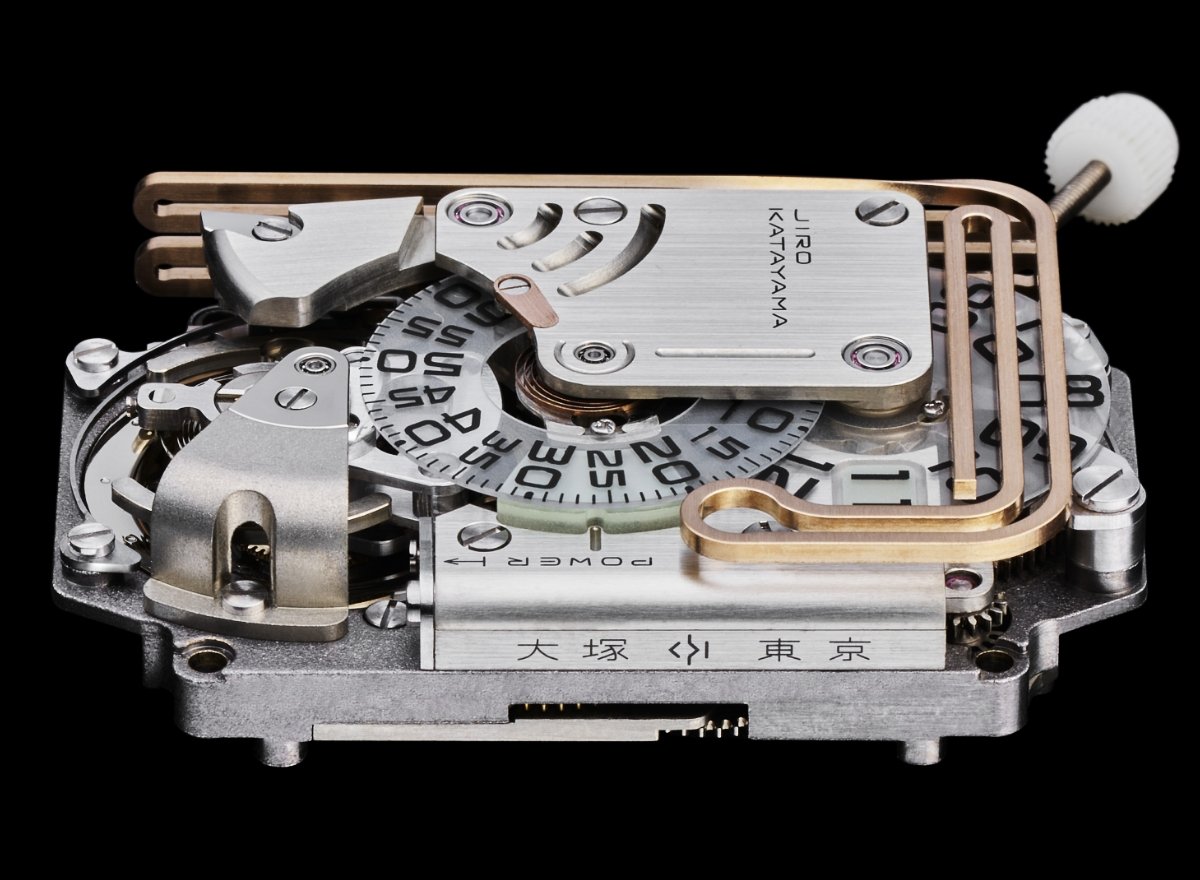
The No.9 is an automatic. Beyond that, Otsuka Lotec does not publish a caliber designation, a power reserve, a beat rate, or a jewel count, and no chronometer certification is claimed. The movement is a Japanese automatic driving the brand's signature layered display, and it is not an in-house calibre in the way that term is usually deployed — the engineering effort here is visibly concentrated on the dial-side mechanism rather than on decorating a base movement.
Is that a problem? For this watch, less than you would think. Nobody buys an Otsuka Lotec because they want to admire a movement through a sapphire caseback. They buy it because the front of the watch does something no other watch does. Judged on that basis, the movement is a means to an end and it performs its job without complaint.
Where it does matter is comparison shopping. If you are the kind of buyer who wants to weigh power reserve against power reserve, or beat rate against beat rate, the No.9 gives you nothing to work with. You are buying on design and on trust. Be honest with yourself about whether you can live with that.
Accuracy in daily wear
With no published rate and no certification, the honest expectation is standard Japanese automatic behaviour: a handful of seconds either way per day, varying with position, temperature and how much the watch is actually worn. In practice that means checking it against a reference once a week rather than once a day.
If you need a watch that holds a rate to the second across a month of alternating wear, this is not the piece for that job — and Otsuka Lotec has never pretended otherwise. What the No.9 does deliver is consistency of feel. It does not stall on a desk-bound day, it does not behave differently on Monday than it does on Friday, and it never once gave me a reason to think about it. For a daily wearer, that reliability of character matters more than a number on a timing machine.
Strap, clasp, and the small frictions
The pin buckle is the right call and I will defend it against anyone who argues for a deployant on a watch like this. It is lighter, it sits flatter on the underside of the wrist, and it does not introduce a hinge that can dig in during a long drive. The leather is supple enough from day one that there is no break-in period worth mentioning.
The frictions are minor but real. The domed crystal collects smudges at a rate that borders on comedic. There is no quick-release on the strap, so swapping to something more casual for the weekend means reaching for a spring-bar tool. And the absence of any luminous treatment means the watch effectively retires when the sun does.
None of these are dealbreakers. All of them are worth knowing before you commit, because the No.9 is not a watch that hides its compromises — it just makes them feel like part of the deal.
Ownership: price, availability, and service
Otsuka Lotec does not publish a USD price for the No.9, and the brand's distribution is largely direct and Japanese-market focused. In practice, that means the realistic path to ownership runs through the secondary market, where small-batch pieces trade privately between collectors and frequently change hands above original Japanese retail. Liquidity is thin. If you need to sell quickly, you may not be able to.
On the question of value: this is not a watch that will fund a retirement. It is, however, a watch from a category — small-batch Japanese independents with genuine design identity — that has held and often exceeded retail over recent years, precisely because production is too small to satisfy demand. Treat any appreciation as a side effect of buying something you actually want to wear, not as an investment thesis.
Servicing realistically means going back to the atelier in Tokyo. There is no independent service network for a watch this low-volume, and no published interval or cost. Budget for the inconvenience of international shipping and a longer turnaround than a mainstream brand would offer. That is the price of buying from a workshop rather than a corporation.
Alternatives worth trying
If the No.9 appeals but the availability does not, the closest comparison in spirit is Kurono Tokyo, which shares the small-batch, dial-led Japanese independent logic with a more conventional movement story and slightly easier access. Naoya Hida & Co. occupies a higher price bracket with hand-finishing and a more traditional dress-watch brief, aimed at the same buyer who values craft over specification. Outside Japan, anOrdain's Model 1 is the nearest equivalent in dial-craft-first small-batch watchmaking, complete with a genuine waiting list.
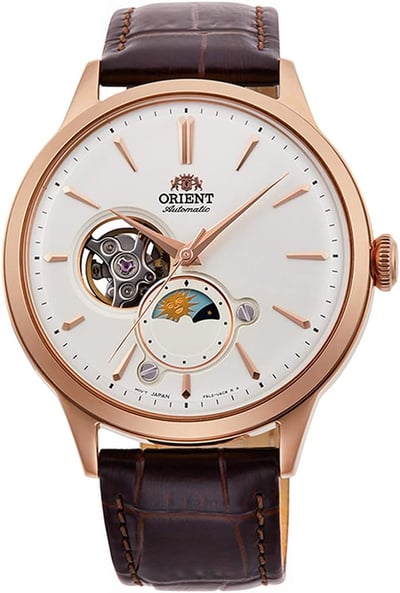
If you simply want the experience at a fraction of the outlay, a Seiko 5 Sports or an Orient Bambino will give you the small, unpretentious, wear-it-everywhere Japanese automatic feeling. Neither is an Otsuka Lotec, and neither pretends to be. But both will tell you whether the underlying instinct — a modest, understated watch worn every day — is really yours.
Verdict
The Otsuka Lotec 9号 is not a watch you buy with a spreadsheet. It is a watch you buy because you looked at it once and could not stop thinking about it, and because you want something on your wrist that a room full of steel sports watches cannot replicate.
After a week, it had earned its place in the rotation on comfort and character alone. The balance is excellent, the strap settles beautifully, and the dial rewards the wearer rather than the camera. The compromises — no luminous treatment, no published specifications, brutal availability, a service path that runs through Tokyo — are real and should be accepted before purchase, not discovered after.
Go in with clear eyes and you will get a watch that feels like it was made for one person. That is a rare thing at any price, and at this one it is close to unreasonable.