The Industrial Renaissance: Why Otsuka Lotec Matters
For the modern collector, the definition of 'luxury' has shifted. It is no longer about how many diamonds you can encrust on a bezel or how many centuries of history a brand can claim. In the age of the 'Alpha,' luxury is defined by access and rarity. This is why Otsuka Lotec has become the most discussed brand in the private lounges from Tokyo to New York. The No. 7.5 isn't just a watch; it's a membership card to an elite tier of horological enthusiasts who value engineering over marketing.
The Design: Brutalism Meets Precision
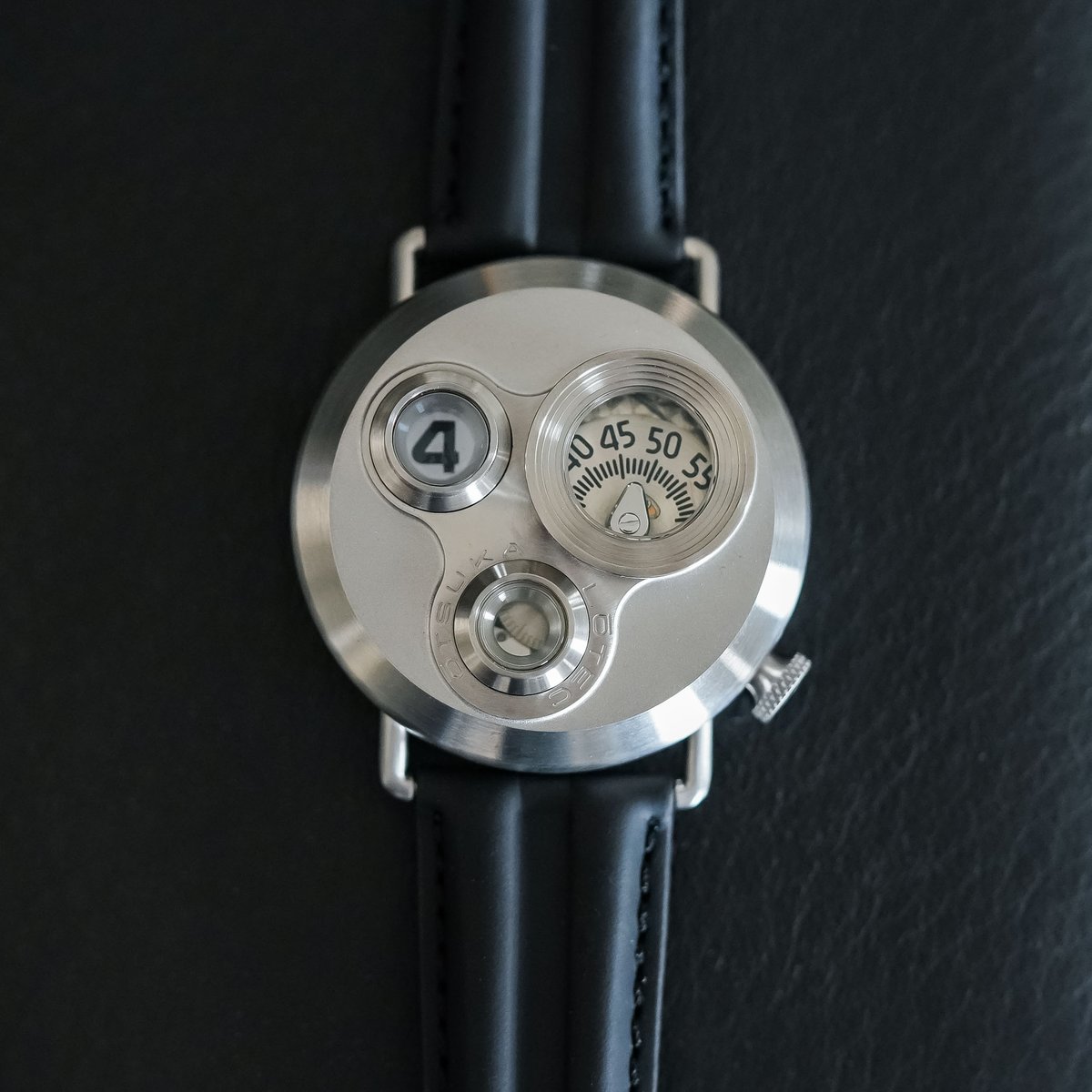
The Otsuka Lotec No. 7.5 is a masterclass in industrial brutalism. The case, crafted from stainless steel, features a raw, almost unfinished aesthetic that highlights the precision of its construction. There are no polished chamfers here to distract you; instead, you get visible screws and a matte finish that looks like it was pulled straight from a 1950s laboratory. The dial—if you can even call it that—is a series of overlapping scales and needles. The retrograde hours and minutes snap back with a mechanical violence that is deeply satisfying to watch. It’s a kinetic sculpture for the wrist.
The Movement Strategy: Smart Engineering
Critics might point to the Miyota 9015 base movement and scoff, expecting a bespoke caliber for a watch with this much hype. But those critics don't understand the market. By using a reliable, thin, and easily serviceable base like the 9015, Katayama ensures that the No. 7.5 remains wearable and functional. The real genius lies in the module he builds on top. This isn't a 'mall watch' with a fancy face; this is a highly engineered mechanical system that manages the torque required to flip those heavy needles back to zero instantaneously. From an investment standpoint, this 'hybrid' approach is brilliant—it keeps the MSRP accessible (for those lucky enough to win the lottery) while providing a unique mechanical hook that drives secondary market value.
Market Analysis: The Hype Cycle and Your Portfolio
Let’s talk numbers, because that’s why we’re here. The MSRP of the No. 7.5 is approximately 400,000 JPY (roughly $2,700 USD). On the secondary market, these pieces are trading hands for anywhere between $8,500 and $12,000. That is a 300% to 400% increase the moment you walk out of the door—or rather, the moment the DHL package arrives from Japan.
Why the massive premium? Scarcity. Katayama is a solo operator. He doesn't have a factory in Bienne; he has a studio. The 'Lottery' system used for allocations has created a fever pitch of demand. In the world of alternative assets, the Otsuka Lotec No. 7.5 is currently outperforming many S&P 500 sectors. If you are holding one, do not sell. We are seeing a shift where 'Micro-Indies' are becoming the new 'Grails' for the younger generation of collectors who find the traditional 'Holy Trinity' brands a bit too much like their father's portfolio.
Wrist Presence and Social Capital
Wearing a Rolex Submariner tells the world you had $10,000 and a desire to fit in. Wearing an Otsuka Lotec No. 7.5 tells the world you have the cultural capital to know what's next. It is a 'quiet luxury' piece that shouts to those who know what they are looking at. At 40mm, it fits perfectly under a bespoke suit sleeve or paired with a heavy-gauge cashmere hoodie. It’s versatile, but more importantly, it’s interesting. In a room full of Royal Oaks, the person with the Otsuka Lotec is the one everyone wants to talk to.
The Verdict for the Sophisticated Buyer
If you have the opportunity to buy this watch at anything close to retail, you take it. No questions asked. If you are looking at the secondary market, you are buying into a piece of horological history. Jiro Katayama is the Akira Nakai of watches—a singular vision, a cult following, and a product that defies traditional market logic. The No. 7.5 is the current crown jewel of his lineup. It’s mechanical, it’s industrial, and it’s arguably the smartest 'flex' you can make in the current market.
Conclusion
The Otsuka Lotec No. 7.5 represents the future of watch collecting. It’s a move away from the corporate and a move toward the artisanal. For the young collector looking to build a portfolio that reflects both taste and market savvy, this is a non-negotiable addition. Just don't expect it to stay at $10,000 for long. As more collectors wake up to the genius of Katayama, that price floor is only going up.