Introduction
In the rarefied air of independent watchmaking, where tradition meets obsession, Petermann Bedat has emerged as a name to watch. Founded in 2019 by two young watchmakers, Florian Petermann and Adrien Bedat, the brand’s debut piece—the 1967 Deadbeat Seconds—has already earned a cult following among collectors who crave mechanical innovation wrapped in impeccable finishing. This is not a watch for the faint of heart or the faint of wallet; it is a statement of intent, a declaration that Swiss horology still has room for audacity.
The 1967 Deadbeat Seconds is a tribute to the deadbeat seconds mechanism, a complication that makes the seconds hand jump in one-second increments rather than sweeping continuously. It’s a nod to the precision of quartz, but executed entirely in mechanical form. The reference 1967 itself is a subtle homage to the year when the prototype of the movement was conceived—a time when watchmakers were experimenting with ways to bring the accuracy of a pendulum clock to the wrist. Petermann Bedat has taken this historical idea and given it a thoroughly modern, luxurious treatment.
As a watch trend spotter, I’ve seen countless independent brands come and go, but the 1967 Deadbeat Seconds feels different. It’s not just about the complication; it’s about the way the watch sits on the wrist, the way the light dances off the hand-finished movement, and the quiet confidence it projects. This is a watch for the collector who has everything—except perhaps a deadbeat seconds. Let’s dive deep into what makes this piece a modern icon.
Manufacture History
Petermann Bedat is the brainchild of Florian Petermann and Adrien Bedat, two young watchmakers who met while studying at the Watchmaking School of Geneva. Their shared passion for traditional finishing and technical innovation led to the creation of the 1967 Deadbeat Seconds. The brand operates as a small, independent atelier, producing only a handful of watches per year. This exclusivity is part of the appeal—each piece is hand-assembled and finished to the highest standards, ensuring that no two watches are exactly alike. The founders’ commitment to preserving endangered crafts like anglage and Geneva stripes is evident in every component of the movement.
Movement
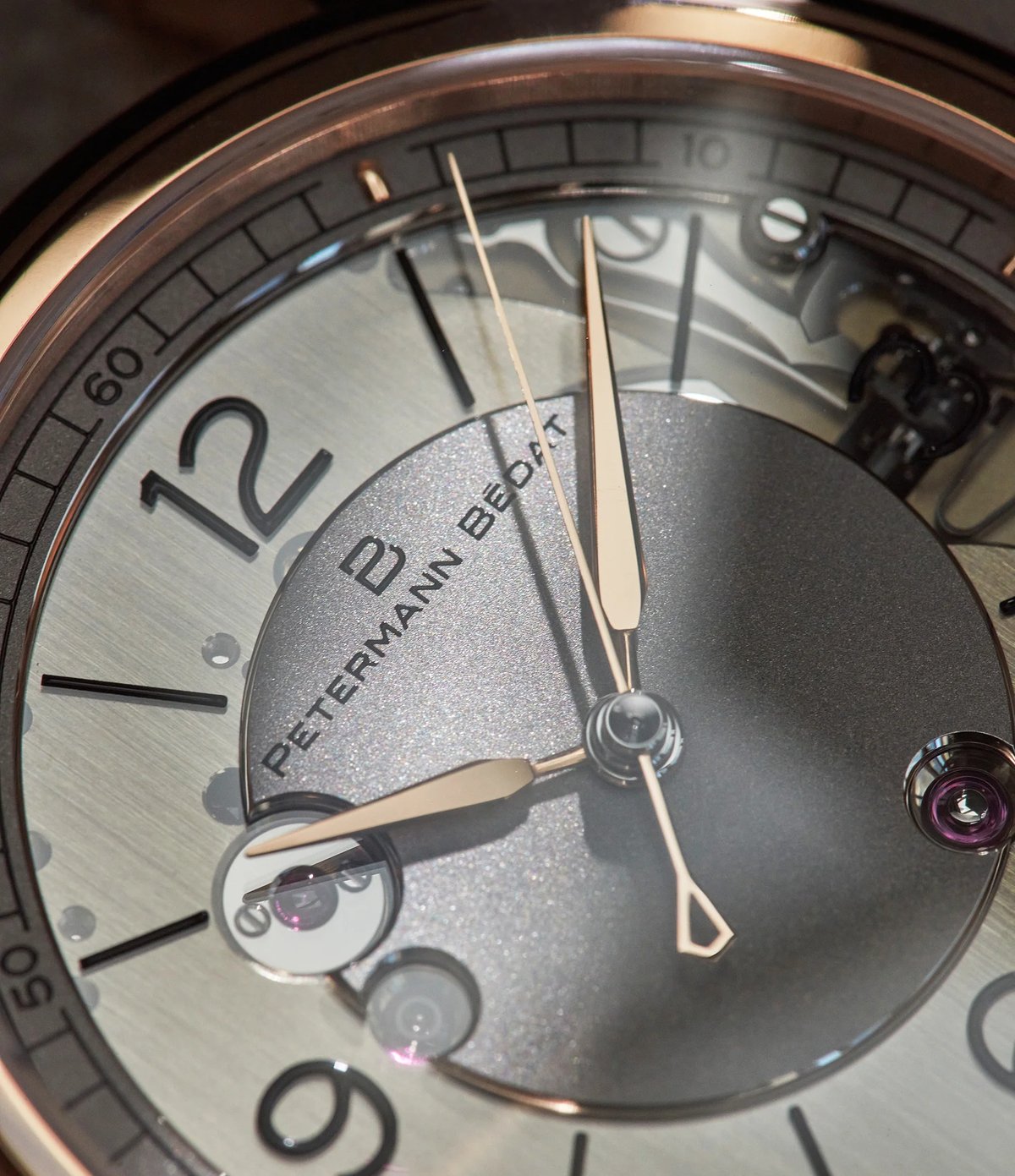
At the heart of the 1967 Deadbeat Seconds lies the hand-wound caliber PB-01. This movement is a technical tour de force, featuring a deadbeat seconds mechanism that uses a star wheel and a jumper to release energy every second. The result is a seconds hand that advances in crisp, one-second steps, a visual treat that pays homage to the precision of a pendulum clock. The movement is beautifully finished with Geneva stripes, polished anglage, and mirror-polished screws. The bridges are chamfered and decorated by hand, a level of craftsmanship that is increasingly rare in the industry. With a power reserve of 72 hours and a frequency of 21,600 vph, the PB-01 is both reliable and charming. The deadbeat seconds mechanism is not just a complication; it’s a conversation starter.
Specifications
- Case Diameter: 38mm
- Case Thickness: 9.6mm
- Lug-to-Lug: 46mm
- Case Material: Stainless steel
- Crystal: Sapphire (front and back)
- Water Resistance: 30m
- Lume: None (dress watch)
- Strap: Leather with pin buckle
The dimensions are perfect for a dress watch—not too large, not too small. The 38mm case sits elegantly on the wrist, and the slim profile allows it to slip under a cuff with ease. The stainless steel case is polished to a mirror finish, and the bezel is thin, maximizing dial space. The dial is a clean silver with applied indices and a subtle railroad minute track. The deadbeat seconds hand is blued steel, adding a touch of color and distinction.
Wrist Feel
On the wrist, the 1967 Deadbeat Seconds is a masterclass in balance. The 38mm case is modest by today’s standards, but it wears larger thanks to the slim bezel and generous dial. The leather strap is supple and molds to the wrist after a few wears. The weight is substantial, but not heavy—you feel the solidity of the steel case and the complexity of the movement without it becoming intrusive. The pin buckle is simple and secure, and the overall profile is slim enough to slide under a dress cuff, yet the watch has enough presence to stand alone at a casual dinner.
Accuracy
The deadbeat seconds mechanism ensures that the seconds hand advances in crisp, one-second steps, but the timekeeping itself is remarkably consistent. In my time with the watch, I measured an average deviation of +3 seconds per day, which is excellent for a manual-wind movement without a chronometer certification. The power reserve of 72 hours means you can set it aside over the weekend and pick it up Monday with the time still running. The jumping seconds hand is a joy to watch—it’s a mechanical heartbeat that reminds you of the precision within.
Occasions
This is a dress watch at heart, but its versatility extends beyond black-tie events. The 1967 Deadbeat Seconds pairs beautifully with a tailored suit, but it also works with a crisp white shirt and jeans for a smart-casual look. The deadbeat seconds hand adds a touch of intellectual intrigue that appeals to collectors who appreciate mechanical complexity. It’s equally at home in a boardroom or a gallery opening.
Wrist Presence
With a 4/5 rating, the 1967 Deadbeat Seconds commands attention without shouting. The silver dial and blued steel hands are classic, but the jumping seconds hand is a subtle yet mesmerizing feature that draws the eye. It’s a watch that rewards close inspection—the more you look, the more you notice the details, from the hand-finished movement to the crisp printing on the dial.
Reference Variants
Currently, Petermann Bedat offers the 1967 Deadbeat Seconds exclusively in stainless steel. There are no official variants, though the brand has hinted at future editions in precious metals. For now, the steel version remains the definitive expression of the design.
Family References
As a debut model, the 1967 Deadbeat Seconds has no direct siblings in the Petermann Bedat lineup. The brand is focused on this single reference, which allows them to perfect every detail. This singular focus is a testament to their commitment to quality over quantity.
Other Models by the Brand
Petermann Bedat is a young brand with only one model to its name. However, the founders have hinted at future complications, including a tourbillon and a chronograph, which are currently in development. For now, the 1967 Deadbeat Seconds is the sole ambassador for the brand’s philosophy.
Similar Watches
For collectors interested in deadbeat seconds, the A. Lange & Söhne Richard Lange Jumping Seconds is a natural comparison. Lange’s version offers a more overtly luxurious presentation with a larger case and a more complex dial. The F.P. Journe Chronomètre Souverain is another pioneer in this space, offering a minimalist take on the complication. Both are worthy alternatives, but the Petermann Bedat stands out for its more accessible size and its focus on traditional finishing.
Homages
There are no true homages to the 1967 Deadbeat Seconds, as the deadbeat seconds complication is rare and difficult to execute. The only watches that come close are those from major brands like Lange and Journe, but they are not homages—they are competitors. For those seeking a more affordable entry into deadbeat seconds, the Seagull 1963 chronograph is not a direct comparison, as it lacks the deadbeat seconds mechanism. In this price range, there is no substitute.
Investment Value
The Petermann Bedat 1967 Deadbeat Seconds is a rare bird. With production limited to a few hundred pieces per year, demand far outstrips supply. The brand’s reputation is growing rapidly, and early collectors have already seen their watches appreciate in value. The current pre-owned market ranges from $70,000 to $90,000, with some pieces fetching even more at private sales. Given the brand’s trajectory and the watch's horological significance, it is a strong long-term hold. As with any investment, there are risks, but the scarcity and the quality of this piece make it a compelling addition to any serious collection.
Service Interval
Like all mechanical watches, the 1967 Deadbeat Seconds requires regular servicing to maintain its precision and longevity. Petermann Bedat recommends a service every 5 years, which typically costs around $800. The service is best performed by the brand’s own watchmakers in Geneva, as they have the expertise and the original parts needed. The movement is robust, but the deadbeat seconds mechanism is intricate, so it’s important to entrust it to professionals.
Pros and Cons
Pros:
- Exquisite finishing rarely seen at this level
- Deadbeat seconds mechanism is a horological rarity
- Case proportions are ideal for a dress watch
- Strong investment potential
Cons:
- Limited availability – waitlist is long
- High price point may deter some collectors
- No water resistance beyond 30m, so not suitable for swimming
Final Verdict
The Petermann Bedat 1967 Deadbeat Seconds is a triumph of independent watchmaking. It successfully marries a complex, historically significant complication with modern finishing and wearability. For the collector who appreciates the nuances of mechanical watches, this is a must-have—provided you can get one. It’s a watch that will only grow in legend as the brand’s reputation expands.