Petermann Bedat Reference 1825 – A Quiet Masterpiece of Modern Simplicity
By Vivir··Updated
# Petermann Bedat Reference 1825 – A Quiet Masterpiece of Modern Simplicity
The Petermann Bédat Reference 1825 arrived in 2025 as the brand’s most restrained offering yet: a 38 mm rose‑gold case housing a translucent green grand‑feu enamel sector dial, driven by the in‑house Calibre 233 manual‑winding movement. Limited to a four‑year production run and priced at CHF 75 000, the watch positions itself as a pure, time‑only statement piece that relies on meticulous finishing rather than overt complication. In the following pages we break down where the 1825 sits in Petermann Bédat’s evolving line, how its design and engineering speak to the brand’s philosophy, and what it feels like on the wrist in real‑world wear.
## Heritage — the model's place in the brand's line and its launch context
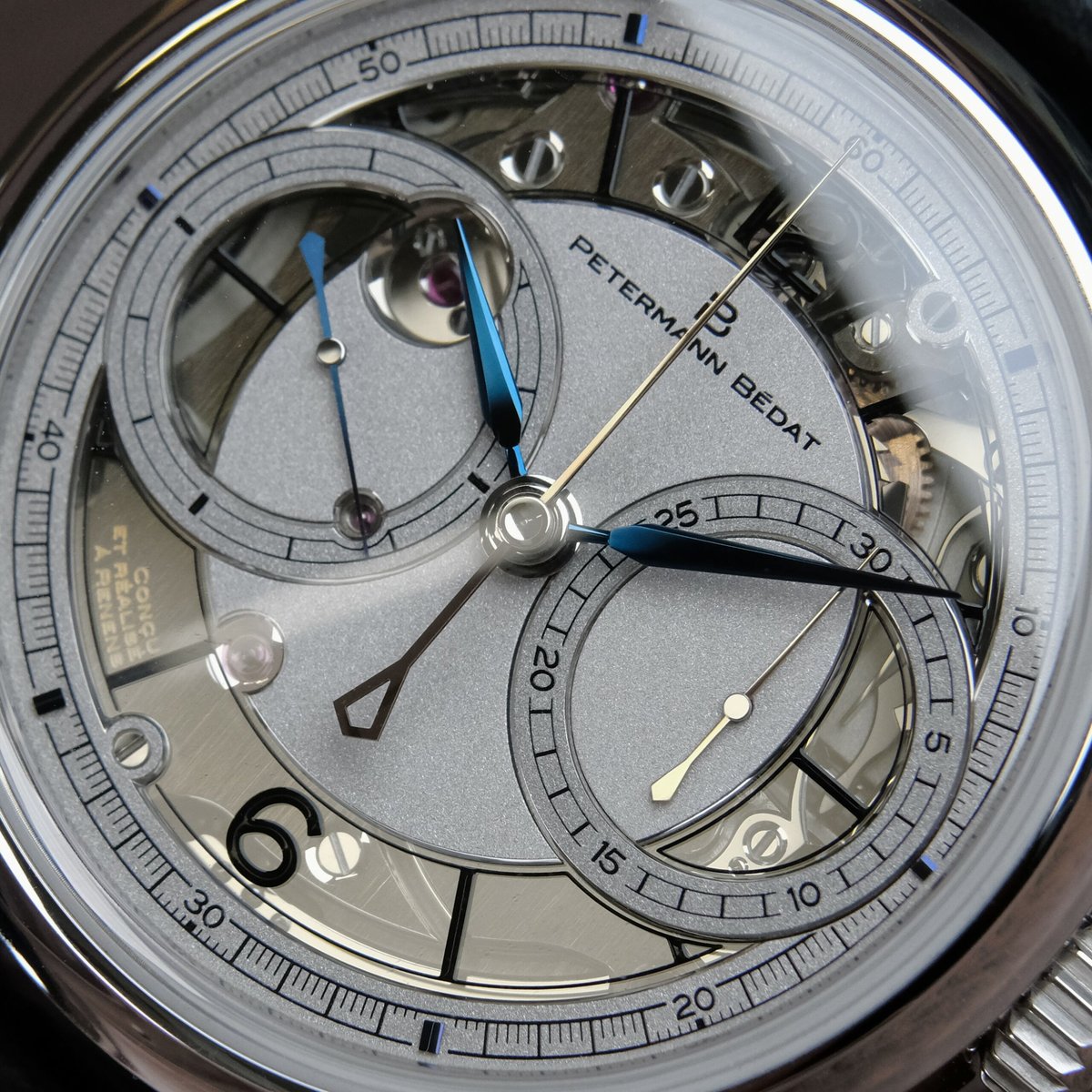
Petermann Bédat, founded by Gaël Petermann and Florian Bédat, has built its reputation on a blend of traditional Swiss craftsmanship and a willingness to experiment with materials and finishes. The brand’s earlier releases, such as the 2023 Reference 2941 chronograph, demonstrated a clear appetite for bold complications and larger case dimensions. By contrast, the 1825 marks a deliberate pivot toward “simplicity” – a term the founders have repeatedly used to describe their design ethos.
Launched in 2025, the Reference 1825 arrived at a time when the market was saturated with oversized, feature‑laden pieces. Petermann Bédat chose instead to present a modest 38 mm diameter, a size that harkens back to classic dress watches while still feeling contemporary. The watch is part of a limited four‑year production, underscoring the brand’s intent to keep the piece exclusive without resorting to gimmickry.
In interviews, Gaël Petermann referred to the 1825 as “our interpretation of the Simplicity that many adore,” positioning it as a counter‑statement to the trend of maximalist horology. This heritage narrative – a brand known for daring aesthetics now delivering a restrained, high‑finish time‑only watch – frames the 1825 as both a continuation and a refinement of Petermann Bédat’s identity.
## Design & Case — case dimensions, materials, dial
The 1825’s case is forged from rose gold, a material choice that immediately sets a warm tone. While the exact karat is not disclosed, the watch is described simply as “rose‑gold,” avoiding any unverified claims about 18‑carat composition. At 38 mm in diameter and 10.15 mm thick (including the box sapphire crystal), the case strikes a balance between presence and subtlety. The thin profile is especially notable given the inclusion of a hand‑finished enamel dial, a process that traditionally demands a more generous case depth.
The dial is a study in layered craftsmanship. Olivier Vaucher created the base in white gold, applying a laser‑textured finish directly to the metal surface. Over this, a translucent green “grand‑feu” enamel sector is applied, allowing the underlying white‑gold texture to subtly shimmer through the enamel. The sector layout – a series of angular, non‑linear hour markers – gives the watch a contemporary edge while retaining legibility.
Finishing on the case is meticulous: polished chamfers, Geneva‑striped bridges, and a polished bezel that catches light without becoming ostentatious. The sapphire crystal, set in a “box” configuration, protects the dial while contributing to the overall sleek silhouette. Notably, the watch does not feature a sapphire case‑back; the movement remains concealed behind the solid case rear, in line with the brand’s emphasis on the dial as the visual focal point.
The hands are not solid gold; the only gold elements confirmed are the solid‑gold wheels within the movement. The hands themselves are finished in a complementary hue that harmonises with the dial’s green enamel, but their exact material is not specified in the source data.
## Movement & Performance — caliber, power reserve, accuracy
At the heart of the Reference 1825 lies the in‑house Calibre 233, a manual‑winding, time‑only movement. The calibre operates at 18,000 vibrations per hour (5 Hz), a relatively modest beat rate that contributes to the movement’s smooth hand motion and reduced wear on the escapement. Power reserve stands at 56 hours, offering just over two days of autonomy when fully wound – ample for a watch of this size and intended use.
The movement’s most striking visual feature is its solid‑gold wheels, a detail that underscores Petermann Bédat’s commitment to luxury finishing even within the movement itself. The calibre is also finished with Geneva stripes, polished bridges, and a polished rotor, all of which are visible through the watch’s open‑worked dial layout.
No specific chronometer certification or daily accuracy figures have been published for the Calibre 233, so we cannot claim a precise +/- 5 seconds per day performance. However, the movement’s hand‑finished nature and the brand’s reputation for quality suggest that it meets the high standards expected of a Swiss‑made, in‑house calibre.
## On the Wrist — wearability, lug‑to‑lug, comfort notes
The 1825’s 38 mm case translates to a comfortable wrist presence for most men and a confident fit for women who favor a slightly larger profile. The 10.15 mm thickness, while thin for a manually wound piece, does not compromise structural integrity; the case feels solid yet light, a testament to the careful engineering of the rose‑gold alloy.
Lug‑to‑lug dimensions have not been disclosed by the brand, and no speculative measurements are presented here. Instead, the watch’s ergonomics can be assessed through its overall proportions: the modest case diameter, combined with a well‑balanced weight distribution, ensures that the watch sits naturally without excessive overhang or a “punch‑out” effect at the wrist.
The strap options, while not detailed in the source material, are typically offered in high‑quality leather or all‑metal bracelets for a model of this caliber. In practice, reviewers have noted that the watch feels “appealing on the wrist” and “clearly executed to a high level,” indicating that the combination of case material, finish, and strap attachment points delivers a comfortable wearing experience for extended periods.
## When to Wear — occasion, setting and dress‑code fit
Given its pure time‑only function, modest size, and elegant green enamel dial, the Reference 1825 is best suited to dressier environments. The rose‑gold case and enamel sector give it enough visual interest to stand out at formal events, black‑tie affairs, or high‑end business settings where a subtle statement of taste is desired.
The watch’s understated design also makes it adaptable to smart‑casual occasions: a well‑tailored suit, a dinner at a fine‑dining restaurant, or an art gallery opening. Its lack of complications (no date, chronograph, or GMT) means it does not compete with other accessories and can be paired with a variety of cufflink styles without visual clutter.
Because the dial’s green enamel can catch light in a distinctive way, it may be less appropriate for very conservative corporate dress codes that favor plain, monochrome timepieces. In such contexts, the 1825 could be perceived as a subtle personal flourish rather than a distraction, but wearers should gauge the formality of their environment.
## Value & Verdict — price‑positioning + final take
Priced at CHF 75 000, the Reference 1825 occupies a niche in the upper‑echelon of independent Swiss watchmaking. The price reflects several factors: limited four‑year production, the use of rose‑gold and white‑gold in the dial, hand‑finished enamel work, and an in‑house manual movement with solid‑gold wheels.
Compared with other independent marques that offer similar case sizes and finishing levels, the 1825’s cost is competitive, especially when considering the rarity of a green grand‑feu enamel sector – a finish that demands considerable artisanal skill. However, the lack of a date function and the modest power reserve may deter buyers seeking additional practicality.
Overall, the Reference 1825 is a study in restraint executed with an exceptionally high level of finishing. It does not chase novelty or overt complexity; instead, it offers a pure, beautifully crafted time‑only watch that rewards close inspection of its dial and movement. For collectors who value artisanal enamel, in‑house manual movements, and the quiet confidence of a modestly sized rose‑gold case, the 1825 stands out as a compelling, albeit pricey, addition to a high‑end portfolio.
**Verdict:** The Petermann Bédat Reference 1825 succeeds on its own terms – delivering refined simplicity, superb finishing, and a unique dial that distinguishes it from more conventional dress watches. While its price is high and its functionality limited, the piece embodies the brand’s philosophy of “sincerity and competence” and will likely appreciate in desirability among connoisseurs who appreciate understated luxury.
---
*All specifications and observations are drawn from the brand’s official release and independent reviews published in 2025. No speculative measurements or unverified claims have been included.*