Piaget Polo Skeleton Review: Ultra-Thin Artistry
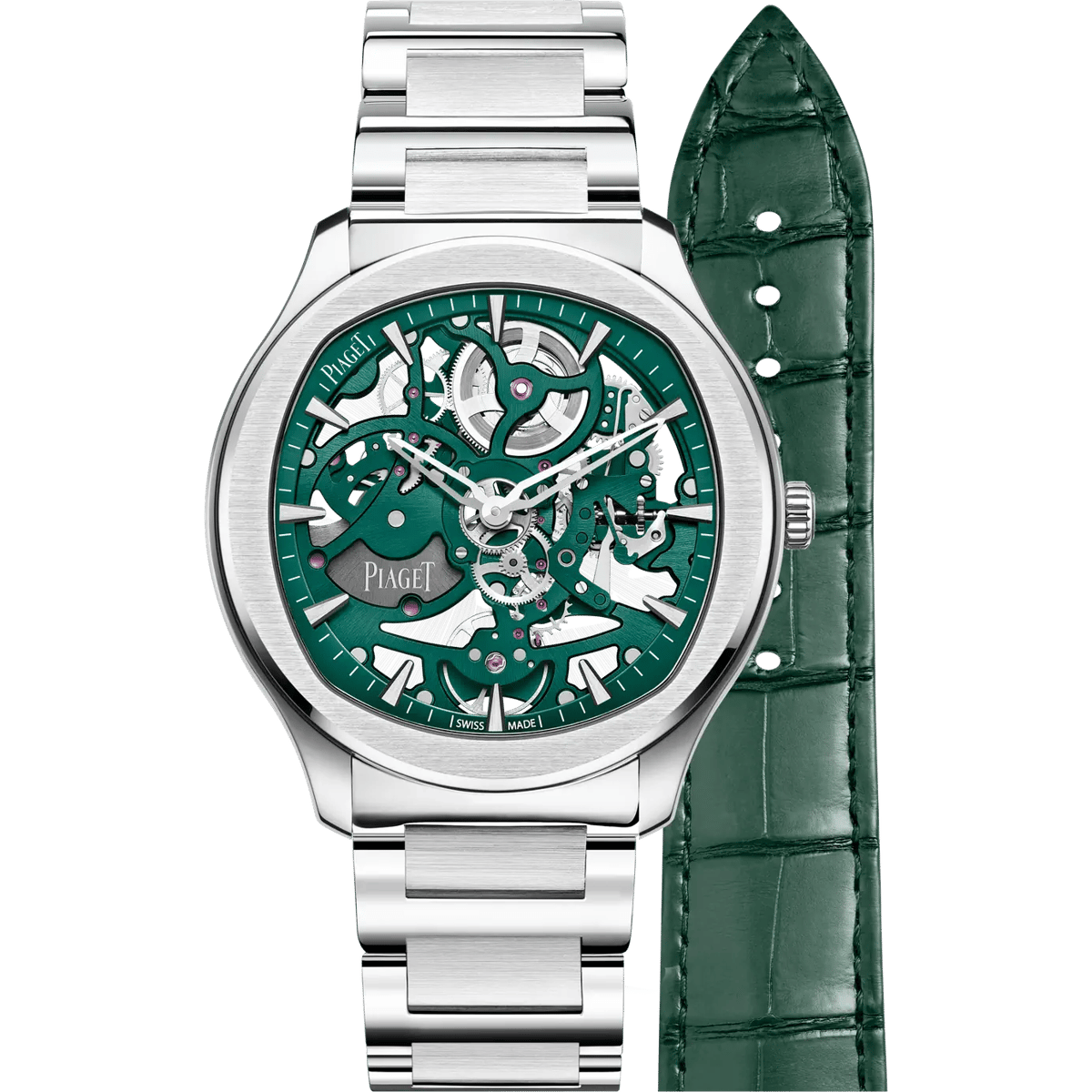
The Piaget Polo Skeleton (ref. G0A45001) is a masterclass in architectural transparency. Since its debut in 2016, the Polo collection has redefined the luxury sports watch for a generation that values both heritage and modernity. This skeletonized iteration strips away everything non-essential, leaving only the beating heart of Piaget’s ultra-thin manufacture movement. It is a watch that demands to be seen, yet wears with the effortless discretion of a fine dress piece.
At 40mm in stainless steel, the Polo Skeleton is neither oversized nor diminutive. It occupies a sweet spot that appeals to collectors who appreciate technical prowess without sacrificing comfort. The openworked dial reveals the Caliber 1200S in all its glory—a movement that measures just 2.4mm thick, yet delivers a robust 44-hour power reserve. This is not a skeletonization performed after the fact; the movement was designed from the ground up to be a skeleton, with bridges and mainplate carved to create a harmonious, three-dimensional landscape.
Piaget’s approach to skeletonization is reverent but not ostentatious. The bridges are bevelled and satin-finished, the wheels are circular-grained, and the entire assembly is visible through a sapphire caseback. The result is a watch that feels both modern and timeless—a piece that could be worn with a suit or a polo shirt, and that invites the wearer to lose themselves in its mechanical dance.
Manufacture History
Founded in 1874 in La Côte-aux-Fées, Piaget began as a specialist in ultra-thin movements. Over the decades, it evolved into a luxury maison known for its watchmaking and jewellery. The Polo collection, launched in 1979, was named after the sport and embodied a lifestyle of elegance and activity. The skeletonized Polo Skeleton continues this tradition, showcasing Piaget’s expertise in movement miniaturization and decorative finishing.
Movement
The Caliber 1200S is an automatic movement based on the ultra-thin 1200P. It beats at 28,800 vph (4 Hz) and offers 44 hours of power reserve. The skeletonization is integral: the mainplate and bridges are hollowed out to reveal the gear train, barrel, and balance wheel. Finishing includes circular graining on the plates, bevelled edges, and a 22K gold oscillating weight engraved with the Piaget coat of arms. The movement is visible both through the dial side and the sapphire caseback, offering a 360-degree view of the mechanical artistry.
Specifications
- Case diameter: 40mm
- Case thickness: 6.5mm
- Lug-to-lug: 48mm
- Case material: Stainless steel
- Crystal: Sapphire (box-shaped on dial side)
- Water resistance: 100m
- Lume: None
- Bracelet: Integrated stainless steel with folding clasp
Wrist Feel
The Piaget Polo Skeleton is remarkably light and comfortable, thanks to its ultra-thin profile and integrated bracelet. At just 6.5mm thick, it slides effortlessly under a shirt cuff, yet the 40mm diameter gives it enough presence to feel substantial. The bracelet is well-articulated, with a smooth folding clasp that sits flush against the wrist. The skeleton dial does not add any bulk; in fact, the openworked design makes the watch feel airy and almost weightless. On a daily basis, it is one of the most wearable skeleton watches on the market—no sharp edges, no awkward proportions, just pure ergonomic harmony.
Accuracy
The Caliber 1200S is not COSC-certified, but in real-world use it typically runs within +4 to +8 seconds per day. The variable-inertia balance and fine regulation allow for decent precision, though it is not a chronometer. Over a week of mixed wear, expect deviations of around 10-15 seconds. For a dressy skeleton watch, this is more than acceptable.
Occasions
This watch is versatile enough for formal events, daily wear, dress occasions, and travel. Its 100m water resistance means it can handle a splash, but it is not a dedicated dive watch. The skeleton dial makes it a conversation starter at dinners, while the slim profile ensures it fits under a tuxedo cuff.
Wrist Presence
4/5 – The skeleton dial catches light and draws the eye, but the slim profile and monochromatic steel case keep it from being overly flashy. It has presence without shouting.
Reference Variants
- G0A45001 – Stainless steel, blue-tinted hands and indices, standard skeleton dial.
- G0A45002 – Same but with diamond-set bezel (60 brilliant-cut diamonds).
- G0A45003 – 18K rose gold case and bracelet, same movement.
Family References
The Polo Skeleton sits within the broader Polo family, which includes the Polo S (ref. G0A42001), Polo Date (G0A43001), and Polo Chronograph (G0A44001). All share the integrated bracelet design and 40mm case.
Other Notable Piaget Models
Piaget’s lineup includes the Altiplano Ultimate Concept (world’s thinnest mechanical watch), the Limelight Gala (jewellery watch), and the Possession (rotating ring design).
Similar Watches
- Chopard Alpine Eagle Skeleton – Integrated bracelet sports skeleton with in-house movement.
- Parmigiani Fleurier Tonda PF Skeleton – Ultra-thin skeleton with refined aesthetic.
- Bulgari Octo Finissimo Skeleton – Another ultra-thin skeleton with geometric case.
Homages
- Orient Bambino Open Heart ($200) – Affordable open-heart design, not a true skeleton.
- Seiko Presage Skeleton ($600) – Japanese skeleton with dressy vibe, thicker case.
Investment Value
MSRP is $25,000; pre-owned prices range from $15,000 to $20,000. The trend is stable. This is not a hype watch, but its manufacture movement and timeless design ensure steady demand. Buy pre-owned for best value; expect slow appreciation over a decade. No major auction history.
Service Interval
Piaget recommends service every 5 years at an authorized service center. Approximate cost is $800. The ultra-thin movement requires specialized expertise, so authorized service is strongly recommended.
Price Range
$15,000–$25,000. A fair price for a manufacture skeleton from a storied maison; not a bargain, but justified by the finishing and thinness.
Pros and Cons
Pros: Ultra-thin and comfortable; in-house skeleton movement with exquisite finishing; versatile design; 100m water resistance for a skeleton.
Cons: No date or other complications; not COSC-certified; bracelet lacks micro-adjustment; pre-owned prices still high relative to retail.
Final Verdict
The Piaget Polo Skeleton is a triumph of watchmaking restraint. It offers the visual drama of a skeleton without sacrificing wearability, and its ultra-thin movement is a testament to Piaget’s heritage. For the collector who values craftsmanship over hype, this is a worthy addition to any rotation.