Piaget Sixtie Ref. G0A50300 – The Cushion-Case Comeback
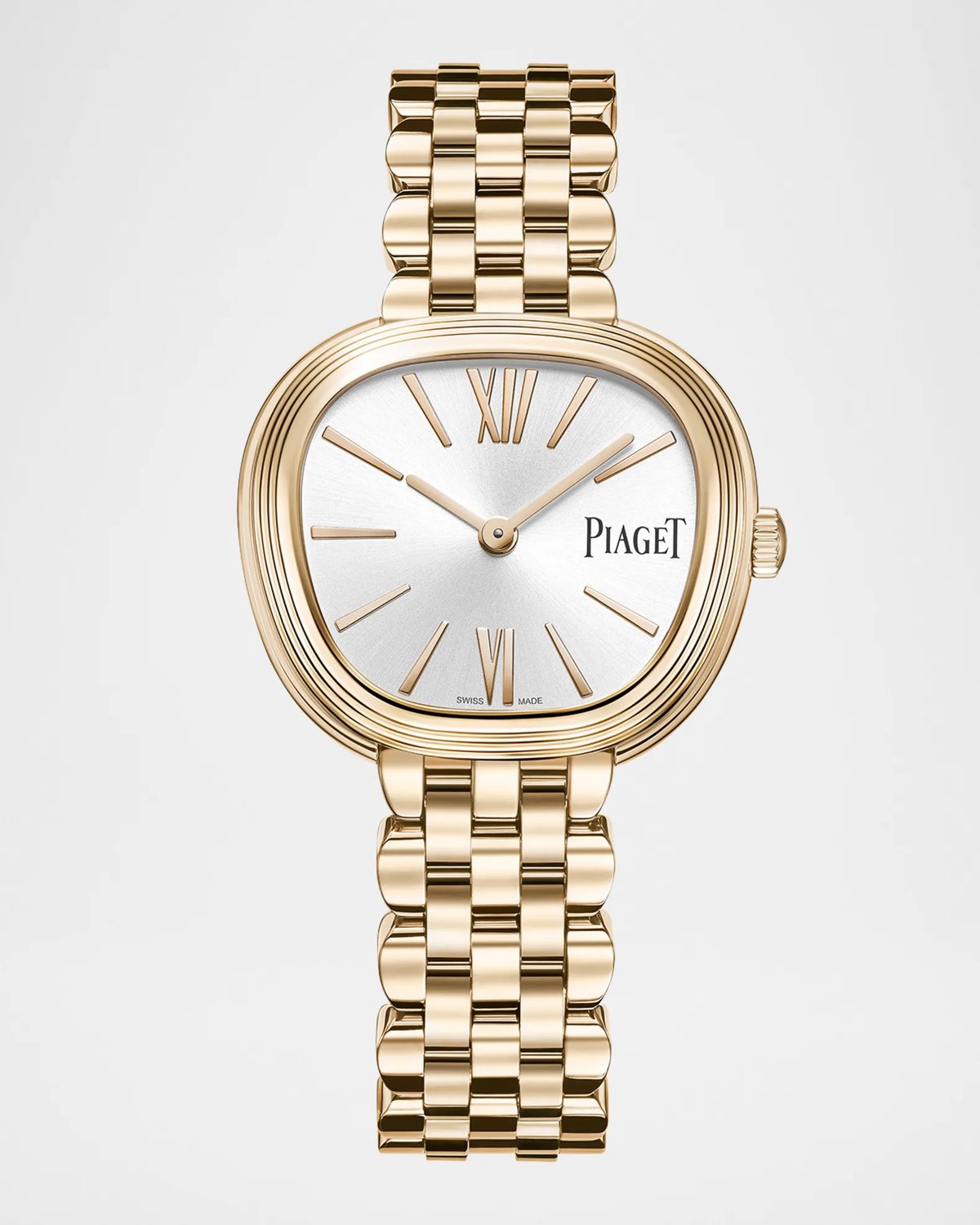
Let’s be real: the watch world is obsessed with round cases and octagonal bezels. But every now and then, a brand throws a curveball that makes you stop scrolling. Enter the Piaget Sixtie, a watch that channels the free-spirited 1960s with its cushion-shaped case and integrated bracelet. Reference G0A50300 is the silver-dialed stainless steel version, and it’s the kind of piece that makes you wonder why more brands don’t take risks.
Piaget launched the Sixtie line in 2015, targeting a younger, style-conscious audience. The brand, known for its ultra-thin dress watches and diamond-studded jewelry pieces, wanted to prove it could do sporty-chic without losing its DNA. The result is a 40mm watch that feels both retro and modern, with an in-house automatic movement and a bracelet that flows seamlessly from the case.
Brand History: From Movement Maker to Style Icon
Piaget was founded in 1874 by Georges-Édouard Piaget in the Swiss village of La Côte-aux-Fées. For decades, the company produced high-quality movements for other brands. It wasn’t until the 1940s that Piaget began making its own watches, and by the 1960s, it had become synonymous with ultra-thin calibers and bold design. The Sixtie line pays homage to that era, but with a modern twist.
Movement: The In-House Cal. 534P
Under the hood, the Sixtie beats with Piaget’s Caliber 534P, an automatic movement with a date complication. It’s not a chronometer, but it’s reliable and well-finished. The rotor is decorated with Geneva stripes, and the bridges feature circular graining. Power reserve is a modest 42 hours, which is fine for a daily wearer but not class-leading. The movement is visible through a sapphire caseback, so you can admire the engineering.
Specs and Wearability
The case measures 40mm in diameter, 10mm thick, and 48mm lug-to-lug. The cushion shape gives it a unique presence on the wrist, and the integrated bracelet (with polished center links) adds a dressy touch. Water resistance is only 30 meters, so keep it away from the pool. There’s no lume, which is a bummer for low-light situations, but the dial is clean and legible with applied indices.
On the wrist, the Sixtie is comfortable and balanced. The bracelet tapers nicely, and the folding clasp is secure. However, the lack of micro-adjustment means you’ll need to get the sizing just right. It’s a watch that works best with a shirt cuff or a casual blazer.
Market Performance: Hold or Flip?
Let’s talk numbers. The Sixtie had an MSRP of $7,800 when new, and current retail is around $8,200. But on the pre-owned market, you can find mint examples for $4,500 to $6,200. That’s a significant depreciation, and the trend is still downward. Unlike the Royal Oak or Nautilus, the Sixtie hasn’t developed a cult following. It’s a niche piece for collectors who appreciate design over hype.
If you’re looking to flip, this isn’t the watch for you. But if you want a unique, in-house Piaget that won’t break the bank, the Sixtie is a solid buy. Just don’t expect it to appreciate.
Similar Watches and Alternatives
In the integrated-bracelet space, the Sixtie competes with the Cartier Santos, the Audemars Piguet Royal Oak, and the Patek Philippe Nautilus. But those watches are either more expensive or harder to find. The Sixtie offers a more affordable entry point into the world of luxury integrated bracelets, with a distinct vintage flavor.
For those on a budget, the Seiko Cocktail Time series offers a similar cushion-case aesthetic for under $500. But it’s not a direct homage – just a nod to the same retro vibe.
Final Verdict
The Piaget Sixtie ref. G0A50300 is a delightful watch that stands out in a sea of sameness. It’s well-made, comfortable, and carries the prestige of a brand with a rich history. But it’s not an investment piece. Buy it because you love the design, not because you expect to make money. The Sixtie is a charming choice.