Piaget Sixtie (Reference G0A50300) – A Vintage‑Inspired Trapezoid for the Modern Woman
By Vivir Editorial··Updated
# Piaget Sixtie (Reference G0A50300) – A Vintage‑Inspired Trapezoid for the Modern Woman
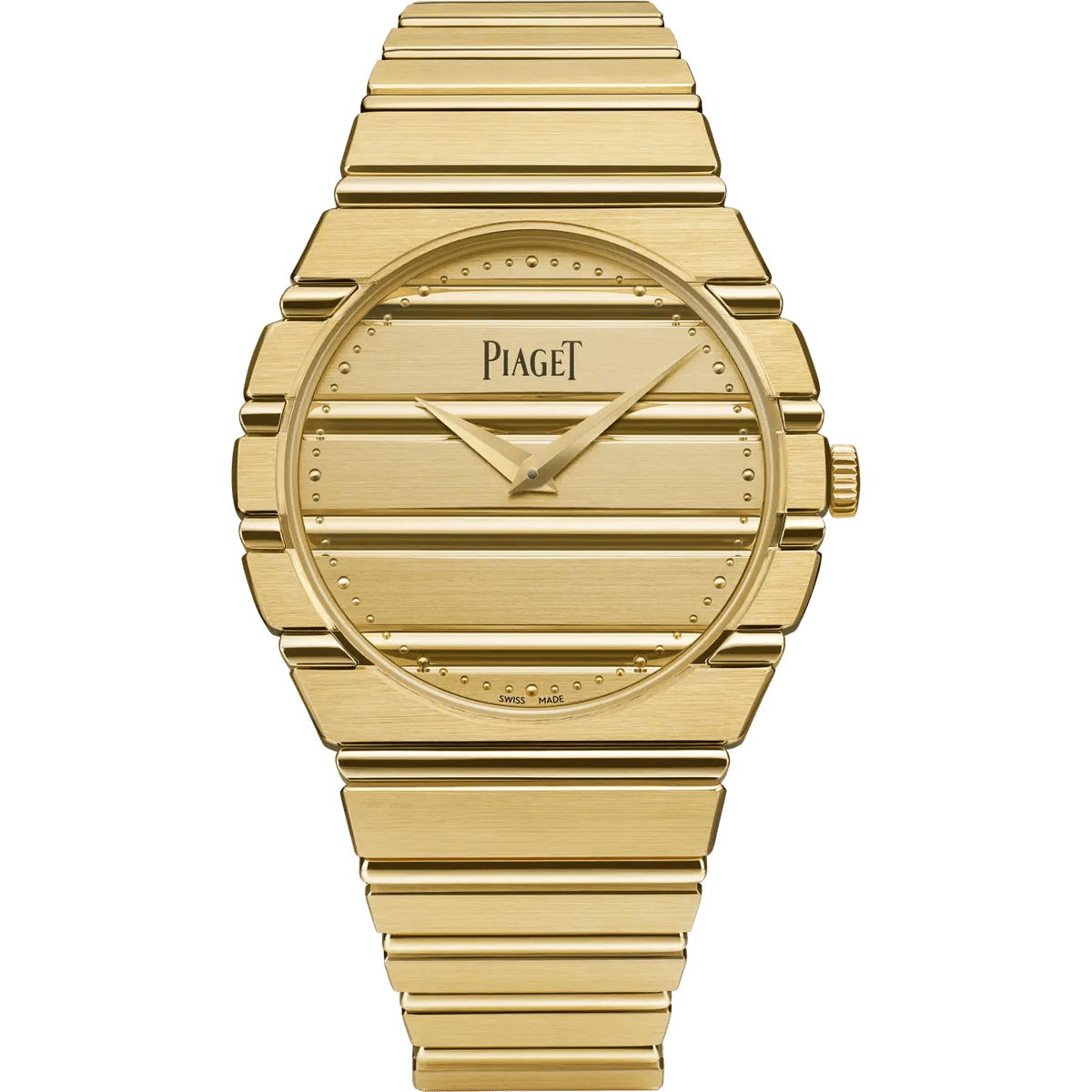
Piaget’s 2025 Sixtie is the brand’s most daring foray into non‑circular geometry in recent memory. Drawing directly from the Maison’s experimental “Swinging Sautoirs” of the late‑1960s, the 29 mm × 25.3 mm trapezoidal case is an unmistakable nod to a bygone era while the ultra‑thin quartz movement keeps the piece firmly planted in today’s wear‑and‑tear reality. At a price point of roughly US $11,500, the Sixtie sits in Piaget’s second‑tier “dress” segment, promising a blend of heritage styling, refined craftsmanship, and everyday practicality. Below we break down how the watch performs across design, movement, wearability, and value.
## Design & Case
The Sixtie’s most striking attribute is its geometry. The 29 mm wide, 25.3 mm tall trapezoidal case sits at a modest 6.5 mm thickness—a direct result of Piaget’s long‑standing expertise in ultra‑thin watchmaking. The case is crafted in three primary material palettes: polished stainless steel, rose‑gold, and a two‑tone steel‑rose‑gold hybrid. Each version can be ordered with a diamond‑set bezel, adding a subtle sparkle that does not overwhelm the clean lines.
The integrated bracelet is a continuation of Piaget’s “integrated” aesthetic, where the bracelet flows seamlessly into the case without a distinct lugs‑to‑bracelet transition. This design choice reinforces the watch’s sculptural nature, making the trapezoid appear as a single, fluid form rather than a case perched on a band.
Dial options remain understated: a sun‑burst silver or champagne‑tone finish that mirrors the case’s material, with simple hour markers—either applied indices or tiny diamond appliqués on the jeweled versions. The lack of a date window or other complications keeps the face uncluttered, allowing the case shape to dominate the visual narrative.
Overall, the Sixtie feels like a collector’s “catnip” piece. Its bold silhouette stands out in a market saturated with round and octagonal reissues, and the vintage inspiration is evident without feeling like a costume replica. The only potential drawback is the niche shape, which may not suit those who prefer classic round profiles or who find the trapezoid too avant‑garde for daily office wear.
## Movement & Performance
Under the slim case sits Piaget’s quartz calibre 57P, a high‑grade Swiss quartz movement known for its reliability and precision. As a quartz, the Sixtie offers the instant time‑set accuracy and low‑maintenance nature that many women’s dress watches prioritize. The calibre provides a power reserve of several years (typical of quartz modules) and requires only a battery change every two to three years, a convenience that aligns with the watch’s dress‑watch positioning.
Accuracy is, by definition, quartz‑level: the watch stays within ± 5 seconds per month, far surpassing the tolerances of most mechanical dress watches. The movement’s thin profile (contributing to the 6.5 mm overall thickness) also ensures the case remains sleek against the wrist, a hallmark of Piaget’s ultra‑thin heritage.
The only limitation is the lack of mechanical intrigue. Enthusiasts who prize a visible balance wheel or a manually wound movement will find the Sixtie’s quartz heart less engaging. However, for the target audience—women seeking a reliable, low‑maintenance dress piece—the quartz calibre is a sensible, if not particularly romantic, choice.
## On the Wrist
The integrated bracelet measures roughly 18 mm between lugs, giving the Sixtie a lug‑to‑lug spread that sits comfortably on a woman’s wrist without overwhelming it. The bracelet’s curvature follows the natural line of the forearm, and the absence of protruding lugs means the watch slides on and off with minimal snagging.
At 6.5 mm thickness, the Sixtie is exceptionally low‑profile, allowing it to sit flush under a shirt cuff—a key criterion for a dress watch. The 50 m water resistance (5 atm) is adequate for everyday splashes, hand‑washing, and brief rain exposure, though it is not intended for swimming or diving.
Comfort is further enhanced by the bracelet’s polished links, which sit smoothly against the skin. The steel version feels lighter than the rose‑gold counterpart, which adds a subtle weight that some wearers associate with a more “premium” feel.
One practical note: the trapezoidal shape can make the watch sit slightly off‑center when viewed from the front, a visual quirk that may require a brief adjustment period. Additionally, the integrated bracelet does not allow for strap swaps, limiting personalization for those who enjoy rotating bands.
## Value & Verdict
With an approximate retail price of US $11,500, the Piaget Sixtie occupies a middle ground in the luxury dress‑watch market—more expensive than a typical quartz dress watch from a fashion brand, yet considerably lower than Piaget’s haute‑horlogerie pieces featuring in‑house mechanical movements.
For what you pay, you receive:
* **Heritage Design** – A genuine reinterpretation of Piaget’s 1960s experimental pieces, rather than a superficial retro‑style.
* **Ultra‑Thin Execution** – A 6.5 mm profile that rivals the thinnest mechanical dress watches on the market.
* **High‑Grade Quartz** – Swiss‑made accuracy, low maintenance, and a power reserve that effectively lasts years.
* **Integrated Bracelet** – A seamless, high‑finish bracelet that reinforces the watch’s sculptural intent.
The primary compromises are the quartz movement (lacking mechanical romance) and the highly distinctive trapezoidal case, which may not suit all styling preferences. If you value a watch that doubles as a conversation piece, offers dependable timekeeping, and fits comfortably under a cuff, the Sixtie delivers a compelling package for its price tier.
**Verdict:** The Piaget Sixtie is a bold, well‑executed homage to a daring era of design, wrapped around a reliable quartz heart. Its ultra‑thin, trapezoidal silhouette makes it a standout dress watch for women who appreciate both heritage and modern convenience. At US $11,500, it offers a solid value proposition within Piaget’s second‑tier line—provided you’re comfortable with its niche shape and quartz movement. For the right buyer, the Sixtie is less a watch and more a wearable piece of Piaget’s experimental legacy.