Madame Rochas Vintage: A Scholarly Analysis of Guy Robert's 1960 Aldehydic Floral Chypre Masterpiece
Unveiling the Timeless Elegance and Complex Heritage of a Parisian Icon
By Vivir··Updated
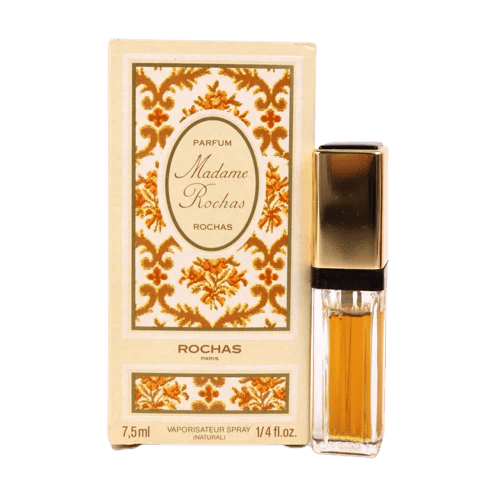
In the annals of perfumery, few creations capture the spirit of an era as poignantly as Madame Rochas. Launched in 1960 by the house of Rochas, this fragrance emerged at a pivotal moment when the aldehydic floral genre, pioneered by Chanel No. 5 decades earlier, was being reinterpreted with new complexity and green freshness. Under the deft hand of perfumer Guy Robert, Madame Rochas became a symphony of contrasts: a sparkling aldehydic overture, a lush floral heart that wove together hyacinth, iris, and narcissus, and a deep, mossy chypre base that grounded the composition in earthy sophistication. It was a scent designed for the modern Parisian woman—confident, cultured, and effortlessly elegant.
To understand Madame Rochas is to delve into the very grammar of classical French perfumery. The fragrance belongs to the esteemed family of aldehydic floral chypres, a structure that marries the effervescence of aldehydes with the richness of a floral bouquet and the tenacity of oakmoss and woods. Yet, unlike its more famous cousin Chanel No. 5, which leans into a warm, abstract floralcy, Madame Rochas distinguishes itself with a pronounced green and hyacinth character, a cool, almost melancholic iris heart, and a distinctive narcissus note that adds a honeyed, animalic nuance. This review will dissect its composition, trace its heritage, and evaluate its performance, offering a comprehensive portrait of a vintage masterpiece that continues to enchant connoisseurs.
moderate, creating a personal aura that invites closeness rather than announcing from across the room
💨 Sillage
moderate to heavy (vintage), leaving a discernible but not overwhelming trail
When to Wear
🌸SpringOK
☀️SummerAvoid
🍂FallBest
❄️WinterBest
🎩 formal events📌 evening wear💕 date night📌 office (vintage elegance)
Pros & Cons
✅ Timeless, complex composition that evolves beautifully over hours
✅ Excellent longevity and sillage in vintage formulations
✅ A benchmark aldehydic floral chypre with a distinctive green-iris character
✅ Evokes the glamour and craftsmanship of mid-century French perfumery
❌ May feel dated or overly powdery to those accustomed to modern transparent scents
❌ Reformulations (especially later EDP) lack the depth and richness of the original
❌ Authentic vintage bottles are increasingly scarce and command high prices
Price & Value
$30-$150
“For a well-preserved vintage EDT, prices between $80 and $150 represent excellent value given the artistry and historical significance. Modern formulations or partial bottles can be found for as little as $30, but they often sacrifice the oakmoss-rich base that defines the original. Collectors should seek reputable sources to ensure authenticity.”
📜 Reformulation History
Vintage formulations from the 1960s through early 1980s are renowned for their rich oakmoss and natural floral absolutes, yielding a deeper, more tenacious scent. Later reformulations, including the EDP intense version, introduced synthetic substitutes to comply with IFRA restrictions, resulting in a lighter, less mossy profile. Batch codes and packaging styles can help date a bottle; early editions often feature a gold cap and a more ornate label.
Layer with a pure sandalwood oil to amplify the creamy woody base and add modern warmth.
Pair with a fresh green soliflore like Diptyque Philosykos to accentuate the hyacinth and green notes for spring wear.
🏆 Final Verdict
Madame Rochas remains a towering achievement in the pantheon of 20th-century perfumery. Guy Robert's masterful orchestration of aldehydes, green florals, and a mossy chypre base created a fragrance that is at once radiant and introspective. While reformulations have softened its edges, a well-preserved vintage bottle offers an olfactory journey back to the golden age of Parisian elegance. For the connoisseur, it is not merely a perfume but a piece of wearable history.