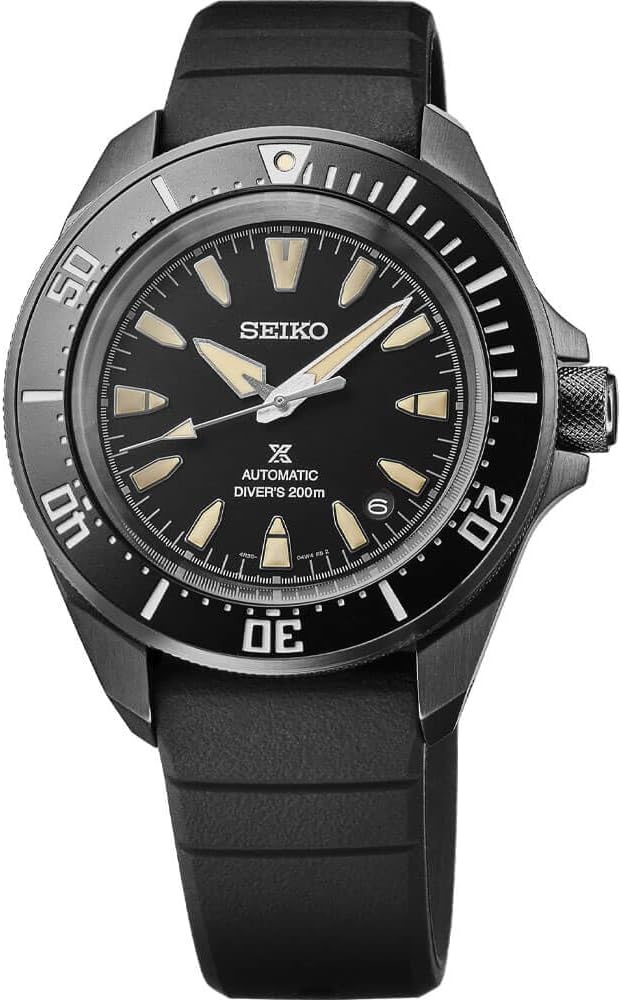
The Geometry of the Blade: Why the Samurai Stands Out
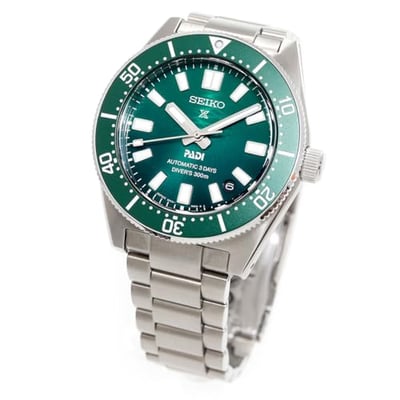
In a market saturated with 'homage' watches and safe, rounded dive watch silhouettes, the Seiko Prospex Samurai is a breath of fresh, salty air. Originally released in 2004 and revived in 2017, the Samurai earned its nickname among enthusiasts due to its sharp, angular case that looks as though it were sliced by a katana. For the Vivir reader, this isn't just about telling time; it's about the architectural statement on the wrist. While your peers are chasing the same tired 'Pepsi' bezels, the Samurai offers a silhouette that is distinctively Japanese—bold, precise, and unapologetically functional.
The case design is the star of the show. The lugs don't just curve; they drop off in sharp, faceted planes. This creates a play of light and shadow that you simply don't find on watches at this price point. It’s a design that appeals to the wealthy collector aesthetic: it looks expensive because it looks intentional. It doesn't rely on polished center links or gold PVD to get noticed; it relies on the complexity of its machining.
The 4R35 Engine Room: Reliability Over Refinement
Under the hood of the standard Samurai beats the Caliber 4R35. Let’s be clear: this isn't a movement you show off through a display caseback. It’s unadorned, industrial, and built like a tank. With a 41-hour power reserve and a beat rate of 21,600 vph, it’s the definition of a workhorse. For the collector, the 4R35 represents 'set-it-and-forget-it' reliability. It features hacking seconds and manual winding—essential features that were missing from the older 7S26 movements found in the legendary SKX.
From an investment standpoint, the movement’s simplicity is its greatest asset. Service costs are negligible, and the movement is so robust that it can go nearly a decade without needing a drop of oil. In a world where a Swiss chronograph service can cost $1,200 and take six months, the Samurai’s low-maintenance profile is a refreshing hedge against the high cost of horological ownership.
Market Dynamics: Hold, Flip, or Daily?
If we look at the hype cycle of the Samurai, we see a pattern of steady demand. Unlike the 'MoonSwatch' which saw a vertical spike and a subsequent crash, the Samurai maintains a healthy secondary market value. The 'King Samurai' (references like the SRPE33 and SRPE35) are the smarter plays for those looking at long-term retention. These models introduce sapphire crystals and ceramic bezel inserts—materials usually reserved for watches in the $1,000+ range.
The 'Save the Ocean' editions are particularly noteworthy. These collaborations with Fabien Cousteau often feature intricate dial textures—like the 'Manta Ray' or 'Great White Shark' patterns—that elevate the watch from a tool to a piece of art. For a young collector, buying a limited or special edition Samurai at a 20% discount off MSRP is a safe 'hold.' You won't retire on the profits, but you’ll likely get your money back when you’re ready to trade up to a Grand Seiko or an Omega.
The 'King' Evolution: Is the Upgrade Worth It?
The transition from the standard Samurai (SRPB) to the King Samurai (SRPE) is where the value proposition gets interesting. For an extra $150-$200, you gain a ceramic bezel that is virtually scratch-proof and a sapphire crystal with a magnifier over the date. For someone used to the luxury standards of Rolex or Tudor, the Hardlex (mineral) crystal on the base Samurai can feel like a compromise. The King Samurai removes that hurdle, offering a spec sheet that rivals Swiss competitors at triple the price.
The ceramic bezel, in particular, changes the visual weight of the watch. It has a deep, inky luster that the aluminum inserts lack. If you’re wearing this to a casual business lunch or on a yacht, the King Samurai has the 'shine' factor that commands respect from those who know their watches.
Wrist Presence and Styling: The Versatile Beast
How does it wear? It’s a presence. It’s a watch that people ask about. The 'Clous de Paris' (waffle) dial on many models adds a layer of sophistication that catches the light beautifully. Despite its tool-watch DNA, the Samurai cleans up remarkably well. Swap the stainless steel bracelet for a grey suede strap, and it suddenly looks at home with a linen blazer and loafers. Put it on a black Isofrane rubber strap, and it’s ready for a weekend in St. Barths.
The Lume is, in typical Seiko fashion, nuclear. Seiko’s proprietary LumiBrite is widely considered the gold standard in the industry, often outshining Super-LumiNova. It’s a small detail, but when you’re checking your watch in a dimly lit club or a dark cockpit, that glow is a reminder of the watch’s professional pedigree.
Final Verdict: The Strategic Acquisition
The Seiko Prospex Samurai is not a replacement for your 'grail' watch; it is the perfect complement to it. It’s the watch you wear when you don't want to worry about your Royal Oak getting scratched, but you still want to feel like a serious enthusiast. It offers a unique design language, a storied history, and a level of durability that is rare in the luxury world. It’s the ultimate 'stealth wealth' move—a watch that says you value engineering and heritage over mere price tags. Buy the King Samurai, keep the box and papers, and enjoy one of the best value propositions in modern horology.