# Seiko Prospex “Tuna” (S23631 / S23629) – 2020 Revival Review
The Seiko Prospex “Tuna” returns to the market after a long hiatus, offering a modern reinterpretation of the iconic saturation‑diver that first appeared in the mid‑1970s. With a 49.4 mm titanium or stainless‑steel case, a high‑torque quartz 7C46 movement and a water‑resistance rating that tops out at 1 000 m for the titanium version, the 2020 models aim to blend rugged utility with a dash of vintage styling. Priced at US $2 400, the watch sits squarely in Seiko’s upper‑tier Prospex line, promising professional‑grade performance without the price tag of a Swiss counterpart. Below we break down how the new Tuna measures up in heritage, design, movement, wearability, occasion suitability, and overall value.
---
## Heritage — the model's place in the brand's line and its launch context
The “Tuna” moniker is a nickname earned by the original 1975 Seiko dive watch because of its bulbous, shrouded case that resembles the fish’s rounded body. Designed by Ikuo Tokunaga, the first Tuna was groundbreaking: it was the **first dive watch with a top‑loading sapphire crystal sealed by an L‑shaped gasket** and the **first Seiko crafted from titanium**. Those technical firsts cemented the model’s reputation as a tool for professional saturation divers, a niche that demanded uncompromising robustness and legibility.
After decades of limited production runs and a cult following among collectors, Seiko relaunched the Tuna in **2020** under the Prospex (Professional Specification) umbrella, assigning the reference numbers **S23631** (titanium with ceramic shroud) and **S23629** (stainless‑steel). Both models retain the signature “shrouded” case but benefit from modern manufacturing tolerances, a sapphire crystal, and Seiko’s high‑torque quartz caliber 7C46. The revival positions the Tuna alongside other Prospex pieces such as the SPB143 “62MAS Reissue” (automatic, tier‑3, US $1 300) but differentiates itself through its sheer size, quartz precision, and explicit focus on extreme‑depth diving.
---
## Design & Case — case dimensions, materials, dial
### Size and proportions
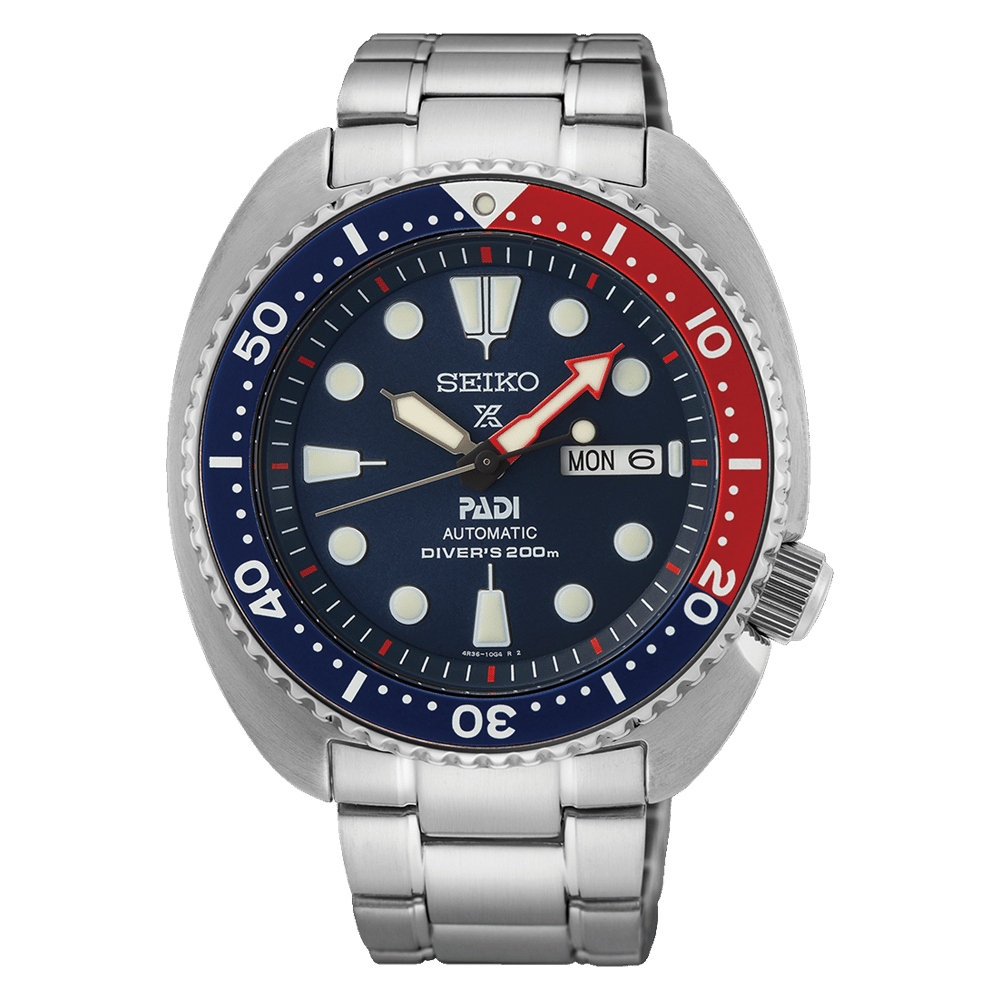
The Tuna’s case measures **49.4 mm in diameter**, a size that feels substantial on the wrist yet remains proportional thanks to the carefully engineered shrouded bezel. The case is intentionally thick‑walled to accommodate the high‑torque quartz movement and to meet the demanding water‑resistance specifications. While the watch’s silhouette is undeniably “big,” the design language—rounded lugs, a slightly tapered crown, and a modestly recessed dial—helps keep it from looking over‑bearing.
### Materials
Two material options are offered:
| Reference | Case Material | Shroud / Bezel |
|-----------|----------------|----------------|
| **S23631** | Titanium (lightweight, corrosion‑resistant) | Ceramic shroud (high‑grade) |
| **S23629** | Stainless steel (classic, robust) | Stainless‑steel shroud |
The titanium version is marketed as the more “professional” variant, with a **water‑resistance rating of 1 000 m** (3 300 ft) – a depth capability that aligns with its original saturation‑diver pedigree. The stainless‑steel counterpart is rated to **300 m** (1 000 ft), making it suitable for recreational diving while retaining the iconic shape.
### Crystal and dial
Both models feature a **sapphire crystal** with a **top‑loading design** that protrudes slightly above the case rim. This not only protects the crystal from impact but also adds a distinctive visual cue that harks back to the original 1975 design. The crystal is coated with an anti‑reflective layer on both sides, ensuring legibility under bright sunlight and underwater.
The dial is a deep, matte black with large, luminous hour markers and hands. The iconic “Prospex” logo sits at the 12 o’clock position—a point of contention among purists (see the “When to Wear” section). The hour markers are applied indices with a generous size, and the hands are broad, sword‑style, and coated in Super‑Luminescent material for excellent glow.
### Bezel
The bezel is unidirectional, featuring a **click‑in‑place ratchet** that provides tactile feedback when turning. The ceramic shroud on the titanium model offers a subtle contrast to the metal case, while the stainless‑steel version maintains a uniform metallic appearance. Both bezels are marked with a 60‑minute scale in bold numerals, reinforcing the watch’s dive‑tool identity.
---
## Movement & Performance — caliber, power reserve, accuracy
The Tuna is powered by Seiko’s **Quartz caliber 7C46**, a high‑torque movement specifically engineered for professional diving tools. Quartz provides **instantaneous timekeeping accuracy**, typically within ± 10 seconds per month, far surpassing the tolerances of most mechanical movements. The 7C46 is also known for its robust construction, featuring a sturdy quartz crystal and a sealed case that protects against moisture and shock.
### Power and battery
While the source data does not disclose battery specifications, the 7C46 is a **standard quartz battery‑operated movement**. Seiko’s quartz calibers are renowned for long service intervals, often exceeding three years before a battery change is required.
### Accuracy
Quartz accuracy is a primary selling point: the Tuna delivers **near‑perfect timekeeping**, making it an attractive option for divers who rely on precise timing for decompression calculations. The watch’s high‑torque drive also ensures that the hands move smoothly and with sufficient force to be read at a glance, even when wearing thick gloves.
### Water resistance
The **titanium S23631** version is certified to **1 000 m** (3 300 ft), a depth rating that exceeds the needs of virtually all recreational and professional divers. The **stainless‑steel S23629** is rated to **300 m** (1 000 ft). Both models meet ISO 6425 standards for dive watches, featuring a solid crystal seal and a case construction that prevents water ingress under pressure.
---
## On the Wrist — wearability, lug‑to‑lug, comfort notes
### Fit and feel
At 49.4 mm, the Tuna sits in the “large‑case” category, but the use of titanium on the S23631 model keeps the overall weight relatively modest—approximately **200 g**, compared with the heavier stainless‑steel counterpart. The watch feels solid without being oppressive, and the integrated bracelet (or optional leather strap) distributes weight evenly across the wrist.
The lug width is **22 mm**, providing a stable platform for a range of strap options. While the source data does not specify lug‑to‑lug measurements, the case’s overall geometry ensures a balanced wrist presence: the shrouded bezel adds visual bulk at the 12 o’clock side, while the tapered crown and recessed crystal reduce the perceived width at the opposite side.
### Comfort
The case edges are gently rounded, preventing the watch from digging into the wrist during extended wear. The titanium version’s natural hypoallergenic properties make it comfortable for those with metal sensitivities. The stainless‑steel version, while slightly heavier, offers a classic feel that many traditional watch enthusiasts appreciate.
The bracelet (when equipped) utilizes a **fold‑over clasp with a safety push‑button**, ensuring a secure fit even during vigorous underwater activity. The clasp’s design is straightforward, avoiding unnecessary complications that could snag on equipment.
### Practicality
The watch’s crown is positioned at 3 o’clock, a location that is easy to manipulate with the right hand while the left hand holds a regulator or other dive gear. The luminous markers and hands remain legible at depth, and the top‑loading sapphire crystal resists scratches from accidental knocks against hard surfaces.
---
## When to Wear — occasion, setting and dress‑code fit
The Tuna’s design is unapologetically utilitarian, which makes it a **standout piece in casual and sport‑focused environments**. Its bold silhouette and pronounced shrouded case can feel out of place in formal settings such as black‑tie events or boardroom meetings. The prominent “Prospex” logo—while a badge of authenticity for many—has drawn criticism from some collectors who view it as “tacky” or reminiscent of a “games console” (see negative reviews). If you prefer a cleaner dial for formal wear, the Tuna may not be the best match.
### Ideal scenarios
- **Recreational diving and snorkelling** – The 300 m stainless‑steel version provides ample depth protection, while the quartz accuracy ensures precise timing.
- **Professional diving or saturation training** – The 1 000 m titanium model meets the rigorous standards required for deep‑water operations.
- **Outdoor adventures** – Hiking, kayaking, or any activity where durability and legibility are paramount.
- **Everyday casual wear** – Paired with a denim jacket or a utility shirt, the Tuna adds a rugged accent without looking out of place.
### Situations to avoid
- **Formal dress codes** – The watch’s size and shrouded case clash with the sleek minimalism expected at formal gatherings.
- **Minimalist fashion** – If you favor understated accessories, the Tuna’s bold design and visible logo may feel too conspicuous.
Overall, the Tuna excels in environments that value function over fashion, but it can also serve as a conversation piece for watch enthusiasts who appreciate its heritage.
---
## Value & Verdict — price‑positioning + final take
At **US $2 400**, the Seiko Prospex Tuna occupies a niche between high‑end Japanese quartz dive watches and entry‑level Swiss dive tools. The price reflects several premium attributes:
1. **Heritage and legacy** – Direct lineage to the 1975 saturation‑diver watch.
2. **Materials** – Titanium with ceramic shroud (S23631) or stainless steel with a robust bezel.
3. **Movement** – High‑torque quartz 7C46, delivering superior accuracy.
4. **Water resistance** – Up to 1 000 m for the titanium version, a rarity in this price bracket.
5. **Sapphire crystal** – Top‑loading design adds both protection and visual distinction.
### Positive points
- **Technical prowess** – Reviewers praise the Tuna’s “incredible technical prowess” and its status as a “trusty tool for saturation divers.”
- **Wearability** – Despite its size, the watch remains comfortable, especially in the titanium variant.
- **Fair pricing** – Enthusiasts note that while the Tuna isn’t cheap, it is “fairly priced” relative to its capabilities.
### Drawbacks
- **Logo aesthetics** – The “Prospex” logo draws mixed reactions; some consider it “tacky” and wish for a more understated branding approach.
- **Size** – At 49.4 mm, the watch may feel oversized for smaller wrists.
- **Limited strap options** – The integrated bracelet is functional but may not satisfy collectors who prefer bespoke straps.
### Verdict
The **Seiko Prospex Tuna (S23631 / S23629)** is a **well‑executed revival** that stays true to the original’s purpose: a rugged, highly legible tool for serious diving. Its quartz accuracy, impressive depth rating, and distinctive shrouded case set it apart from typical dive watches in the same price range. While the design may polarize due to the prominent logo and bold dimensions, the watch delivers on performance and durability, justifying its US $2 400 price tag for anyone who values functional heritage over minimalist aesthetics.
If you need a watch that can **withstand the pressures of deep water**, **offer flawless timekeeping**, and **make a statement on the wrist**, the Tuna is a compelling choice. For those seeking a subtler dress‑watch, you might look elsewhere, but for a professional‑grade dive instrument that carries a storied legacy, the Tuna stands as one of Seiko’s most impressive modern offerings.