Tissot Seastar 1000 40mm Review: Dive Ready, Street Smart
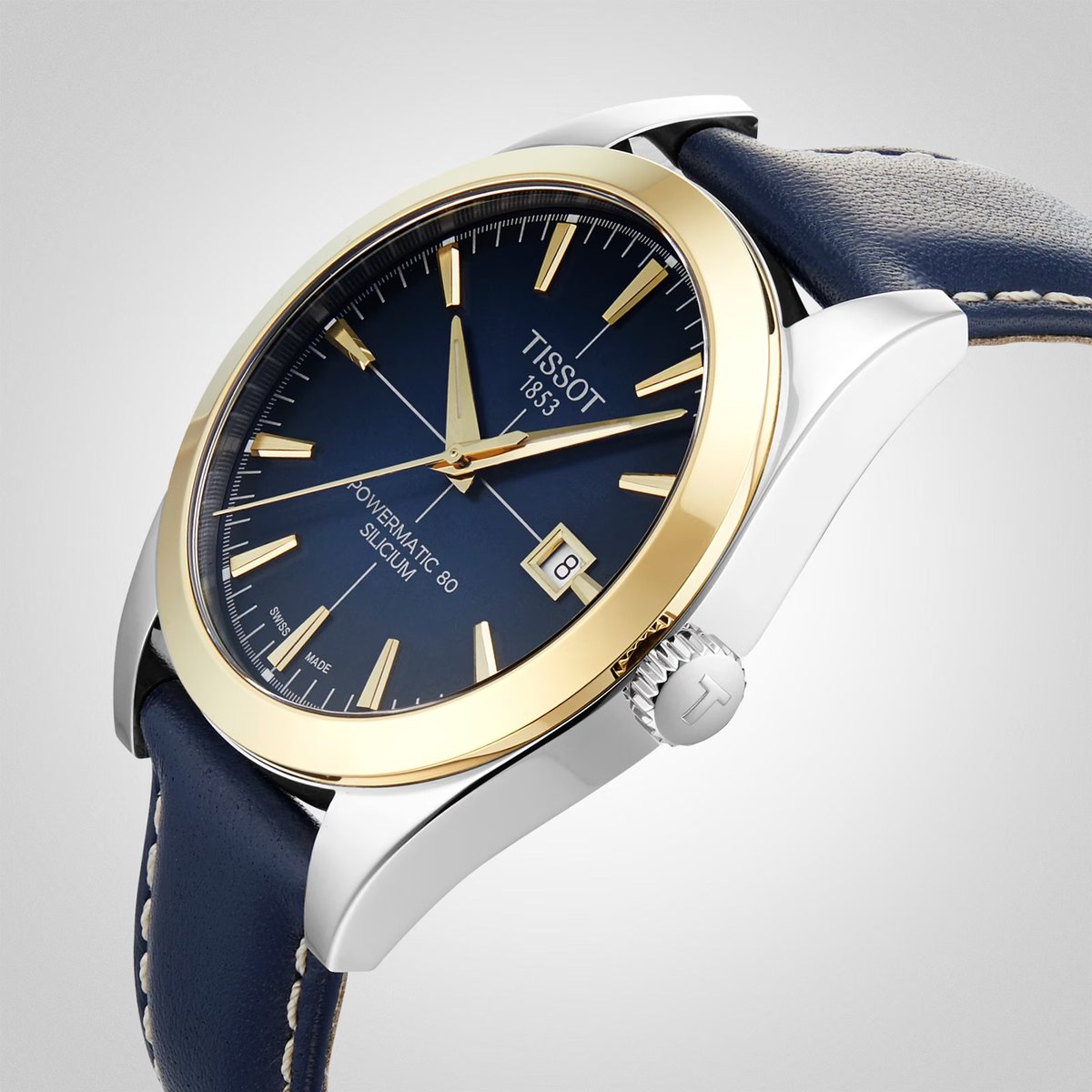
The Tissot Seastar has quietly become the default answer for young collectors who want a real Swiss dive watch without remortgaging their finances. Reference T1208071105100—the 40mm automatic on rubber—is the sweet spot of the line: compact enough for a shirt cuff, tough enough for actual water, and priced like a pair of sneakers from a hyped drop. It doesn't scream. It doesn't need to.
In a market where dive watches are either vintage grails or disposable fashion pieces, the Seastar 1000 occupies a rare middle ground. It's the watch you buy when you've outgrown homage brands but aren't ready to explain to your parents why you spent $10,000 on a Submariner. It's also the watch that actual divers, desk divers, and everyone in between can agree on.
This review isn't about spec-sheet worship. It's about how the Seastar 1000 40mm fits into a life—on the wrist, in the rotation, and in the culture of modern collecting.
Manufacture History
Tissot was founded in Le Locle, Switzerland, in 1853 and has spent 170 years positioning itself as the accessible face of Swiss watchmaking. As part of the Swatch Group, Tissot gets first access to ETA movements and industrial scale that keeps prices low. The Seastar line dates back to the 1950s as Tissot's water-resistant sports watch, and today's Seastar 1000 continues that legacy with modern materials and the Powermatic 80 caliber.
Unlike some heritage brands that lean on nostalgia, Tissot uses its history as a foundation for value. The Seastar 1000 isn't a reissue of a vintage model; it's a contemporary tool watch that happens to carry a name with six decades of dive credibility. That's exactly why it works for a generation that cares about specs more than stories.
Movement
Inside the Seastar 1000 40mm beats the Powermatic 80.111, an automatic caliber based on the ETA C07.111. It runs at 21,600 vibrations per hour, has 23 jewels, and delivers an 80-hour power reserve—more than three full days. That means you can take it off Friday evening and pick it up Monday morning without resetting the time or date.
The movement features a Nivachron balance spring, which improves resistance to magnetic fields—a real-world benefit for anyone who works near laptops, phones, or MRI machines. It's not COSC-certified, and the finishing is industrial rather than decorative, but that's the point. This is a movement built to be reliable, serviceable, and forgettable in the best way. You won't show it off through a display caseback, but you'll appreciate it every time you don't have to wind your watch.
Specs
- Case diameter: 40mm
- Case thickness: 12.5mm
- Lug-to-lug: 47.5mm
- Case material: Stainless steel
- Crystal: Sapphire with anti-reflective coating
- Water resistance: 300m (1000 feet)
- Lume: Super-LumiNova
- Strap: Black rubber with pin buckle
- Bezel: Unidirectional with ceramic insert
The 40mm diameter is the Goldilocks size for modern dive watches—large enough to read underwater, small enough to slide under a cuff. The ceramic bezel insert is scratch-resistant and has a satisfying click when rotated. The screw-down crown and caseback ensure the 300m rating is legitimate, not just marketing.
Wrist Feel
On the wrist, the Seastar 1000 40mm disappears in the best way. The 47.5mm lug-to-lug keeps it from overhanging smaller wrists, and the 12.5mm thickness sits low enough to slide under a cuff. The rubber strap is soft, pliable, and doesn't pull hair—a small mercy at this price. Weight is around 90 grams on rubber, so you forget it's there until you check the time.
The balance is excellent: the case doesn't feel top-heavy, and the pin buckle is simple but secure. If you're used to bracelets with diver extensions, the rubber setup feels minimal, but it's the right call for a daily wearer. You can always swap to the steel bracelet variant if you want more presence.
Accuracy
Expect real-world accuracy of +/- 10 to 15 seconds per day out of the box. The Powermatic 80 isn't COSC-certified, but most examples run within spec and can be regulated easily. Day to day, you'll lose or gain less than a minute a week—perfectly acceptable for a watch at this price. If you're obsessive, a quick trip to a watchmaker can tighten it to within a few seconds.
Occasions & Wrist Presence
This watch is a chameleon. On the rubber strap, it's a sporty daily driver for the gym, the beach, or a casual Friday. Swap it onto a NATO or a leather strap, and it dresses up enough for a dinner date or a creative office. It's not a formal watch—don't wear it with black tie—but it covers 90% of life's scenarios.
Wrist presence scores a 4 out of 5. The 40mm case with black dial and ceramic bezel has a quiet confidence. It doesn't shout, but it reads as intentional. On rubber, it's sporty; on a NATO or leather, it dresses up slightly. It won't stop conversations, but it earns respect from people who know.
Reference Variants & Family
The Seastar 1000 40mm comes in several dial and strap combinations. The black dial on rubber (this reference) is the most understated. A blue dial version adds a pop of color, while the steel bracelet option gives a more traditional dive watch feel. There's also a green dial variant that has become a sleeper hit among collectors who want something different without going full Hulk.
Within the Seastar family, you'll find a 36mm version for smaller wrists, a 2000 Professional with 600m water resistance, and a chronograph for those who want more complications. All share the same design language and Powermatic 80 movement, so choosing is about size and depth rating rather than quality.
Similar Watches & Homages
The Seastar 1000 40mm competes directly with the Seiko Prospex SPB143, which offers more heritage but less power reserve. The Certina DS Action Diver 38mm is essentially the same watch in a smaller case. Mido's Ocean Star 200 and Hamilton's Khaki Navy Scuba are Swatch Group siblings with identical movements and different styling. None of them is objectively better—it's about which dial and case shape speaks to you.
As for homages, the Seastar isn't iconic enough to spawn direct copies, but budget brands like Steeldive and Pagani Design offer similar specs for half the price. They lack the Swiss finishing and brand equity, but they prove that the affordable dive watch category is alive and well.
Investment Value & Service
At $475 retail, the Seastar 1000 40mm is not an investment. It will depreciate 30-40% the moment you leave the store, settling into a pre-owned range of $250-$350. That's not a flaw—it's the reality of modern mass-market watches. Buy it to wear, not to flip. After a year of daily use, you can sell it for around $300 and lose less than a night out in Manhattan.
Service is straightforward. Any competent independent watchmaker can handle the ETA-based movement, and a full service costs around $250 every five years. Parts are widely available through Swatch Group, so you'll never be stuck waiting months for a repair.
Pros & Cons
- Pros: 80-hour power reserve, 300m water resistance, 40mm versatile size, sapphire crystal, ceramic bezel, under $500.
- Cons: No COSC certification, pin buckle feels basic, brand cachet below luxury tier, lume could be brighter.
Final Verdict
The Tissot Seastar 1000 40mm is the thinking person's dive watch—Swiss, capable, and priced like a smart first move. It won't turn heads at Sotheby's, but it will survive everything from desk dives to actual dives. For the money, there's no better way to get a real 300m automatic on your wrist without pretending you're a Navy SEAL.
If you're a young collector building a rotation, this should be your first or second watch. It's the reliable friend that never lets you down, and it leaves budget for the grail you're actually saving for.