The Paradox of the Entry-Level Tudor
In the high-stakes world of luxury horology, 'entry-level' is often a backhanded compliment. It usually suggests a compromise—a watch that exists merely to fill a price bracket rather than to push the boundaries of design. But the Tudor 1926 flips this narrative on its head. As a trend spotter at Vivir, I see thousands of watches, but few manage to balance the weight of history with the lightness of modern style as successfully as the 1926. It is not just the 'affordable Tudor'; it is a deliberate aesthetic choice for those who find the Black Bay too bulky and the Pelagos too technical.
1926: A Date with Destiny
To understand this watch, you have to understand the year 1926. This was the year Hans Wilsdorf, the visionary behind Rolex, decided that the world needed a watch that could match the technical prowess of his primary brand but at a price point that wouldn't require deep pockets. By naming this collection '1926,' Tudor isn't just picking a random number; they are staking a claim to their own genesis. This watch is the physical manifestation of Wilsdorf’s original mission statement: 'For some years now, I have been considering the idea of making a watch that our agents could sell at a more modest price than our Rolex watches, and yet one that would attain the standard of dependability for which Rolex is famous.'
The Dial: A Masterclass in Texture
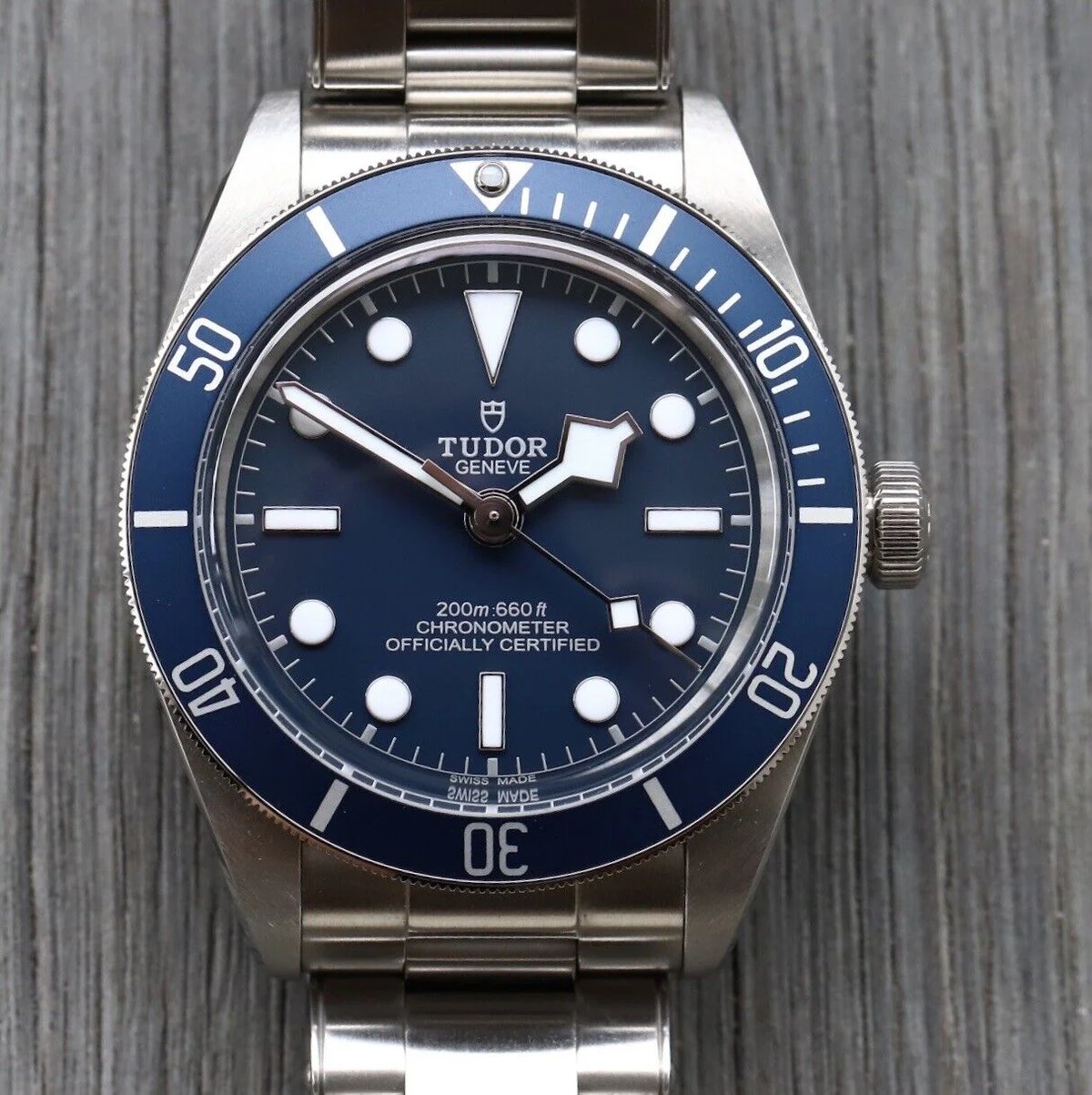
The first thing that hits you when you see the 1926 in person is the dial. In photos, it looks like a simple pattern. In the light of a mid-afternoon espresso meeting, it comes alive. The 'waffle' or 'honeycomb' texture is an embossed finish that adds incredible depth. It catches the light in a way that flat dials simply cannot, creating a play of shadows and highlights that makes the watch feel far more expensive than its sub-$2,500 price tag suggests.
The Arabic numerals at the even hours, interspersed with arrow-shaped markers, give it a vintage, mid-century vibe without feeling like a costume piece. The blue-on-opaline configuration is particularly striking—the heat-blued hands and indices provide a pop of color that feels sophisticated rather than sporty. It’s a dial that demands a macro lens but looks just as good from six feet away.
The Case: Classicism in 39mm
While the 1926 comes in a variety of sizes, the 39mm version is the sweet spot for the modern collector. It occupies that rare space where it is large enough to have presence but small enough to remain elegant. The case is fully polished, which might scare off those used to the brushed 'tool watch' look of the Black Bay, but for the 1926, it works. The polishing highlights the soft curves of the lugs and the slimness of the bezel.
One of the most surprising features is the screw-down crown. Despite its dressy appearance, the 1926 is water-resistant to 100 meters. This is a crucial detail. It means you don't have to panic if you're caught in a sudden downpour or if you decide to take a celebratory dip in a hotel pool. It’s a 'dress watch' with the soul of a daily driver, a combination that is increasingly rare in today's market.
The Seven-Link Bracelet: An Understated Flex
We need to talk about this bracelet. In a world of three-link Oysters and five-link Jubilees, the Tudor 1926’s seven-link bracelet is a revelation. The links are staggered in size, with the smaller links adding a level of flexibility that makes the watch feel almost like a second skin. It is remarkably comfortable, especially in warmer climates where wrists tend to swell. The clasp is a simple, sturdy folding buckle with the Tudor shield, providing a secure fit without the bulk of a diver’s extension. It is a subtle flex—a design choice that prioritizes the wearer's comfort over aggressive branding.
The T601 Movement: Reliability Over Ego
If there is one point of contention among 'purist' collectors, it is the movement. The 1926 uses the Calibre T601, which is based on the Sellita SW200-1. It isn't an in-house movement, and it isn't COSC-certified. But here is the reality: the T601 is a workhorse. It is easy to service, incredibly reliable, and keeps excellent time. For the young collector who doesn't want to spend $800 and wait six months for a specialized in-house service, the T601 is actually a blessing. It allows Tudor to keep the price accessible while ensuring the watch will still be ticking decades from now. At Vivir, we value transparency, and the truth is that for a daily wearer, this movement is more than enough.
Market Position: The Wilsdorf Halo Effect
There is no denying the power of the Wilsdorf name. When you buy a Tudor, you are buying into the Rolex ecosystem. You are getting the same quality control, the same attention to detail, and the same design philosophy that makes Rolex the most powerful name in the world. The 1926 is the smartest way to enter this ecosystem. It is a watch that commands respect from seasoned collectors—who appreciate its historical significance—and from newcomers who just want something that looks incredible with a suit.
Styling the 1926: From Soho to Singapore
How do you wear the 1926? The beauty is in its versatility. For a gallery opening in Soho, pair the opaline dial with a black oversized blazer and a crisp white tee. The blue accents on the dial will play off the monochromatic look perfectly. For a weekend in Singapore, the 100m water resistance and comfortable bracelet make it the perfect travel companion for hopping from a rooftop bar to a high-end shopping district. It’s a watch that adapts to its environment, never looking out of place, never looking like it’s trying too hard.
Final Verdict: The Smartest Buy in its Class
The Tudor 1926 is not a hype watch. It won't double in value overnight, and it won't cause a riot at a boutique. And that is exactly why I love it. It is a watch for the person who is confident in their taste and doesn't need a waiting list to validate their choices. It is a masterclass in value, a tribute to history, and a stunning piece of modern design. Or the self-made professional looking for their first real 'big' purchase, the 1926 is the ultimate move. Hans Wilsdorf would be proud.