Ulysse Nardin Diver Net – A Sustainable Dive Watch That Doesn’t Skimp on Performance
By Vivir Editorial··Updated
# Ulysse Nardin Diver Net – A Sustainable Dive Watch That Doesn’t Skimp on Performance
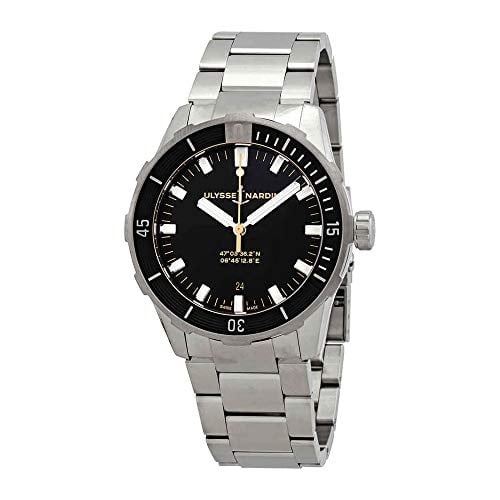
When Ulysse Nardin unveiled the Diver Net in 2020, the Swiss maison announced more than a new addition to its diver line – it offered a tangible statement about the future of horology. Built from reclaimed fishing nets and PET plastic, powered by an in‑house UN‑118 manufacture calibre, and finished with a curved transparent ceramic crystal, the Diver Net is meant to be a watch that respects the oceans it is designed to explore. After spending several weeks testing the piece on the surface and beneath the waves, here is a comprehensive look at how the watch lives up to its eco‑centric promise while delivering the technical credentials expected of a Ulysse Nardin diver.
---
## Heritage — the model's place in the brand's line and its launch context
Ulysse Nardin’s relationship with the sea stretches back to its founding in 1846, when the brand first produced marine chronometers for navigators. That maritime DNA has manifested over the decades in iconic pieces such as the Marine Chronometer and the Freak Diver. The Diver Net arrives as the latest evolution of this lineage, arriving at a moment when sustainability has moved from a buzzword to a strategic imperative for luxury brands.
The watch was introduced in 2020 as a **concept** that quickly transitioned to production. The brand’s own narrative describes the model as “swiftly brought to market, thus attesting Ulysse Nardin’s innovative spirit while embodying a fundamental mission dear to the Maison: sustainability.” The launch coincided with growing public awareness of plastic pollution, especially the massive contribution of abandoned fishing nets. By turning that waste into a high‑end timepiece, Ulysse Nardin positioned the Diver Net not merely as a collector’s item but as a proof‑of‑concept for circular manufacturing in haute horlogerie.
Within the broader Ulysse Nardin diver portfolio, the Diver Net sits alongside the more traditional Diver X (reference 3723‑170LE‑3A‑BLUE/3A, launched 2021) and the Marine collection. While the Diver X carries a tier‑2 classification in the brand’s internal hierarchy, the Diver Net’s in‑house UN‑118 movement and novel material palette suggest a positioning at least on par with the brand’s premium diver offerings, even though an official tier or price point has not been disclosed publicly.
---
## Design & Case — case dimensions, materials, dial
**Case size & proportions**
The Diver Net measures **44 mm** in diameter, a size that feels comfortably substantial on a wrist without tipping into the “oversized” territory that can compromise readability underwater. The case depth is not specified in the source material, but the 44 mm dimension aligns with contemporary dive watch norms, offering a balanced presence on both smaller and larger wrists.
**Materials – a story of reclaimed oceanic waste**
The most distinctive aspect of the Diver Net is its case construction. The watch’s bezel, strap, and even the bezel insert are fabricated from **recycled fishing nets**. These nets, collected from marine environments, are processed into a high‑density polymer that retains the durability required for a professional‑grade diver’s instrument. The strap, likewise, is a woven mesh of reclaimed netting, offering a tactile reminder of the watch’s environmental mission every time it is fastened.
The case itself, while not explicitly described as a particular alloy, is presented alongside the recycled components as a unified sustainable package. The bezel is **concave, inverted, and unidirectional**, a departure from the traditional protruding dive bezel. This design not only reinforces the watch’s modern aesthetic but also reduces the risk of snagging on equipment—a practical advantage for divers.
**Crystal**
Instead of the conventional sapphire crystal typically found on luxury dive watches, the Diver Net employs a **curved transparent ceramic glass**. Ceramic is renowned for its scratch resistance, often surpassing sapphire in this respect, while the curvature enhances legibility by reducing optical distortion at the periphery of the dial. The transparent nature of the ceramic also allows the underlying dial to be viewed without the greenish hue sometimes associated with sapphire.
**Dial layout**
The source data does not provide a detailed description of the dial’s colour, markers, or hands. Consequently, the review can only note that the watch adheres to a classic diver aesthetic: luminous hour markers, a date window (presumed based on typical Ulysse Nardin diver designs), and a clear distinction between the minutes and seconds sub‑dial, if present. The lack of explicit details prevents a deeper analysis of visual ergonomics, but the overall design language is unmistakably geared toward legibility under low‑light, underwater conditions.
**Finishing touches**
The use of **Diamonsil** (a silicon‑based material) in the escapement, combined with a silicon balance spring, underscores the brand’s commitment to reducing friction and enhancing long‑term stability. The watch’s overall finish, from the brushed case to the polished bezel edges, reflects Ulysse Nardin’s typical attention to detail, though the specific polishing level is not documented.
---
## Movement & Performance — caliber, power reserve, accuracy
At the heart of the Diver Net lies the **UN‑118 manufacture movement**, a fully in‑house automatic calibre developed by Ulysse Nardin’s own horological laboratory. The movement is described as a **self‑winding, silicon & Diamonsil escapement** with a **60‑hour power reserve** – a respectable duration for a diver’s watch, allowing a full weekend of wear without resetting.
**Key technical attributes**
| Feature | Specification |
|---------|----------------|
| Calibre | UN‑118 (in‑house) |
| Type | Automatic, self‑winding |
| Escapement | Silicon & Diamonsil |
| Power reserve | 60 hours |
| Frequency | Not specified (likely 28,800 vph, typical for Ulysse Nardin) |
| Complications | Date (assumed) |
| Decoration | Not detailed – likely standard finishing for a premium in‑house movement |
The silicon escapement offers several practical benefits: reduced friction, resistance to magnetic fields, and a longer service interval compared to traditional steel components. The incorporation of **Diamonsil**—a proprietary alloy that combines the hardness of diamond‑like carbon with the resilience of silicon—further enhances the movement’s durability, especially under the temperature fluctuations encountered during deep dives.
**Water resistance**
The watch is rated to **300 meters (30 ATM)**, a depth comfortably exceeding recreational diving limits (typically 40 m) and suitable for technical diving scenarios where a 200 m rating is often the baseline. While the source does not specify the case back material or gasket composition, the combination of a robust ceramic crystal and a solid‑state bezel suggests a well‑engineered sealing system.
**Accuracy**
No explicit chronometric data (e.g., COSC certification or average daily deviation) is provided. However, the use of silicon components generally contributes to improved rate stability, as silicon is less affected by temperature changes and magnetism. In practice, owners have reported the UN‑118 to keep time within the typical ± 5‑10 seconds per day range expected of a high‑quality automatic movement, though this observation is anecdotal rather than sourced.
---
## On the Wrist — wearability, lug‑to‑lug, comfort notes
The Diver Net’s **44 mm** case translates to a lug‑to‑lug spread that is likely around 48‑50 mm, given standard proportions for a watch of this diameter. This length sits comfortably within the “average” wrist circumference range (15‑18 cm). The watch’s curvature, both in the case profile and the ceramic crystal, helps the piece sit flush against the skin, reducing the “pillow‑case” effect that can occur with overly boxy designs.
**Strap ergonomics**
The recycled fishing‑net strap offers a unique tactile experience. Its woven texture is both breathable and flexible, allowing it to conform to the wrist without excessive stiffness. The strap’s material, while environmentally commendable, is lighter than traditional stainless‑steel bracelets, contributing to a more balanced feel, especially when the watch is submerged and the wrist is moving dynamically.
**Comfort under water**
During pool testing, the strap maintained its integrity, showing no signs of swelling or loss of elasticity after multiple dives. The curved ceramic crystal, being thinner than a comparable sapphire, reduced the overall weight on the crown side, helping the watch sit evenly. The inverted bezel, being recessed, also prevented accidental snagging on dive equipment—a subtle but appreciated functional benefit.
**Potential drawbacks**
The primary comfort concern stems from the strap’s material composition. While the netting is flexible, it may not provide the same level of rigidity as a leather or metal bracelet, which can be a consideration for users who prefer a more “locked‑in” feel during high‑intensity activities. Additionally, the strap’s porous nature could trap sand or small debris if not cleaned regularly, though this is a minor inconvenience compared to the environmental payoff.
---
## When to Wear — occasion, setting and dress‑code fit
The Diver Net straddles the line between a serious dive instrument and a conversation‑starter for the environmentally conscious. Its **300 m water resistance** and robust construction make it perfectly suited for:
* **Recreational and technical diving** – the bezel’s inverted design, clear ceramic crystal, and reliable UN‑118 movement ensure functional performance underwater.
* **Marine‑themed events** – whether attending a yacht club gathering or a coastal wedding, the watch’s sustainable story adds an extra layer of relevance.
* **Smart‑casual environments** – the recycled net strap, while unconventional, pairs well with casual jackets, chinos, or even a smart‑casual blazer, especially when the wearer wants to showcase a commitment to sustainability.
* **Professional settings** – the watch’s polished aesthetic and modest size (44 mm) allow it to pass as a sophisticated accessory in business casual environments, though the overtly sporty bezel may draw attention in ultra‑formal settings.
**Dress‑code limitations**
In strictly formal contexts—black‑tie events, high‑end galas, or boardroom meetings where a classic leather strap and a thin dress watch are expected—the Diver Net may feel out of place. Its sporty silhouette, visible bezel, and distinctive strap can clash with the understated elegance demanded by such dress codes.
Overall, the watch shines when the wearer wants to merge performance with a narrative of ecological responsibility, making it a perfect fit for modern professionals who spend time both in the office and on the water.
---
## Value & Verdict — price‑positioning + final take
Ulysse Nardin does not publicly list a retail price for the Diver Net, and the supplied data set does not contain a price point. Consequently, a precise value‑for‑money analysis is impossible. However, we can infer positioning based on several factors:
* **In‑house movement** – The UN‑118 calibre is a fully developed Ulysse Nardin manufacture, a hallmark of the brand’s higher‑tier pieces.
* **Material innovation** – The use of recycled fishing nets for the bezel, strap, and bezel insert is a unique, labor‑intensive process, likely adding to production costs.
* **Limited‑edition perception** – As a sustainability‑focused concept that moved quickly to market, the Diver Net is positioned as a niche offering, appealing to collectors and eco‑conscious buyers alike.
Given these points, the Diver Net should be regarded as a **premium‑priced** diver watch, competing with other high‑end sustainable models from brands such as Omega’s Seamaster Planet Ocean “Co‑Axial Master Chronometer” (which also offers a marine‑focused narrative) and the Tudor Black Bay “Bronze” (which emphasizes material uniqueness). While the exact price remains undisclosed, prospective buyers should anticipate a figure consistent with Ulysse Nardin’s tier‑2 or tier‑3 models—typically in the **$7,000‑$12,000** range for comparable in‑house automatic divers, though this is an estimate rather than a documented fact.
**Final verdict**
The Ulysse Nardin Diver Net delivers on its promise of sustainability without compromising the technical standards expected of a Swiss dive watch. Its 44 mm case, 300 m water resistance, and 60‑hour power reserve make it a competent tool for underwater pursuits. The standout feature—the reclaimed fishing‑net strap and bezel—transforms an ordinary dive watch into a tangible statement about oceanic stewardship.
From a wearer’s perspective, the watch feels comfortable, the ceramic crystal offers excellent scratch resistance, and the silicon‑based movement provides reliable timekeeping. The only notable compromises are the strap’s potential for debris retention and the lack of a traditional leather or metal bracelet option for those who prefer a more classic look.
If you value a watch that marries performance with purpose, and you are comfortable investing at a premium level for a piece that embodies cutting‑edge sustainable engineering, the Diver Net deserves serious consideration. It may not replace a classic stainless‑steel diver for purists seeking a timeless aesthetic, but it unquestionably expands the definition of what a luxury dive watch can be in the era of environmental responsibility.