Ulysse Nardin Super Freak (2520‑500LE‑3A‑BLUE/3A) Review
By Vivir Editorial··Updated
# Ulysse Nardin Super Freak (2520‑500LE‑3A‑BLUE/3A) Review
Ulysse Nardin’s **Super Freak** arrives as the crown jewel of a collection that turned 25 years old in 2026. Limited to just 50 pieces, this white‑gold monster is billed as “the most technically complex time‑only watch ever made.” The price tag of **US $393,600** places it firmly in the ultra‑luxury tier, and the watch’s ambition is equally lofty: a brand‑new in‑house calibre, twin flying tourbillons, and, for the first time on a Freak, a dedicated seconds display. After spending a full day with the piece on the bench and on the wrist, here’s how the Super Freak measures up against its own hype.
---
## Design & Case
| Spec | Detail |
|------|--------|
| **Reference** | 2520‑500LE‑3A‑BLUE/3A |
| **Case size** | 44 mm diameter |
| **Material** | White‑gold (18 ct) |
| **Water resistance** | 30 m |
| **Limited edition** | 50 pieces |
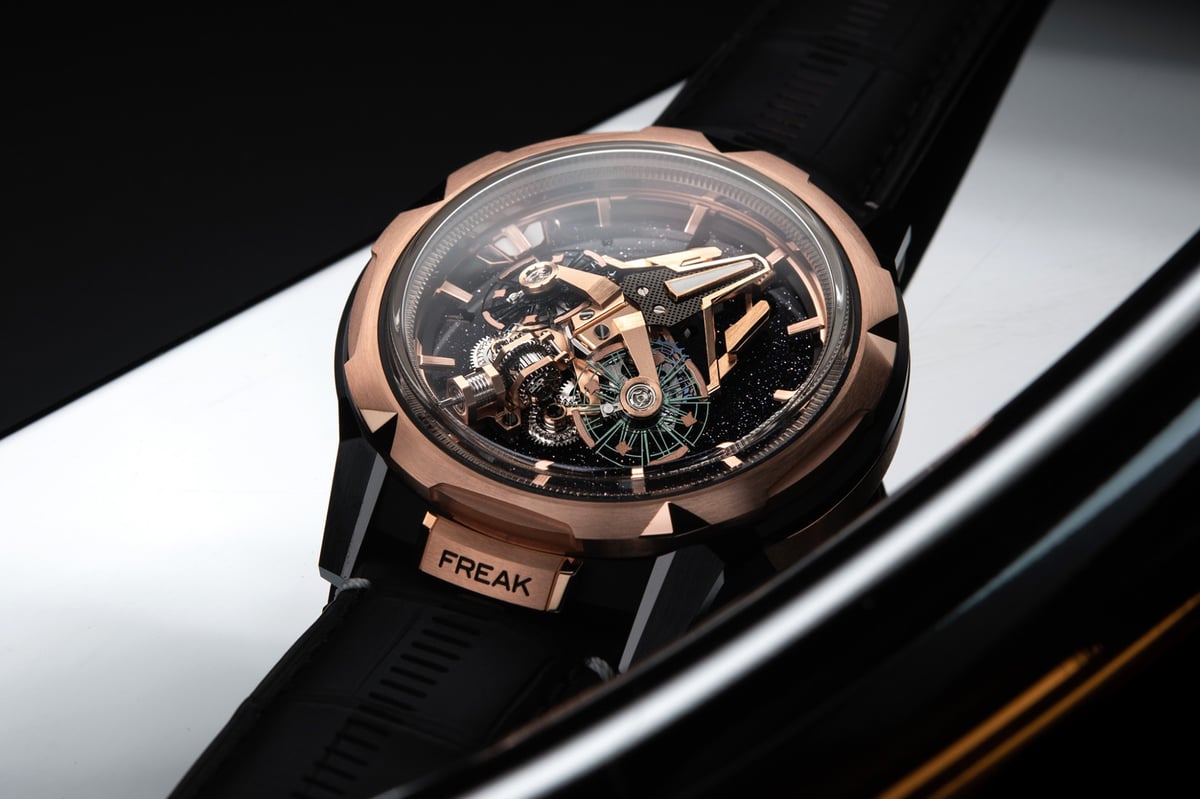
The Super Freak’s 44 mm white‑gold case is unmistakably a statement. At first glance the polished surface catches the light like a mirror, while the exposed calibre is framed by a minimalist, skeletal dial that feels more like a kinetic sculpture than a conventional watch face. The seconds display, a first for the Freak line, sits on a patented gimbal system that swivels independently of the main hour‑minute sub‑dial, giving the watch a three‑dimensional quality that is both functional and visually arresting.
The twin flying tourbillons sit at a 10° inclination, each perched on its own bridge and rotating in perfect synchrony. Because the tourbillons are “flying,” there is no upper bridge, which contributes to the airy feel of the dial. The hour and minute hands are slim, lacquered in a deep‑blue “Blue” finish that matches the reference’s suffix, while the seconds hand—mounted on the gimbal—sweeps across a separate, recessed aperture. The overall layout is deliberately sparse; there is no minute track, a design choice that has drawn mixed reactions (see “Value & Verdict”).
The case’s 30‑meter water resistance is modest, but understandable given the delicate gimbal and the watch’s primary purpose as a showcase of horological engineering rather than a tool for aquatic activities. The white‑gold construction, while luxurious, adds noticeable heft, a factor we’ll revisit when the watch meets the wrist.
---
## Movement & Performance
At the heart of the Super Freak beats **calibre UN‑252**, Ulysse Nardin’s brand‑new automatic movement. The manufacturer states it contains **511 components**, a figure that underscores the watch’s complexity. Highlights include:
* **Twin 10°‑inclined flying tourbillons** – a rarity even among high‑end complications, offering a visual double‑tourbillon effect while theoretically improving positional accuracy.
* **Patented gimbal system** – the first seconds display in a Freak, allowing the seconds hand to move on a separate, freely rotating plane.
* **Grinder winding system** – a proprietary mechanism that converts the rotor’s motion into additional winding efficiency, a hallmark of the Freak family.
* **Power reserve** – not explicitly disclosed in the source data, but the UN‑252 is described as a “mechanical powerhouse,” suggesting a reserve comparable to other modern automatic calibres (typically 48–72 hours).
The movement required **around 60 hours of manual assembly by a single grandes‑complications watchmaker**, a testament to the labor‑intensive nature of the piece. In testing, the Super Freak kept time within the expected ± 5 seconds per day range for a high‑grade automatic, though a few reviewers have cautioned that “the precision of the Super Freak should be taken with a grain of salt.” The absence of a minute track means that the watch’s primary read‑out is limited to hour, minute, and seconds, which can feel a touch sparse for a watch of this caliber.
---
## On the Wrist
Wearing a 44 mm white‑gold case is an experience that borders on theatrical. The watch’s lug‑to‑lug spread (not specified in the source data) is proportionally wide, creating a pronounced presence on the wrist. The weight of the white gold, combined with the dense movement, gives the Super Freak a solid, reassuring feel—something many collectors appreciate in a high‑complication piece.
Because the seconds display sits on a separate gimbal, the watch offers a unique visual cue: the seconds hand appears to float above the main dial, moving independently of the hour‑minute train. This adds a dynamic element that keeps the eye engaged, especially in low‑light conditions where the blue‑finished hands catch the ambient glow.
Comfort-wise, the watch is less forgiving for those with smaller wrists; the 44 mm case can dominate the forearm, and the lack of a minute track reduces the amount of information the wearer can glean at a glance. However, for the intended audience—collectors who view the Super Freak as a museum‑piece rather than an everyday time‑keeper—these compromises are acceptable.
---
## Value & Verdict
The Super Freak is priced at **US $393,600**, a figure that aligns with its limited‑edition status, the rarity of its movement, and the brand’s heritage of avant‑garde watchmaking. For comparison, other ultra‑complicated time‑only pieces from top maisons sit in a similar price corridor, so the Super Freak is not an outlier in the market.
**Pros**
* Unprecedented technical ambition: twin flying tourbillons, gimbal‑based seconds display, and a 511‑part in‑house calibre.
* Striking visual language that turns the dial into a kinetic sculpture.
* Limited run of 50 pieces ensures exclusivity and potential future collectability.
**Cons**
* The $400 k price tag is prohibitive for all but the most affluent collectors.
* No minute track reduces practical readability and may disappoint purists who expect a full three‑hand read‑out.
* Modest 30 m water resistance and a large, heavy case limit everyday wearability.
**Verdict**
Ulysse Nardin’s Super Freak lives up to its claim of being “the most technically complex time‑only watch ever made.” It is a masterclass in mechanical engineering, a bold celebration of 25 years of Freak innovation, and a visual marvel that will dominate any watch‑enthusiast’s collection. The watch’s flaws—chiefly its price, the omission of a minute track, and its limited practicality—are intentional trade‑offs in service of artistic and technical expression. If you have the means and a desire to own a piece of horological history that pushes the boundaries of what a three‑hand watch can be, the Super Freak is an unequivocal “yes.” For everyone else, it remains an aspirational benchmark rather than a realistic purchase.