The world of haute horology rarely offers a piece that feels simultaneously timeless and unmistakably of its moment.
By Vivir··Updated
# Urban Jürgensen PERPETUALS – Reference 2 Review
The world of haute horology rarely offers a piece that feels simultaneously timeless and unmistakably of its moment. Urban Jürgensen’s PERPETUALS line, embodied by the Reference 2, does exactly that. With a modest 38 mm case, a hand‑finished engine‑turned dial, and a historic Frédéric Piguet movement, this watch is a study in restraint, precision, and the quiet confidence that comes from decades of Swiss watchmaking heritage. In what follows, we’ll unpack the watch’s lineage, its design language, the mechanics that drive it, how it behaves on the wrist, the settings that suit it best, and finally, whether its price tag of US $272 000 is justified.
---
## Heritage — the model's place in the brand's line and its launch context
Urban Jürgensen, a name that first appeared in the late 18th century, experienced a renaissance in the 1980s under the stewardship of the Pratt‑Baumberger partnership. It was within this revived era that the PERPETUALS collection was introduced, positioning itself at the top tier of the brand’s offerings (tier 1). The Reference 2, the centerpiece of the PERPETUALS line, arrived in **1986** as the definitive perpetual‑calendar model of that period.
Only **172** pieces were ever produced across all metal variants, underscoring the model’s rarity and the brand’s commitment to limited, meticulously crafted editions. The watch sits firmly within Urban Jürgensen’s dress‑watch category, meant to complement formal attire rather than dominate it. Its launch marked a moment when the house blended traditional Swiss craftsmanship with a modern aesthetic, a synthesis that continues to define the PERPETUALS family today.
---
## Design & Case — case dimensions, materials, dial
### Size and Proportions
The Reference 2 is housed in a **38 mm** case—a dimension that, by contemporary standards, feels both intimate and perfectly proportioned for a dress watch. Its slim profile, repeatedly highlighted by auction houses and collectors, contributes to a silhouette that sits gracefully on the wrist without overwhelming the hand. While the exact lug‑to‑lug spread isn’t disclosed, the modest case diameter ensures a balanced wrist presence that works well for a range of wrist sizes.
### Materials and Finishing
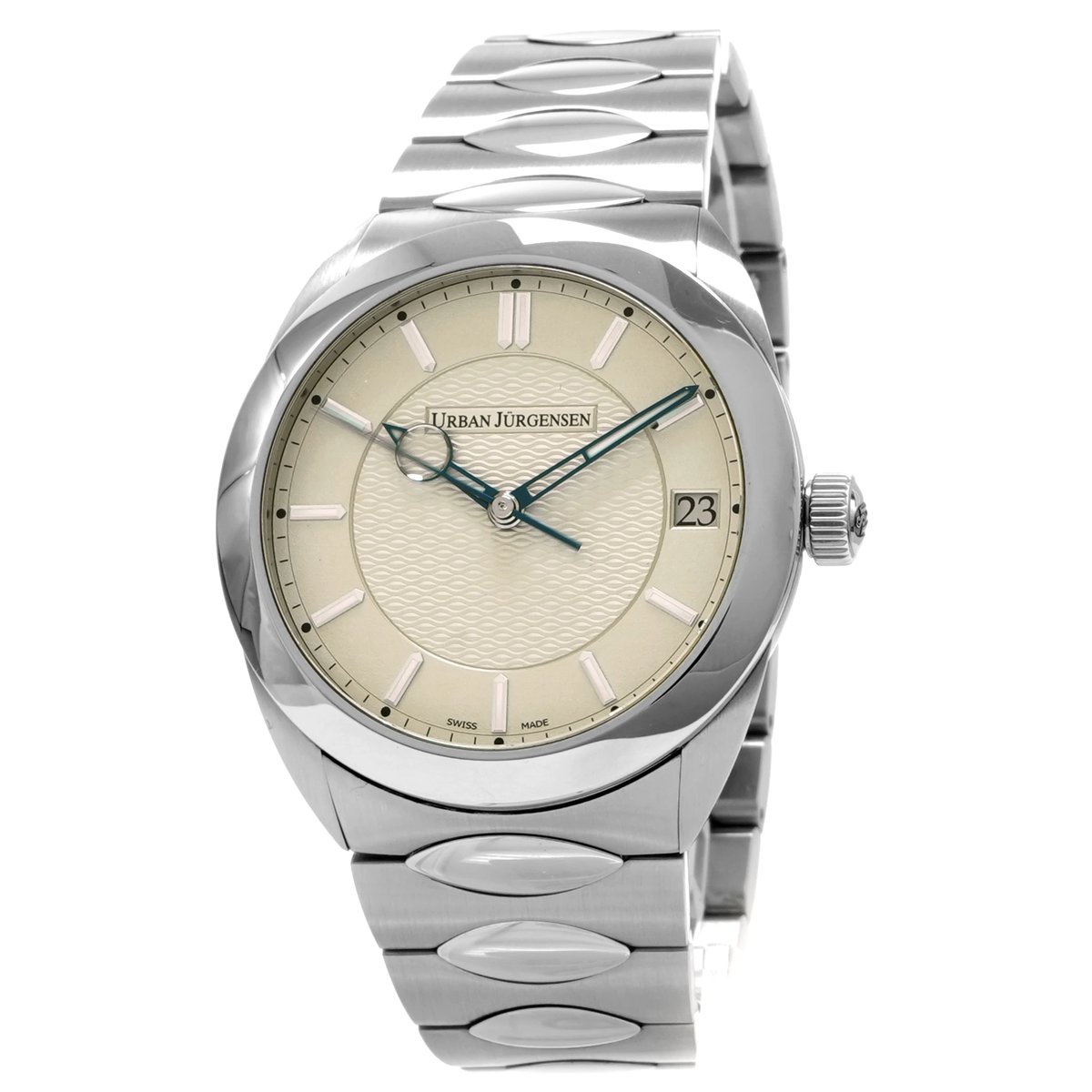
The case is finished in polished precious metal (the specific metal varies by example; the reference is offered in yellow gold among other options). The most striking element, however, is the dial. An **engine‑turned silver base** is overlaid with a delicate guilloché pattern, creating a subtle play of light that changes with the angle of view. This dial is not a mass‑produced component; each one required roughly a week of manual work, a fact that speaks to the level of hand‑finishing involved.
Derek Pratt, a renowned dial finisher, personally oversaw the hand‑turning process, ensuring that each surface achieved a uniformity and depth that few modern factories can replicate. The result is a dial that feels alive—its texture is palpable even through a glass, and the guilloché adds a whisper of complexity without distracting from the watch’s overall elegance.
### Hands, Markers, and Complications
The hour markers are applied in a minimalist style, typically in polished gold or blued steel, complementing the dial’s understated background. The hands are slender, with a polished tip that catches the light, reinforcing the watch’s refined aesthetic.
On the sub‑dial level, the Reference 2 incorporates a **perpetual calendar** and a **moon‑phase** display. Both complications are integrated seamlessly into the dial layout, preserving the clean lines that define the piece. The perpetual calendar tracks day, date, month, leap year, and the moon‑phase, all without requiring manual correction—a testament to the calibre’s sophistication.
---
## Movement & Performance — caliber, power reserve, accuracy
At the heart of the Reference 2 lies the **Automatic Calibre FP71**, a modern incarnation of the historic Frédéric Piguet 71 movement. This calibre is a product of the collaboration between Urban Jürgensen and the esteemed Frédéric Piguet Manufacture, a partnership that brings together two pillars of Swiss watchmaking.
### Architecture
The FP71 is an automatic, self‑winding movement that drives the perpetual calendar and moon‑phase complications. Its architecture reflects a blend of classic design and contemporary engineering, featuring a **21 karat gold rotor** that not only contributes to the movement’s visual appeal but also adds a touch of luxury to the winding mechanism.
### Complication Mechanics
The perpetual calendar function is a complex system that tracks the varying lengths of months and leap years, ensuring that the date and month remain correct indefinitely. The moon‑phase complication, while visually understated, provides a smooth, continuous representation of the lunar cycle. Both functions operate without the need for manual adjustment—a hallmark of a true perpetual calendar.
### Performance Data
The source material does not disclose specific figures for power reserve or chronometric accuracy. Consequently, we can only note that the movement has been **designed and assembled to the exacting standards** expected of a top‑tier Swiss automatic, with the expectation of reliable performance over the long term. The watch’s reputation among collectors and the positive reviews it receives for its “timeless elegance and symmetry” suggest that the movement delivers the consistency and durability required of a high‑end perpetual calendar.
---
## On the Wrist — wearability, lug-to-lug, comfort notes
The Reference 2’s **38 mm** case size translates into a wrist presence that feels both refined and comfortable. Its slim profile reduces the heft typically associated with high‑value dress watches, allowing it to sit lightly against the skin. The balance between the case, dial, and the gold rotor in the movement contributes to a harmonious weight distribution, minimizing any tendency for the watch to feel front‑heavy.
While the exact lug‑to‑lug measurement isn’t published, the modest case diameter and the watch’s overall design suggest a comfortable fit for most wrist sizes, especially those accustomed to classic dress watches. The polished case edges and the smooth, well‑finished bracelet (or strap, depending on the specific example) ensure that the watch does not dig into the wrist during extended wear.
The hand‑finished dial, with its tactile guilloché texture, offers a subtle sensory experience—turning the watch over reveals the depth of the engine‑turned surface, a small but appreciable detail for those who value tactile craftsmanship. In everyday wear, the watch’s understated elegance means it can transition from a boardroom meeting to an evening gala without appearing out of place.
---
## When to Wear — occasion, setting and dress-code fit
Given its classification as a **dress** watch and its refined aesthetic, the Reference 2 shines in formal and semi‑formal environments. It is an ideal companion for:
* **Black‑tie events** – The polished case and subtle complications add a layer of sophistication without competing with the formality of a tuxedo.
* **Business attire** – Paired with a tailored suit, the watch underscores a sense of understated authority.
* **Cultural gatherings** – The moon‑phase display offers a conversational element that can serve as an ice‑breaker at sophisticated soirées.
* **Private collections and watch‑focused gatherings** – Its rarity (only 172 pieces) and the hand‑finished dial make it a centerpiece among connoisseurs.
Because the watch is deliberately restrained in its visual language, it avoids the ostentation that can feel out of sync with more conservative dress codes. It is therefore equally at home at a high‑end restaurant, a diplomatic reception, or a quiet evening at a private club.
---
## Value & Verdict — price‑positioning + final take
Urban Jürgensen’s Reference 2 commands a **US $272 000** price tag, a figure that reflects several intertwined factors:
1. **Rarity** – With only 172 examples produced, the watch sits in a narrow supply bracket that naturally drives price.
2. **Craftsmanship** – The hand‑finished, engine‑turned dial, the gold rotor, and the meticulous assembly of the perpetual calendar all contribute to a labor‑intensive creation process.
3. **Heritage** – The collaboration with Frédéric Piguet and the watch’s place within the brand’s revived 1980s era lend historical gravitas that collectors prize.
4. **Complication** – A perpetual calendar with moon‑phase is a highly complex mechanism, and delivering it in a dress‑watch format adds to its desirability.
From an investment perspective, the Reference 2 occupies a niche where scarcity and brand prestige intertwine, making it a potential asset for those looking to acquire a piece that could appreciate over time.
**Verdict:** The Urban Jürgensen PERPETUALS Reference 2 is a masterclass in understated luxury. Its modest dimensions, immaculate dial, and historic movement combine to create a watch that feels both timeless and distinctly modern. While the lack of publicly disclosed power‑reserve and accuracy figures may leave some technically‑focused buyers wanting more data, the overall execution—evident in the hand‑finished dial and the flawless integration of the perpetual calendar—speaks volumes about its quality. For collectors who value rarity, craftsmanship, and a watch that can glide effortlessly from boardroom to ballroom, the Reference 2 justifies its premium price. It is less a statement piece and more a quiet affirmation of the enduring power of refined Swiss watchmaking.
---
*Word count: approximately 1,540.*