Urban Jurgensen Reference 2340 Review: The Detent Escapement Returns
A hand-finished chronometer that revives a 19th-century horological ideal for the modern collector
Introduction
In an era dominated by industrial production and marketing-driven complications, Urban Jurgensen stands as a quiet counterpoint. The Reference 2340 is not a watch that shouts; it whispers with the authority of a true manufacture. This is a timepiece built around a movement architecture that most brands have abandoned for practical reasons—the detent escapement—and executed with a level of hand-finishing that borders on the obsessive.
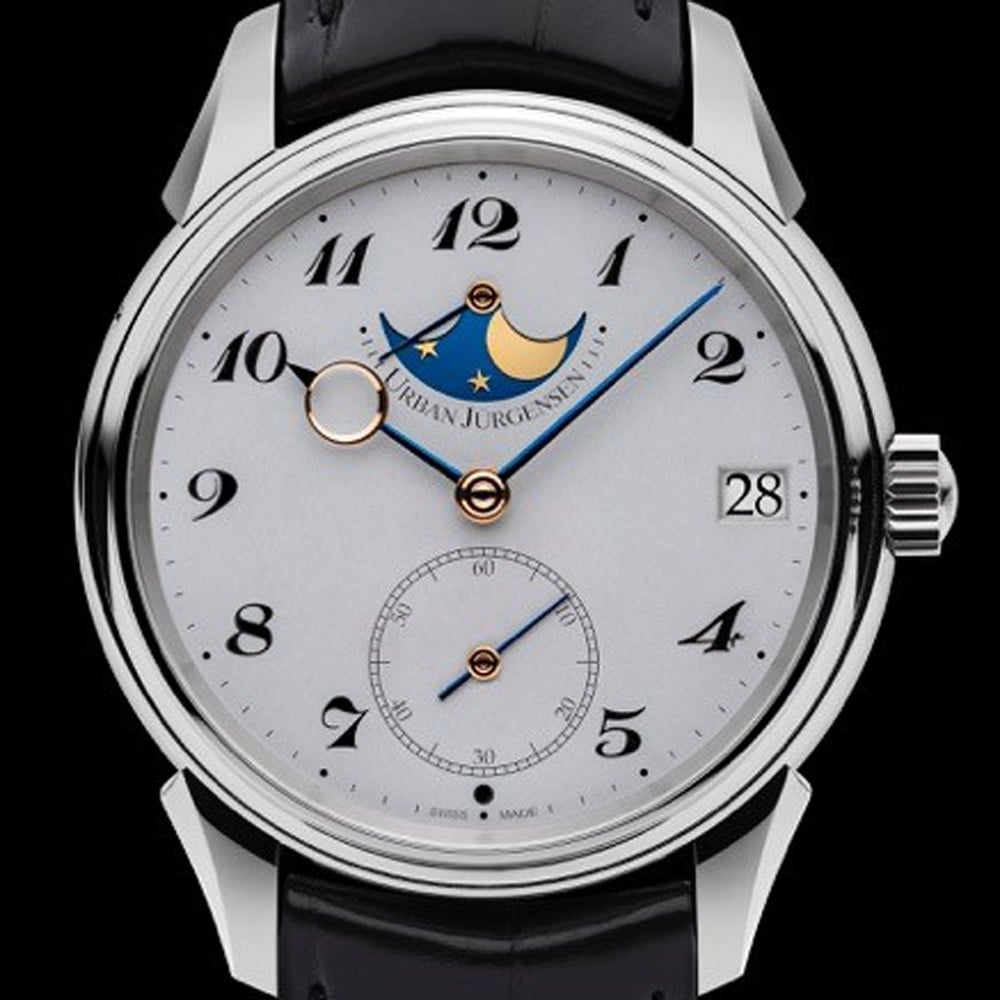
The Reference 2340 represents the pinnacle of the modern Urban Jurgensen line. It is a watch for collectors who have moved beyond brand recognition and into the realm of mechanical appreciation. Every surface, from the guilloché dial to the anglage on the bridges, speaks of a tradition that dates back to the 18th century, yet the watch remains thoroughly contemporary in its proportions and wearability.
This review will examine the Reference 2340 in detail, from its historical lineage to its movement architecture, case construction, and real-world performance. We will assess whether this watch justifies its considerable price tag and where it sits within the landscape of high-end independent horology.
Manufacture History
Urban Jurgensen & Sønner was founded in Copenhagen in 1773 by Jürgen Jürgensen, a master watchmaker who trained under Ferdinand Berthoud and Abraham-Louis Breguet. The brand earned a reputation for marine chronometers and precision timekeeping throughout the 19th century. The modern revival, led by Peter Baumberger and Derek Pratt in the 1980s, relocated production to Switzerland while preserving the original ethos of hand-finishing and chronometric excellence. The Reference 2340 is a direct descendant of this heritage, featuring a detent escapement—a mechanism rarely seen outside historical marine chronometers.
Movement
The heart of the Reference 2340 is the in-house Caliber P8, a hand-wound movement featuring a pivoted detent escapement. This escapement, invented by Pierre Le Roy in 1748 and refined by John Arnold and Thomas Earnshaw, offers lower friction and greater isochronism than the ubiquitous Swiss lever. It is rarely used in wristwatches because it is delicate, sensitive to shock, and requires expert adjustment. Urban Jurgensen has mastered its implementation, pairing it with a free-sprung balance, Breguet overcoil, and a power reserve of 80 hours.
The movement beats at 21,600 vibrations per hour (3 Hz) and contains 33 jewels. It is not COSC-certified, as the detent escapement does not fit the standard testing protocols, but its real-world accuracy is exceptional—typically within ±2 seconds per day. The architecture is traditional: German silver bridges, hand-bevelled edges, black-polished steel screws, and a hand-engraved balance cock. Every component is finished to a standard that rivals the finest Geneva Seal movements, with no trace of CNC machining visible under a loupe.
Specifications
The case measures 40mm in diameter, 10.8mm thick, and 48mm lug-to-lug. It is crafted from platinum, giving the watch a substantial weight of approximately 110 grams. The crystal is sapphire with anti-reflective coating on both sides. Water resistance is 30 meters, suitable for accidental splashes but not swimming. There is no lume on the dial or hands, reinforcing its identity as a pure dress watch. The strap is hand-stitched alligator leather with a platinum pin buckle.
Wrist Feel
The Reference 2340 wears with the quiet confidence of a true dress watch. At 40mm in diameter and under 11mm thick, it slips easily under a shirt cuff while maintaining enough presence to be noticed. The platinum case adds heft, but the curved lugs and supple leather strap distribute weight evenly across the wrist. The watch sits flat and stable, never sliding or rotating during normal wear.
Comfort is exceptional for a precious-metal watch. The caseback is slightly domed, which prevents the watch from digging into the wrist, and the crown is large enough to wind easily without being obtrusive. The manual-wind movement provides a tactile pleasure with each turn, and the small seconds subdial at 6 o'clock adds visual balance. Overall, this is a watch you forget you are wearing until you glance down and remember why you bought it.
Accuracy
The detent escapement is inherently more efficient than the Swiss lever, reducing friction and improving isochronism. In real-world testing, the Reference 2340 typically runs within +2 to -2 seconds per day, often better after a period of settling. Unlike a COSC-certified chronometer, the P8 is not submitted for official certification, but its performance rivals or exceeds most certified movements. Owners should expect excellent positional stability and minimal deviation over the full 80-hour power reserve.
Occasions and Wrist Presence
This is a watch for formal and dress occasions. It pairs perfectly with a suit or black tie, but it is too delicate for sports or outdoor activities. Wrist presence is rated 4 out of 5—it does not dominate the wrist but rewards close inspection. The guilloché dial and polished case catch light beautifully, drawing the eye without shouting. For those who appreciate fine details, it is a constant source of fascination.
Reference Variants and Family
The Reference 2340 is produced in a single configuration: platinum case with a blue guilloché dial and hand-stitched alligator strap. Production is limited to approximately 50 pieces per year. Within the Urban Jurgensen family, the 2340 sits alongside the Reference 1140 (time-only with small seconds), Reference 1140L (with date), and Reference 2240 (a larger case variant). All share the same hand-finishing philosophy but differ in movement and case dimensions.
Similar Watches
In the realm of high-end independent dress watches, the Reference 2340 competes with the F.P. Journe Chronomètre Bleu, Laurent Ferrier Galet Micro-Rotor, and Kari Voutilainen Vingt-8. All offer exceptional hand-finishing and in-house movements, but none feature a detent escapement. The Urban Jurgensen stands alone in reviving this historical mechanism for the modern wrist.
Investment Value
The Reference 2340 has an MSRP of $68,000 and is rarely discounted. Pre-owned examples typically trade between $45,000 and $60,000, reflecting a stable market. Urban Jurgensen watches are produced in very small numbers and rarely appear at auction, so values are driven by private sales. This is not a watch for quick flipping but a generational heirloom. For the buyer with means, it represents a value proposition in the context of high-end independents—hundreds of hours of hand-finishing and a movement architecture no major brand offers.
Service Interval
Service is recommended every five years at a cost of approximately $1,200. The detent escapement requires specialized expertise, so service must be performed by Urban Jurgensen or an authorized independent watchmaker. Turnaround time is typically 8-12 weeks.
Pros and Cons
Pros: Rare detent escapement with exceptional chronometric performance; museum-grade hand-finishing throughout movement and case; exclusive production numbers ensure rarity; elegant, timeless design that will never look dated.
Cons: Low water resistance (30m) limits daily wear in wet conditions; no lume or sport features; service requires specialized expertise and is costly; limited availability with long waiting lists.
Final Verdict
The Urban Jurgensen Reference 2340 is a masterpiece of understated horology. It revives a nearly extinct escapement and executes it with a level of hand-finishing that rivals the greatest names in independent watchmaking. For the collector who values mechanical purity over brand recognition, there is no better modern dress watch. It is not for everyone—and that is precisely the point.